
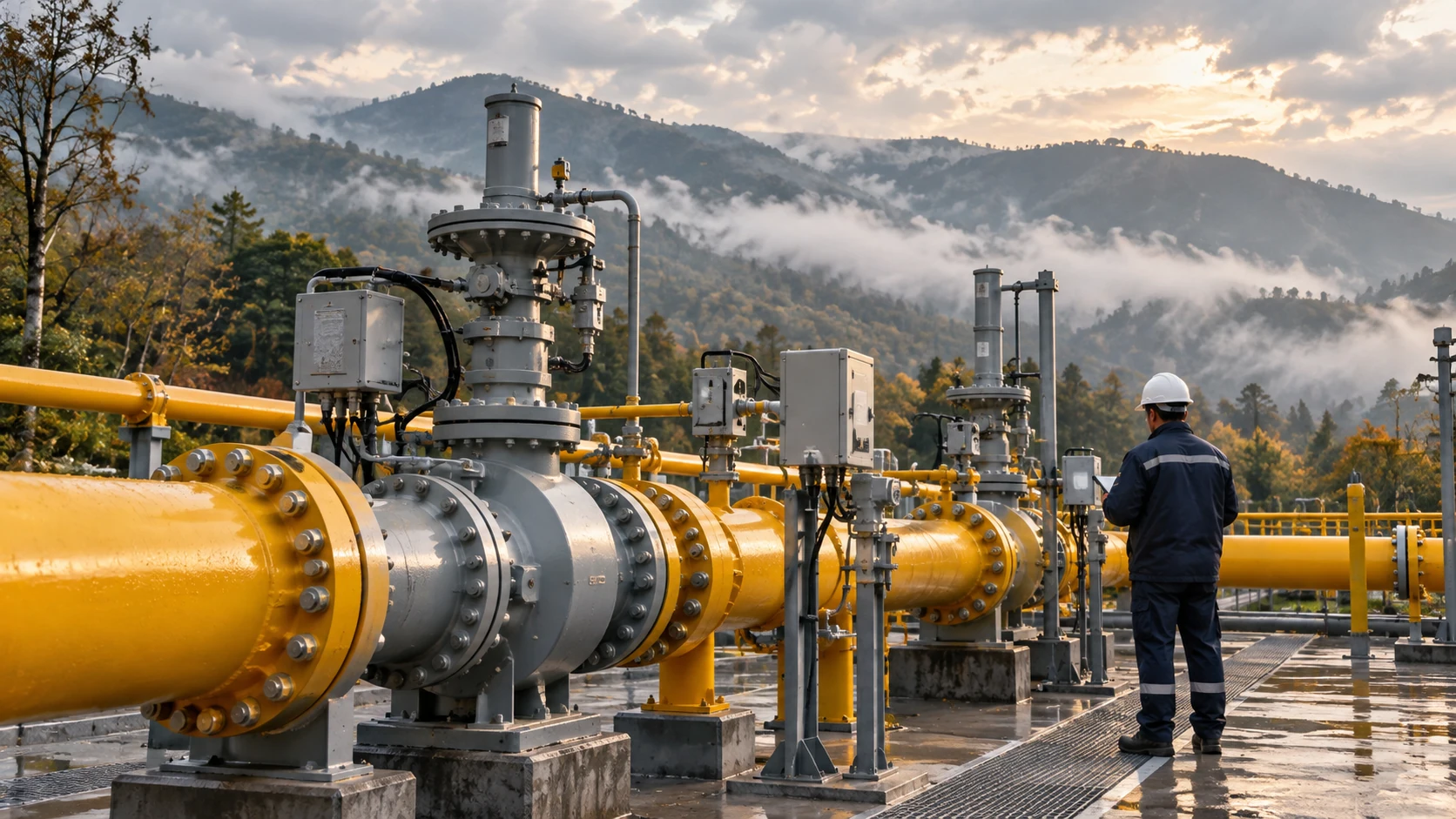
As winter 1405 approaches, gas network stability involves more than production at gas fields. Gas processed in southern Iran must travel through transmission pipelines and stations to distant consumers. Simultaneous increases in cold-weather demand make that task harder. Managing gas pressure drops therefore requires coordination of supply, transmission, timely monitoring and consumption.
At a meeting on 21 Mehr 1405 (13 October 2026), National Iranian Gas Company and provincial managers emphasised transmission monitoring, peak-load management and winter preparedness. Mazandaran Gas Company reported four operational scenarios for the cold season. This describes planning and readiness, rather than an announcement of outages or general restrictions. Source: republication of Shana’s 21 Mehr report.
What is a gas pressure drop?
Pressure is an operational variable of transmission and distribution networks. It must stay within design and operating limits so gas can reach different points under the required conditions. A pressure drop does not necessarily mean an outage. If conditions leave acceptable limits, the operator must investigate and apply appropriate control and safety measures.
Supply constraints, pressure drops and outages are different
A supply constraint means available production, processing or transmission capacity is limited relative to demand. A pressure drop is a measured condition at one or more network points. An outage is a cessation of flow for consumers. These are related but distinct. Reduced production capacity alone cannot establish that a particular region will experience an outage without operational information.
Why northern provinces need coordination
Heating demand in northern and cold regions can rise rapidly. Pipeline condition, station capacity, customer demand and weather affect the network together. Regional management must therefore coordinate with dispatching and provinces along the transmission route.
What winter preparations were announced?
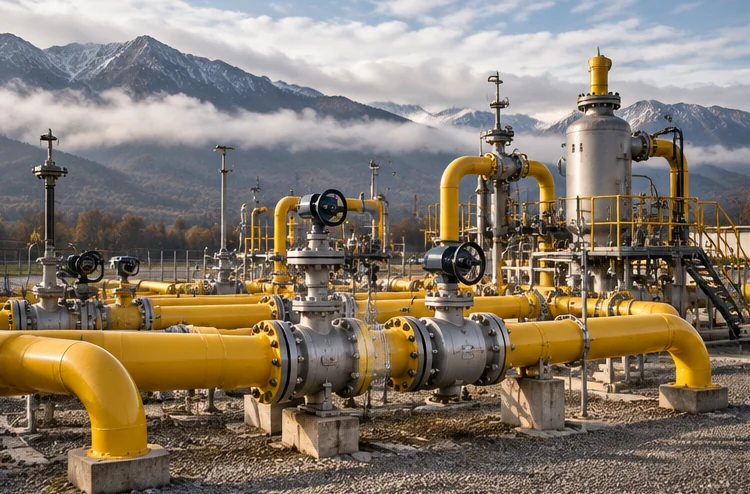
The 21 Mehr meeting report, citing National Iranian Gas Company, described coordination between Tehran, Qazvin, Qom, Gilan, Semnan, Alborz and Mazandaran gas managers and transmission operating regions. It emphasised accurate records, timely pipeline monitoring and power-station readiness to use authorised alternative fuels.
Mazandaran’s four scenarios: what is known?
The provincial company said it had prepared four operational scenarios. The reported themes include reducing government-office consumption, monitoring high consumers, operational network coordination and alternative fuel preparedness for sensitive facilities. The complete scenarios and their activation thresholds were not published in the cited report. They therefore cannot be presented as four definite instructions applying to everyone.
South Pars reconstruction and capacity constraints
In separate news on 21 Mehr, the acting oil minister reported substantial completion of major South Pars refinery maintenance and continued reconstruction of damaged units. Tasnim reported that around 100 million cubic metres of approximately 230 million cubic metres of unavailable daily refining capacity had been compensated through spare capacity at other refineries. These figures describe processing capacity and operational compensation, not the pressure drop in each city.
How network monitoring supports decisions
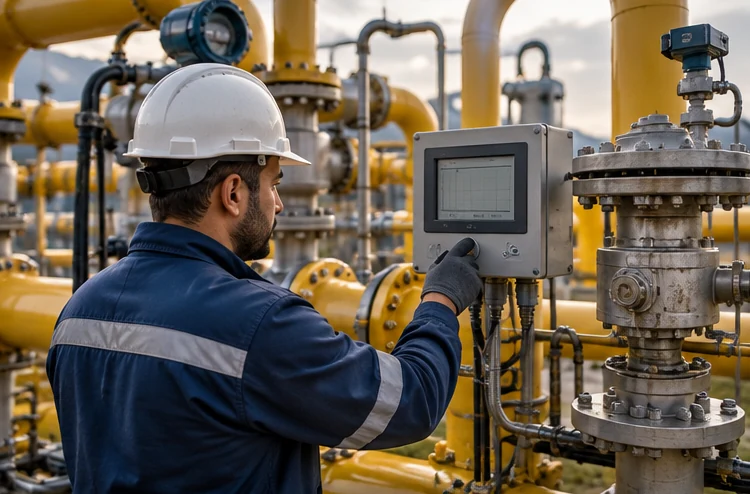
Operational monitoring combines pressure at defined points, flow conditions, equipment status and gas delivery data. Unexpected changes can be investigated against demand, equipment and transmission conditions. No single indicator provides a complete network picture.
Dispatching and operational data
Dispatching coordinates gas flow within capacity and technical limits. Data from stations, pipelines and operating centres, together with consumption estimates, inform load management. Timely monitoring supports decisions based on current conditions rather than delayed reports.
Pressure sensors are different from gas meters
A gas meter primarily measures gas passing through it. A pressure gauge or sensor measures pressure, while a regulator controls pressure. Some measuring systems have additional functions, but none should be attributed to a particular meter without its datasheet.
Meter data and peak-load management
Customer consumption patterns can complement operational network data. Valid, timely readings from large users, public buildings and different districts help identify rising demand periods. Combined with pipeline conditions, they provide a fuller view of supply and demand.
Remote reading and data management
Some meters or supplementary systems transmit readings to a central platform without a site visit. This may simplify recording and analysis, but depends on communications architecture and verified equipment features. Remote reading does not imply direct network pressure control or definitive leak detection. Such claims require valid technical evidence.
Avoiding unsupported conclusions
Higher recorded consumption may reflect colder weather, longer operating hours or changed equipment. Additional information is necessary to attribute a change to a specific cause. Likewise, lower readings do not automatically establish lasting savings: efficiency evaluation needs a baseline and a valid comparison method.
Reducing demand during peak periods
Network stability involves households, transmission companies, major consumers, offices and facility operators. Appropriate planning and operation can reduce unnecessary demand.
Building heating
Suitable temperatures, authorised servicing and reduced heat loss can prevent avoidable consumption. Measures must not obstruct flues or necessary combustion-air openings. No single savings percentage applies to all buildings; results depend on their initial condition.
Industrial consumption planning
Measuring flow and consumption, understanding peak hours, maintaining combustion equipment and auditing energy use can help industry. Changes to production schedules or fuel must follow operating constraints and required authorisations. The aim is to reduce unnecessary use while maintaining safety and process quality.
Government and commercial buildings
The 21 Mehr report identifies office demand reduction and high-user monitoring as winter priorities. Periodic comparisons help identify buildings needing equipment inspection, temperature control improvements or operator training.

What can be predicted about winter 1405?
The available reports describe preparations, provincial coordination and ongoing reconstruction. Predicting a pressure drop in a specific city at a specific time requires current weather, demand, production and pipeline-capacity data. Claims of an outage in a named province or on a particular day are unreliable without an official notice.
| Topic | What reports indicate | Interpretation limit |
|---|---|---|
| South Pars maintenance | Much major maintenance completed according to the 21 Mehr report | Complete restoration of all damaged capacity was not confirmed |
| Mazandaran’s four scenarios | Prepared for winter management | Full details and activation dates were not published |
| Consumption monitoring | Can complement demand information | Does not replace pressure sensors or dispatching |
| Load management | Can ease demand pressure | Its effect depends on actual conditions |
Meter manufacturers and network resilience
Reliable measurement is a prerequisite for evidence-based consumption management. Manufacturers can support data quality with equipment whose operating conditions and metrological requirements are documented. As a gas equipment industry participant, Ekbatan Gas Control can emphasise correct sizing and responsible data use without claiming unverified capabilities or certification for a particular product.
Stability requires coordinated production, transmission and demand
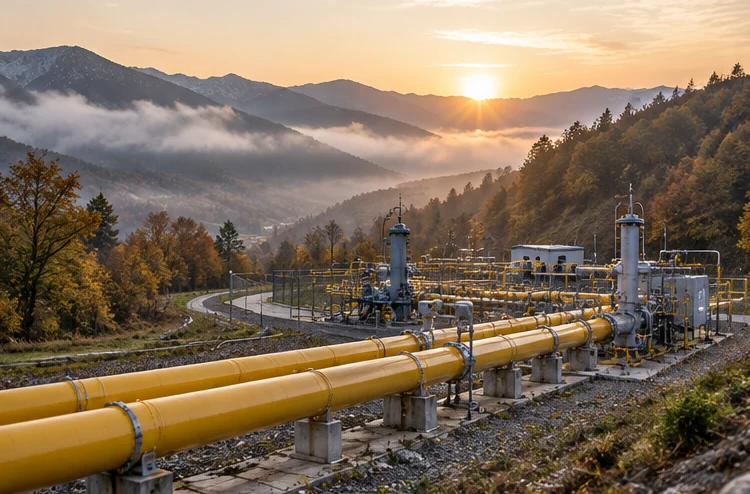
The cited reports show simultaneous attention to processing-capacity reconstruction, transmission monitoring and peak demand. Mazandaran’s scenarios are part of preparedness, not a definite prediction of disruption. Meters contribute reliable consumption data; operational pressure and flow decisions require a broader set of information and equipment.
For consumers and industry, practical priorities are reducing waste, operating safely and using trustworthy data. Network stability depends on infrastructure management and informed consumption as well as production.
Sources
- Shana report citing National Iranian Gas Company, republished on 21 Mehr 1405.
- Tasnim, South Pars reconstruction, 21 Mehr 1405.
- Tasnim, reconstruction assessment, 21 Mehr 1405.
Frequently asked questions
Will Mazandaran’s gas be cut off in winter 1405?
Operational scenarios do not announce an outage. Official notices for specific locations and times are the relevant authority.
What are Mazandaran Gas Company’s four scenarios?
The report announces four scenarios and themes including office demand reduction, high-user monitoring and sensitive-facility preparedness. The full texts were not published.
How does a pressure drop differ from an outage?
A drop is reduced pressure at a network point. An outage is stopped flow to a customer or area. One does not necessarily lead to the other.
Does a smart gas meter regulate network pressure?
No. Its primary role is consumption measurement. Pressure control belongs to regulators and operational systems; any additional meter features require datasheet verification.
Why does consumption monitoring help stability?
It clarifies the timing and scale of demand and, alongside pressure and flow data, supports peak-load decisions.
What should household users do?
Use equipment safely, reduce unnecessary consumption and contact the gas emergency service if there is a malfunction or gas smell. Do not tamper with meters or regulators.
Has all lost South Pars refining capacity been restored?
The 21 Mehr report describes compensation through spare refinery capacity, but does not confirm complete reconstruction of all damaged facilities.