
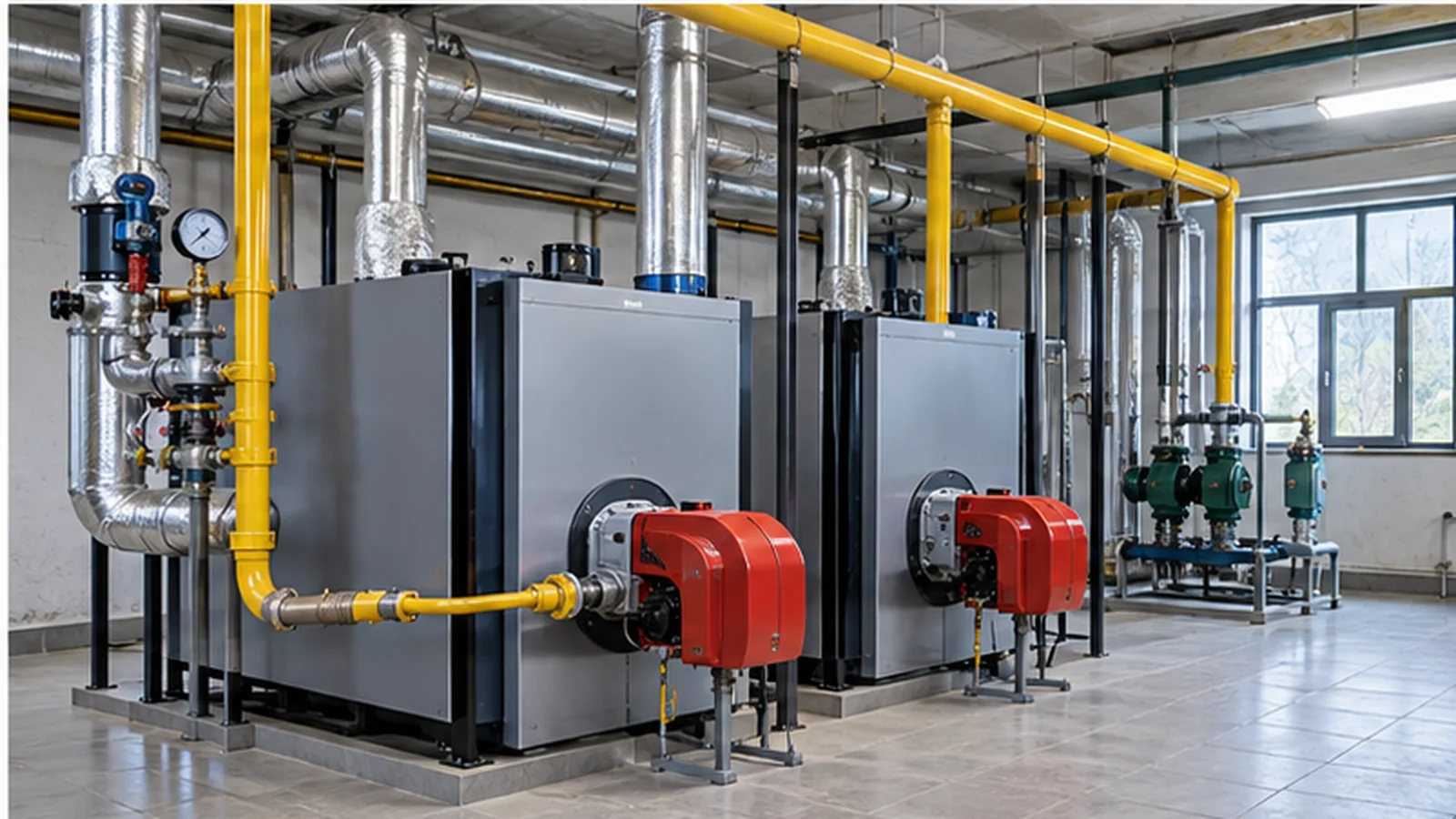
Alborz Province Gas Company says it has optimized more than 600 boiler rooms. In a report published by Iran's official petroleum news agency Shana on 31 October 2026 (9 Aban 1405), the company's managing director, Nasser Hosseini, said the initiative could reduce natural-gas consumption by approximately 15–20%. The most useful question for energy professionals is not simply how many boiler rooms were treated, but how a projected reduction can be converted into measurable, reproducible and independently reviewable performance.
A critical distinction: the number of optimized boiler rooms describes reported implementation activity. The 15–20% figure describes potential savings, not a verified outcome across all 600-plus sites. The cited news report does not provide a complete baseline, post-retrofit consumption dataset, measurement period or independent audit for this group.
What the 31 October announcement actually says
According to the managing director, free boiler-room optimization is one of the province's measures to manage gas demand, and the number of treated installations has exceeded 600. He identified high energy intensity, inefficient equipment, poor building insulation and incomplete implementation of efficiency requirements among the factors contributing to excessive demand.
The report also mentions maintaining indoor temperatures around 18–20°C, preventing heat loss and using heating equipment correctly. That range is a recommendation reported in this particular news item; appropriate temperatures for an individual building must still reflect its use, occupant health, thermal comfort and applicable rules.
Replacing old space heaters with higher-efficiency models and checking flues and heating-system safety were discussed as additional measures. Those are not the same intervention as boiler-room optimization. Savings attributable to replacing a room heater should not automatically be credited to a boiler-room retrofit.
What can boiler-room optimization involve?
A boiler room is a thermal system comprising heat generators, burners, pumps, distribution circuits, controls and safety devices. Energy may be wasted through incorrect combustion settings, unnecessary operating hours, insufficient insulation, unbalanced heat distribution or inadequate maintenance. A suitable retrofit should follow a site-specific technical assessment rather than a single standardized recipe.
Combustion settings, controls and maintenance
Burner adjustment, preventive maintenance, checking temperature and pressure sensors, and improving equipment scheduling can all form part of a general efficiency program. These are examples of possible technical measures, not a verified list of works performed at each of the 600-plus Alborz sites. The Shana report does not publish that site-level scope.
Pipe insulation and temperature management
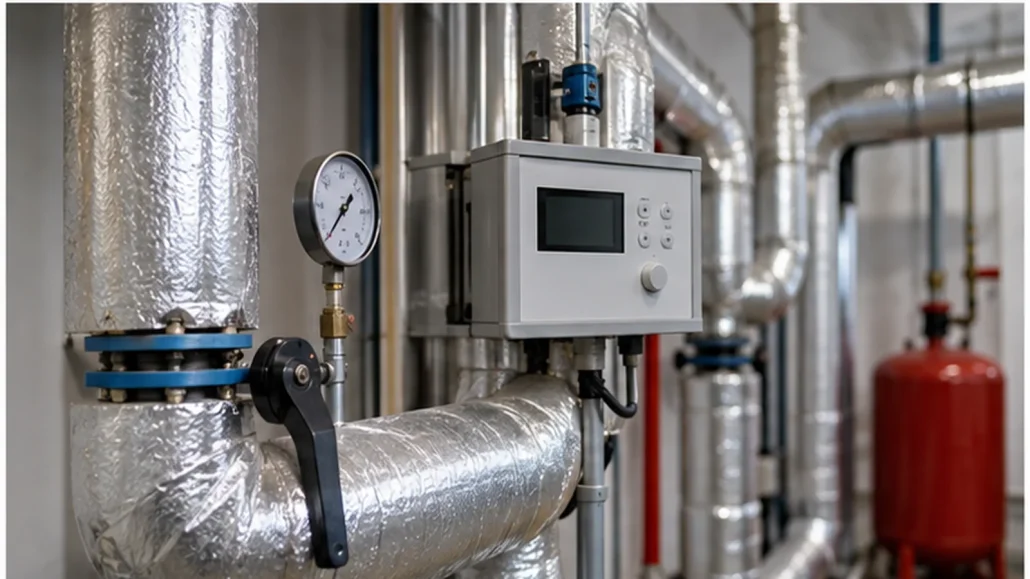
Insulating hot pipework, matching water temperature to demand and avoiding heating unoccupied areas can reduce unnecessary losses. However, excessively low temperatures or unauthorized changes to safety controls are not acceptable efficiency measures. Work on gas trains, burners, combustion equipment and flues must be carried out by qualified personnel under applicable procedures.
Why potential savings are not the same as verified savings
Consider a hypothetical building that consumes 10,000 cubic metres of gas during a comparable period before a retrofit. A 15% reduction would equal 1,500 cubic metres, while a 20% reduction would equal 2,000 cubic metres. This is an arithmetic illustration only. It is neither the average baseline of Alborz boiler rooms nor a measurement of the reported project.
A building's gas consumption varies with outdoor temperature, operating hours, occupancy, indoor setpoints and equipment condition. Comparing a cold month with a milder month, without adjusting for those factors, does not demonstrate the retrofit's effect. Consumption might even rise after an effective retrofit if the weather becomes much colder or the facility operates for longer.
Baselines, reporting periods and adjustments
A credible evaluation first establishes a baseline using reliable pre-intervention data. Post-intervention consumption is then measured within a consistent boundary and adjusted for relevant factors such as heating degree days, operating hours and changes in building use. ISO 50015:2014 sets out general principles for measuring and verifying energy performance. The International Performance Measurement and Verification Protocol (IPMVP) provides a framework for selecting a measurement boundary, documenting adjustments and reporting savings.
Conceptually, adjusted savings = baseline consumption adjusted to reporting-period conditions − measured reporting-period consumption. Real projects also need to document non-routine changes, data quality, uncertainty and baseline modelling. Without such evidence, a headline percentage remains an estimate or an unverified performance claim.
How gas meters and remote reading support credible results
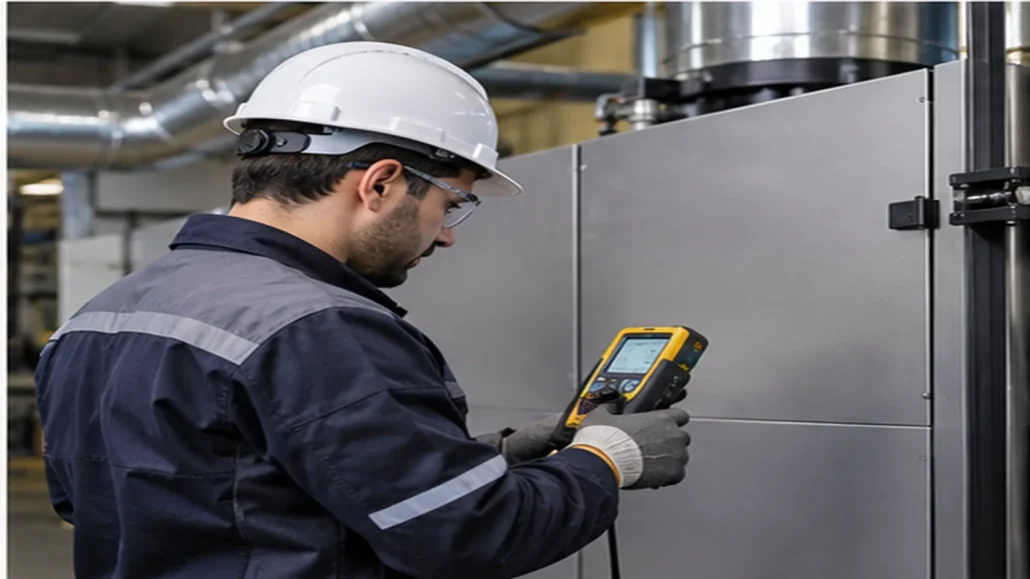
Reliable metering underpins energy-savings calculations. A gas meter suited to its installation and operating range, consistent time-stamped consumption records and reliable links to operating conditions make analysis more defensible. Installation quality, meter sizing, accurate readings and data governance matter as much as the measuring instrument itself.
AMR and smart gas meters are monitoring tools, not automatic savings
Automatic Meter Reading (AMR) can improve the timeliness and consistency of data collection. Where the infrastructure and authorizations exist, a smart gas meter or upgraded gas meter can support trend analysis, data anomaly checks and before-and-after comparisons. However, installing a smart meter does not itself deliver a 15–20% reduction in gas use. Actual savings depend on technical improvements and operational behaviour.
Whole-building versus boiler-room measurement
A building's main gas meter may capture space heating, domestic hot water and other gas uses together. If the objective is to assess one boiler room, the measurement boundary must be explicit, and other uses must be isolated or adjusted using a defensible method. Hourly or daily meter data without weather and operating information are not sufficient for a conclusive attribution.
Which performance indicators should accompany the 600-plus installations?
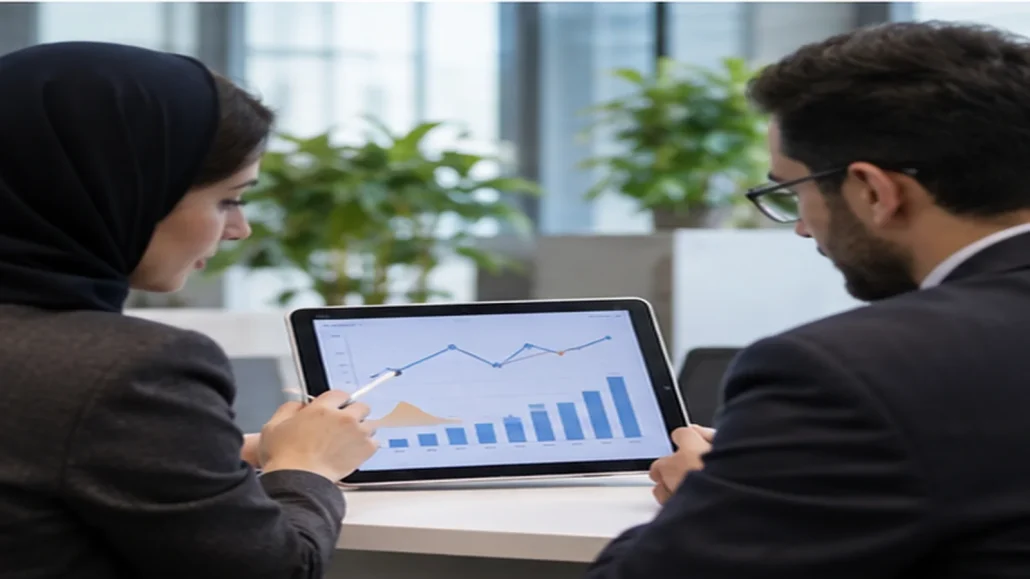
A transparent performance report would distinguish completed and operating installations; the types of measures implemented; pre- and post-retrofit gas consumption; weather and operating-hour adjustments; data continuity and quality; project costs; economic payback; and safety outcomes. Publishing anonymized aggregate data with a documented method would make independent assessment easier.
It would be incorrect to calculate provincial savings by simply multiplying '600 × 15%'. A percentage cannot be converted into a gas volume without the baseline consumption of each facility. Adjusted savings should be calculated in consistent units for individual buildings and then aggregated while avoiding double counting and acknowledging measurement uncertainty.
Implications for gas-equipment manufacturers and Ekbatan Gas Control
For manufacturers of residential gas meters, smart gas meters, upgraded gas meters and gas regulators, the news illustrates the connection between accurate equipment, dependable consumption data and demand-side management. Potential engineering opportunities include better data-quality specifications, secure remote-reading workflows and reporting tools for evaluating energy-efficiency programs. The announcement does not identify a gas-meter tender, procurement contract or specific partnership with Ekbatan Gas Control.
Ultimately, success should not be measured by the number of treated installations alone. The more meaningful result is a demonstrable reduction in gas use under comparable conditions, achieved while preserving safety and occupant comfort. That evidence is essential when deciding whether and how to scale similar programs ahead of the winter demand peak.
Frequently asked questions
Has gas consumption actually fallen by 20% at all 600 Alborz boiler rooms?
Not according to the published evidence. Shana reports a potential reduction of 15–20%, but does not publish a verified 20% result for every site or a complete measurement-and-verification dataset.
Were more than 600 boiler rooms optimized, or is this only a plan?
The company's managing director reported that more than 600 boiler rooms had already been optimized as of 31 October 2026. The report does not specify every intervention or its measured result.
What data are required to verify boiler-room gas savings?
Reliable pre- and post-intervention consumption, outdoor temperature, operating hours, changes in use, a defined measurement boundary and an adjustment methodology are essential. The evaluation approach should be documented before drawing conclusions.
Does a smart gas meter automatically save energy?
No. Smart meters and AMR systems improve monitoring opportunities, but consumption reductions require effective technical measures, appropriate controls and operational changes.
Is 18–20°C mandatory for every type of building?
The range appears as a demand-management recommendation in the cited report. Actual setpoints must be assessed against the building's function, health and comfort requirements and applicable regulations.
Does the announcement include new meter or regulator procurement?
No. It concerns efficiency and demand management; the source does not announce a specific meter or regulator tender or purchase contract.
Sources
1. Shana, 'Alborz could reduce gas use by up to 20% through boiler-room optimization', published 31 October 2026 (9 Aban 1405), reporting comments by Nasser Hosseini: https://www.shana.ir/news/3161248/
2. International Organization for Standardization, ISO 50015:2014, Measurement and verification of energy performance: https://www.iso.org/standard/60043.html
3. Efficiency Valuation Organization, International Performance Measurement and Verification Protocol (IPMVP): https://evo-world.org/en/products-services-mainmenu-en/protocols/ipmvp