

Iran’s Cabinet has authorized a special energy working group to review prices and consumption quotas for petroleum products and natural gas. According to an official Shana report published on 29 October 2026 (7 Aban 1405), this is an authorization to review policy—not an announcement of a new residential gas tariff, a new quota or an immediate price increase. The distinction matters for energy users and for manufacturers of gas meters, regulators and remote-reading equipment.
What exactly did the Cabinet authorize?
Shana reported at 13:05 Iran time on 29 October 2026 that the Cabinet, at its meeting on 14 October (22 Mehr 1405), accepted a joint proposal from the Ministry of Petroleum and the Plan and Budget Organization. Acting under Article 138 of the Constitution, it empowered the working group identified in clause 8 of a Cabinet resolution dated 23 November 2025 (2 Azar 1404) to review prices and quotas for petroleum products and natural gas across consumption sectors. The First Vice President communicated the resolution to executive bodies on 27 October (5 Aban). The report describes authority to review; it does not establish a new tariff.
Three dates, three different functions
The Cabinet meeting took place on 14 October, the resolution was communicated on 27 October, and Shana published its report on 29 October 2026. None of those dates, by itself, is an effective date for a revised gas tariff or quota. Any future implementation date would have to be checked against the subsequent operative decision and its scope.
Have household or industrial gas prices changed?
The cited official report provides no price table, consumption-band thresholds, revised quota, implementation timetable or new bill-calculation formula. Consequently, a claim that all gas customers face an immediate increase is not supported by this source. A legal mandate to consider revisions is different from an adopted and implemented pricing decision. If the working group later issues measures for particular customer groups, the details must be taken from those measures rather than inferred from the current announcement.
The resolution identifies consumption management, prevention of resource waste and improved allocation of fuel and natural gas as objectives. It also requires economic, social and environmental considerations. Those objectives do not reveal the eventual tariff level, the affected customer classes or any amount of savings that might actually be achieved.
Why metering quality matters under any tariff design
If a future policy changes pricing or quota rules, fair implementation will depend on well-defined billing periods, customer identifiers, valid measured quantities and procedures for correcting invalid readings. A residential gas meter records the gas quantity passing through it; billing and consumption classification must follow the applicable gas utility rules and contractual conditions. A meter does not itself decide a tariff or allocate a quota.
Reading periods, volume units and error controls
Consumption comparisons should refer to clearly defined time windows. Different reading-period lengths, estimated consumption where a physical reading is missing, delayed data transmission or an incorrect customer identifier can distort the apparent result. Where conversion to reference conditions is required, the pressure and temperature basis and conversion method must be explicit. These data-quality principles matter for accurate billing even without any policy reform.
OIML R 137 addresses metrological and technical requirements and tests for gas meters. Referring to this recommendation does not imply that any particular device or Ekbatan model has been certified. Applicable Iranian legal requirements and product-specific approvals remain decisive for actual installations.

What can smart gas meters and AMR contribute?
Properly designed smart gas meters and automatic meter reading (AMR) systems can reduce delays in obtaining readings, support investigation of missing data and make time-series consumption information available for authorized analysis. These capabilities can help network management, customer inquiries and assessment of demand patterns. However, “smart” does not mean unlimited accuracy, error-free operation, universal remote shut-off functionality or guaranteed energy savings.
Data protection and bill dispute procedures
A data-driven scheme needs clear access controls, trustworthy timestamps, records of reading corrections, cybersecurity measures, communications resilience and a fair route for reviewing disputed bills. If connectivity fails, the system should define what is stored locally and how readings are synchronized later. Financial decisions based solely on unverified alerts or unchecked automatic data may create avoidable errors.

Demand management is not the same as verified energy savings
A lower recorded gas volume does not necessarily demonstrate savings caused by a particular intervention. Outdoor temperature, occupancy, business closures, production changes and reading-period differences can all affect demand. Evaluating an efficiency measure requires an appropriate baseline, comparable conditions and attention to measurement uncertainty. ISO 50015:2014 provides general principles for measurement and verification of energy performance; it does not prescribe Iranian gas prices.
Potential implications for gas equipment manufacturers
For producers of diaphragm gas meters, upgraded meters, gas pressure regulators and remote-reading solutions, the policy development highlights the importance of dependable consumption data. It is not evidence of a purchase order, a funded smart-meter rollout or a new mandatory device specification. Manufacturers such as Ekbatan Gas Control may evaluate opportunities to improve metrological reliability, durability, testability, documentation, cybersecurity and interoperability with authorized utility systems. Any claim of compliance must be supported by evidence for the specific product.
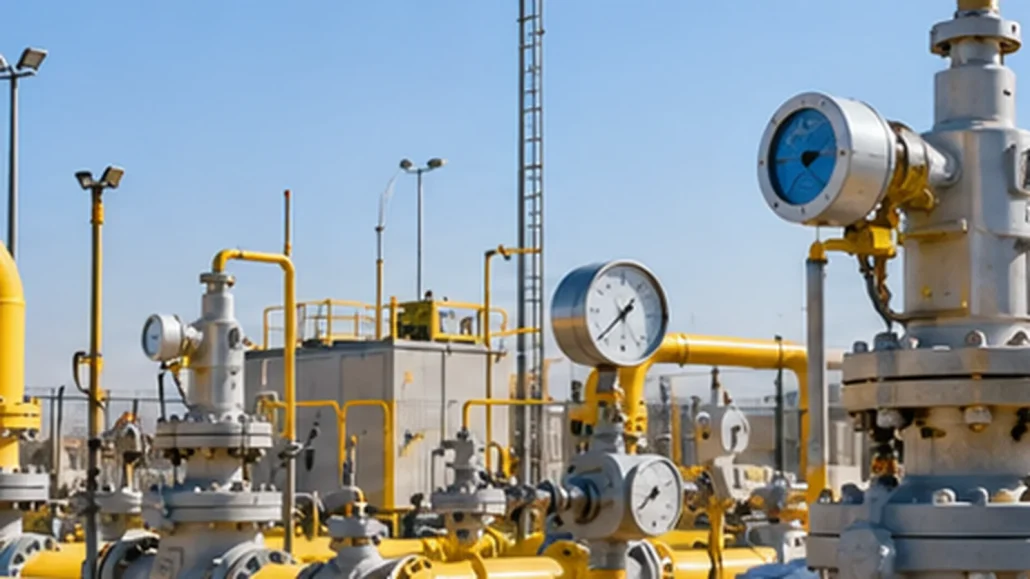
A gas pressure regulator controls downstream pressure; it is not a meter. Industrial flow and pressure instruments at gas facilities also serve different applications from residential diaphragm meters in sizes such as G1.6, G2.5, G4 and G6. Equipment selection should follow the intended use, applicable standards, operating range and installation rules.

What should the industry monitor next?
The next meaningful milestone would be a published implementing decision for a particular energy carrier. Its full text should be checked for customer scope, any tariff or quota schedule, effective date, transitional provisions, appeal process and metering-system implications. Until such documentation exists, neither a price increase nor a smart-meter procurement program should be attributed to this resolution.
Conclusion
The 29 October 2026 report confirms that a special working group has been empowered to review natural gas and petroleum-product pricing and quotas. It does not announce new rates. For the gas industry, the practical lesson is the value of reliable metering, auditable data and a clear distinction between policy authority and implementation. Smart meters and AMR can support data collection, but they are neither mandated by this announcement nor substitutes for testing, regulation and oversight.
Sources
1. Shana, “Authority to review fuel prices and quotas assigned to special energy working group,” 29 October 2026, 13:05 Iran time: https://www.shana.ir/news/3149274/
2. International Organization of Legal Metrology, OIML R 137, Gas meters: https://www.oiml.org/en/publications/recommendations/137/
3. International Organization for Standardization, ISO 50015:2014, Measurement and verification of energy performance: https://www.iso.org/standard/60043.html