
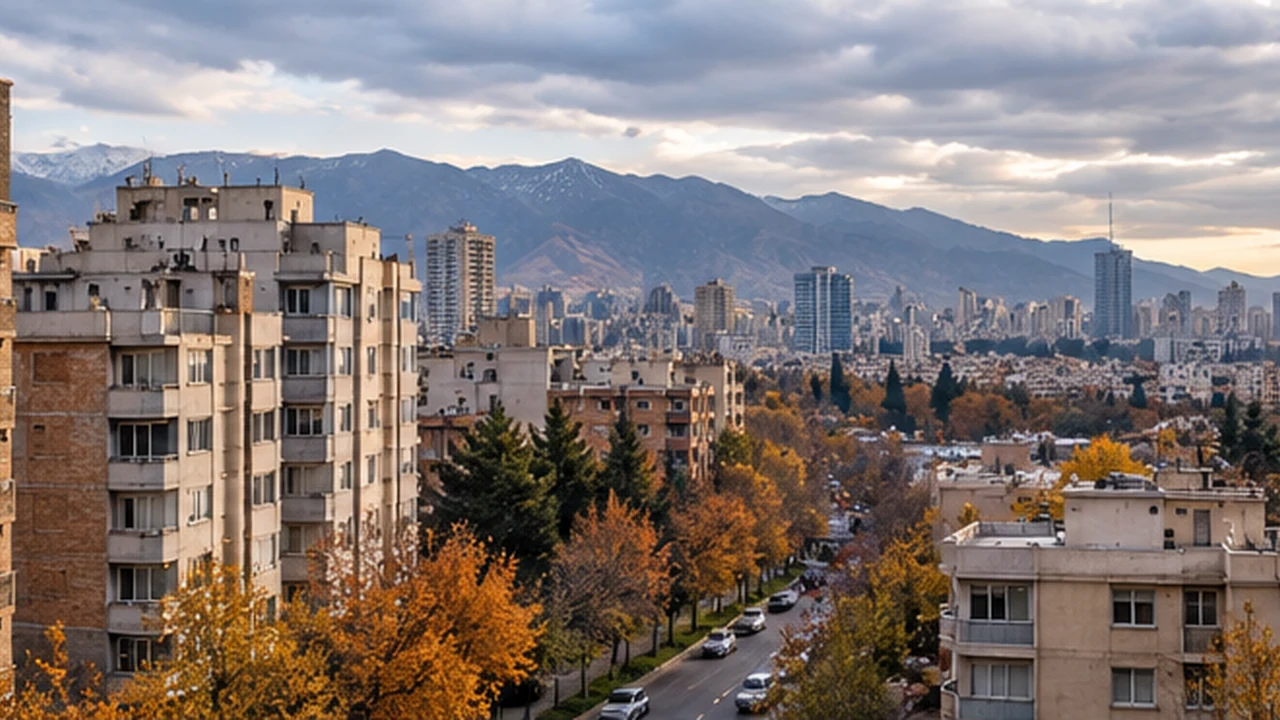
A five-day jump in gas demand: what the official report says
Iran’s household and commercial gas demand can change quickly as colder weather arrives. On 29 October 2026 (7 Aban 1405), the official Shana news agency quoted Saeed Tavakkoli, managing director of the National Iranian Gas Company (NIGC), as reporting an increase of approximately 70 million cubic metres, equivalent to 30%, in consumption across households, commercial users and small industries over the preceding five days. The figures describe the change reported at that point in time. They are not an annual growth rate, nor should 70 million cubic metres be presented as the cumulative volume consumed during those five days.
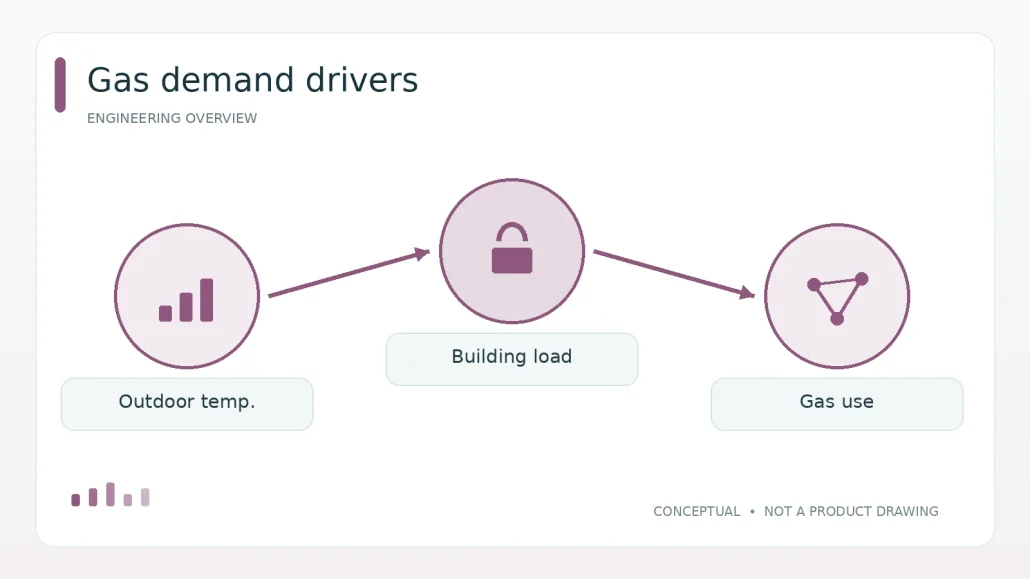
Tavakkoli linked the increase to heating demand as temperatures declined and highlighted the company’s campaign encouraging indoor settings around 20°C. He also stressed the importance of demand management for winter network reliability. The official announcement and our technical interpretation of metering are distinct: the news report does not announce a new smart-meter procurement programme or provide independently verified savings from such equipment.
What does the reported 30% increase actually measure?
A reliable comparison requires a clear baseline, observation period and measurement boundary. Shana reports an increase of roughly 70 million cubic metres, described as 30%, over five days, but does not publish daily time series, provincial breakdowns, peak-hour profiles or raw meter readings. Consequently, the article does not calculate daily growth rates, allocate the change among provinces or claim that any specific customer group caused the increase.
One degree cooler: a conditional demand-reduction estimate
According to the NIGC managing director, if households, commercial customers and small industries all lower indoor temperatures by one degree during peak demand, daily gas use could fall by around 25 million cubic metres; the estimate for two degrees is about 50 million cubic metres per day. These are conditional system-wide estimates, not measured savings already achieved. Actual outcomes depend on outdoor weather, insulation, heating equipment and participation.
| Indicator | Officially reported figure | How to interpret it |
|---|---|---|
| Five-day change | Approximately 70 million m³ | Reported demand increase, not five-day total use |
| Relative change | About 30% | Reported ratio; raw data not published |
| One-degree reduction at peak | About 25 million m³/day | Conditional estimate, not verified savings |
| Two-degree reduction at peak | About 50 million m³/day | Conditional estimate, not recorded performance |
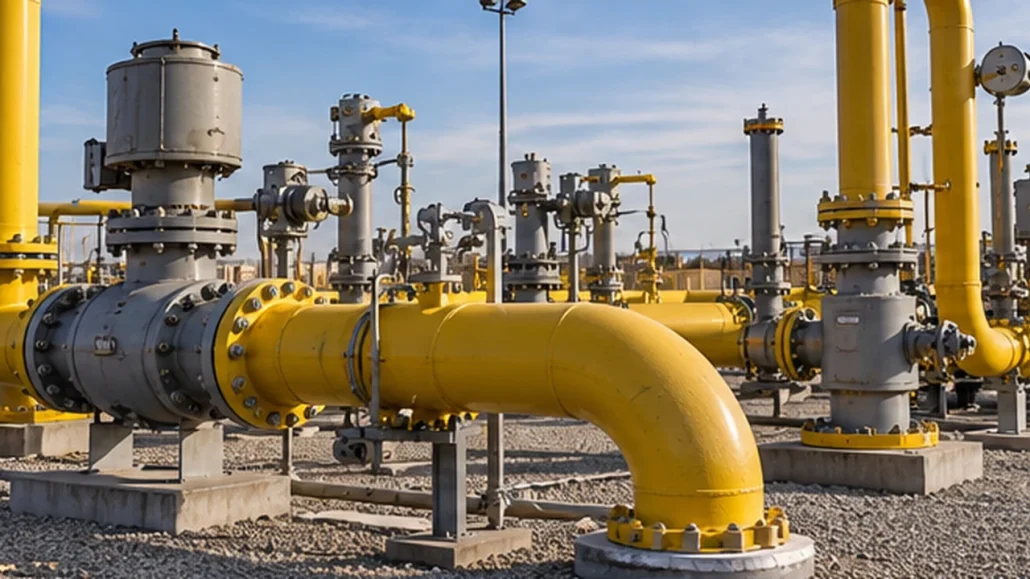
Why is the 20°C campaign significant?
NIGC describes 18–21°C as a typical indoor comfort range and promotes 20°C as the campaign target. This is general guidance rather than a universal medical or building requirement. The needs of infants, older adults and other vulnerable occupants, as well as ventilation and building conditions, take precedence. Unsafe reductions in heating or ventilation should not be treated as conservation measures.
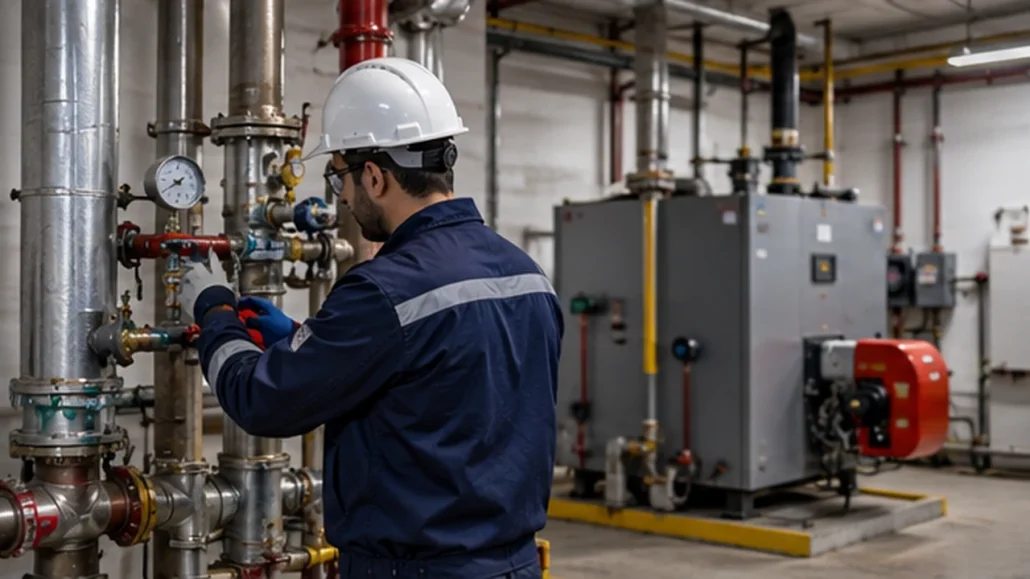
Building efficiency involves more than thermostat settings. Draught-proofing, insulation, properly commissioned burners and maintenance of boiler rooms by qualified professionals can reduce avoidable demand. The same Shana report states that more than 132,000 boiler rooms have been optimized in Iran and cites a possible consumption reduction of about 13–25% from such measures. That range should not be assumed for every building or attributed to a particular installation without project-level evidence.
Where can smart gas meters contribute?
The primary purpose of any residential gas meter, whether mechanical or electronic, is measurement. A smart gas meter or an upgraded gas meter with appropriate communications hardware and software may transmit timestamped readings, supported event records and connectivity status to an automatic meter reading (AMR) platform. These records can help compare similar periods and identify unusual patterns. A meter does not, by itself, save gas.
To assess a temperature-management programme, operators should establish a baseline and a post-intervention period, then account for outdoor temperature, holidays, occupancy and changes in building use. Without such adjustments, a lower meter reading cannot confidently be attributed to the 20°C campaign. A credible smart gas system must expose missing records, clock errors, communication interruptions and measurement uncertainty.
Remote reading is not the same as heating control
AMR mainly retrieves and transfers metering data. Indoor temperature control belongs to approved thermostats and heating equipment. Integrating these functions may improve analysis where technically appropriate and authorized, but neither functionality should be attributed to all smart gas meters—or to any particular Ekbatan Gas Control model—without product documentation and testing.
Measurement integrity during demand peaks
Comparisons should use consistent time windows, clearly defined volume units and known measurement conditions. Clock drift, estimated billing readings, communication outages and mixing operating-condition with reference-condition volumes can distort analysis. OIML R 137 provides a technical metrological framework for gas meters; citing it does not establish certification or performance of any named product.
A defensible pilot should test data completeness, meter accuracy, secure communications, recovery after outages and the auditability of calculations before a large-scale rollout. For Iranian manufacturers, including Ekbatan Gas Control, the practical opportunity is trustworthy measurement and data infrastructure—not promising a fixed savings percentage without field trials.
Conclusion: move from demand alerts to measurable action
The 29 October report illustrates how quickly natural-gas demand can rise as winter approaches. A robust response combines safe heating guidance, building efficiency, network resilience and credible measurement of outcomes. The 30% and 70-million-cubic-metre figures are reported observations; the 25- and 50-million-cubic-metre figures are conditional estimates of possible daily reductions, not realized savings.
Sources and editorial method
Shana, 29 October 2026, 11:36 Iran time — NIGC managing director interview — official source for demand and temperature figures.
OIML R 137 — Gas meters — technical reference on gas-meter metrology, not a source of Iranian consumption statistics.