
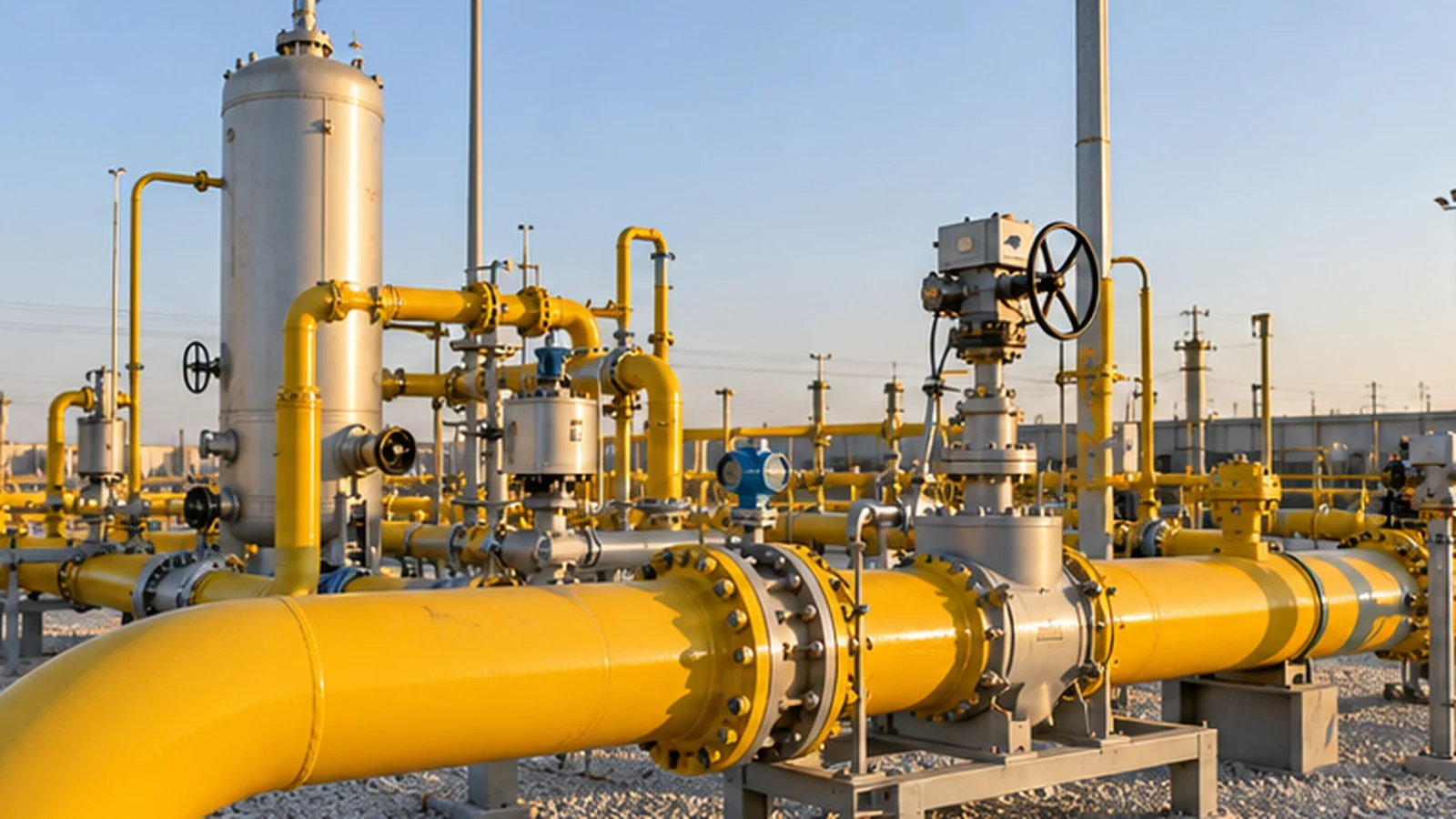
Why does a gas distribution balance matter?
A reading at a distribution zone inlet will not necessarily equal the sum of customer readings taken at another time. Different timestamps, reference conditions, changing gas inventory in the pipes and metering quality can all produce discrepancies. Treating every discrepancy as unauthorized consumption would be technically unsound and potentially unfair.
In an interview published by Shana on 21 October 2026 (29 Mehr 1405), an official of the National Iranian Gas Company described comparing network inflow with registered customer consumption as one potential application of network digitalization. This article is an educational analysis, not an announcement of a new deployment or procurement.
Define the balance boundary before calculating
A gas balance is a quantitative reconciliation for a defined physical boundary and a consistent time interval. A preliminary residual is the measured inlet volume minus registered outlet volumes. Operational calculations also need to account for transfers to other zones, authorized operating uses and the change in gas inventory within the pipes, commonly called linepack.
The zone boundary must be explicit on the network map: which stations supply the area, which outlets transfer gas elsewhere and which customer meters are included. Accurate readings alone cannot compensate for an undefined boundary.
Essential balance components
| Component | Reference m³ in hypothetical example |
|---|---|
| Zone inlet | 100,000 |
| Registered customer use | 96,000 |
| Inter-zone transfer | 1,000 |
| Linepack increase | 500 |
| Balance residual | 2,500 |
A worked example with hypothetical numbers
Assume a one-day period with 100,000 reference cubic metres entering a zone, 96,000 registered by customers, 1,000 transferred to an adjacent zone and an estimated 500 reference cubic metres added to linepack. Assuming other authorized uses are zero, the balance residual is 2,500 reference cubic metres: 100,000 − 96,000 − 1,000 − 500٫
That hypothetical residual equals 2.5% of inlet volume. It is not proof of leakage, theft or even a physical loss. Before drawing conclusions, analysts must verify the data, combined uncertainty, timing and all model assumptions.
What creates an apparent imbalance?
One frequent error is to compare volume at operating pressure and temperature with volume converted to reference conditions. Both readings may be correct on their own terms, yet incompatible in a balance. Units, reference temperature and pressure, and conversion methods must therefore be aligned before aggregation.
Late readings, missing packets, estimated bills, incorrect device clocks, meter replacement and changes in the customer register also matter. Physical leakage, authorized but unrecorded use and possible interference are only some of the hypotheses to consider after basic data-quality checks.

What smart meters and AMR can contribute
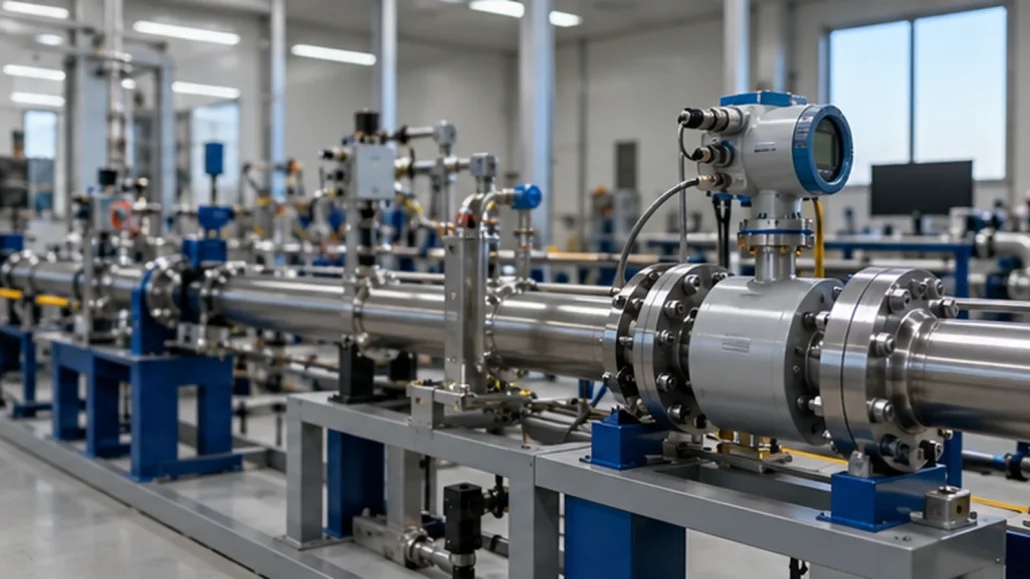
A smart gas meter and an automated meter reading (AMR) system may capture cumulative consumption, timestamps, communication status and supported device events more frequently than manual reading. An upgraded gas meter may provide some of these functions through an added communications module. Actual capabilities depend on the approved design of each device.
Such data can improve reading alignment, anomaly screening and trend comparison. However, a smart meter does not pinpoint an underground leak, and allegations of tampering require independent, authorized evidence. Access to consumption data should be proportionate, controlled and auditable.
An anomaly alert is not evidence of wrongdoing
Measurement uncertainty and fair decisions
A network balance combines several measured and estimated quantities and therefore has uncertainty of its own. JCGM 100 provides general principles for expressing measurement uncertainty; OIML R 137 covers metrological requirements for gas meters. Neither document is, by itself, a gas-theft detection procedure.
When a calculated residual is compatible with the uncertainty and expected variation, describing it as a confirmed loss is not justified. Persistent, material differences should trigger checks of calibration, configuration, clocks, data completeness and network boundaries before any lawful field investigation.
From analytics to safe field verification
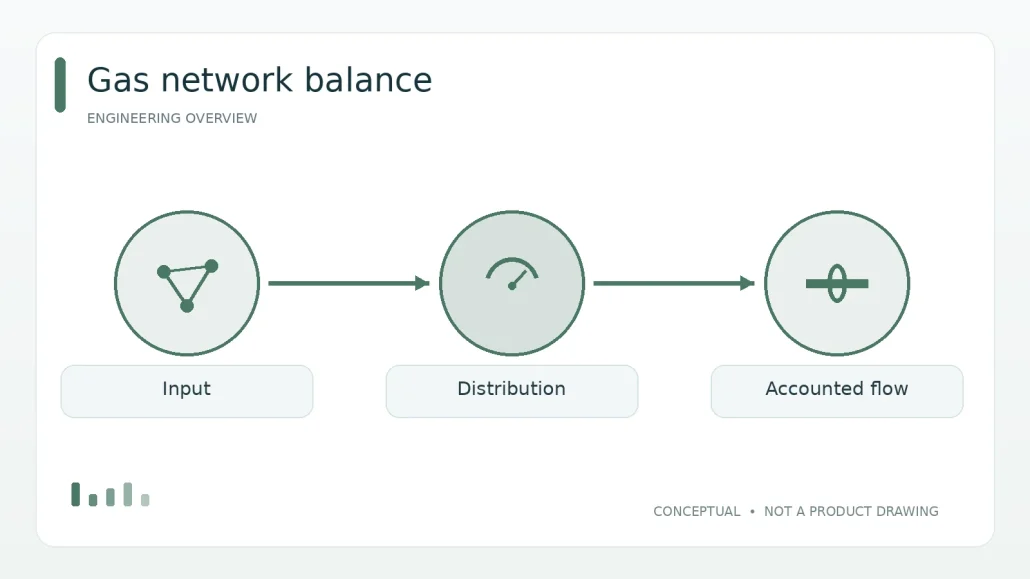
A defensible workflow begins with automated completeness checks, followed by unit normalization, timestamp alignment, balance calculation, uncertainty assessment and prioritization of zones for inspection. Field verification belongs to qualified, authorized personnel. No customer should be accused solely because of a statistical anomaly.
If gas odor or other leakage indicators are observed, safety takes precedence over analytics. People should avoid manipulating equipment and follow local gas-emergency procedures. AMR data is not a substitute for dedicated leak-detection equipment or emergency response.
Implications for Iranian meter manufacturers
For residential gas meter manufacturers such as Ekbatan Gas Control, relevant development topics include auditable event logs, clock synchronization, handling of communication outages, persistent cumulative readings and interoperable data exchange with authorized utility systems. Any claimed function must be supported by product documentation, testing and applicable security and metrology requirements; this article does not attribute these functions to a specific Ekbatan model.
Ultimately, the value of a smart gas system is not the volume of transmitted messages alone. It lies in dependable records, reproducible calculations and fewer incorrect operational decisions. Better data combined with safe inspection can improve network management without equating every residual to theft or leakage.
Sources and methodology
شانا | گفتوگو با مدیر هماهنگی امور گازرسانی شرکت ملی گاز ایران، 29 مهر 1405 — Authoritative reference; the numerical example is hypothetical and does not describe any actual network or product.
OIML R 137 — Gas meters (2012 edition, with 2014 amendment) — Authoritative reference; the numerical example is hypothetical and does not describe any actual network or product.
BIPM/JCGM 100:2008 — Guide to the Expression of Uncertainty in Measurement — Authoritative reference; the numerical example is hypothetical and does not describe any actual network or product.