
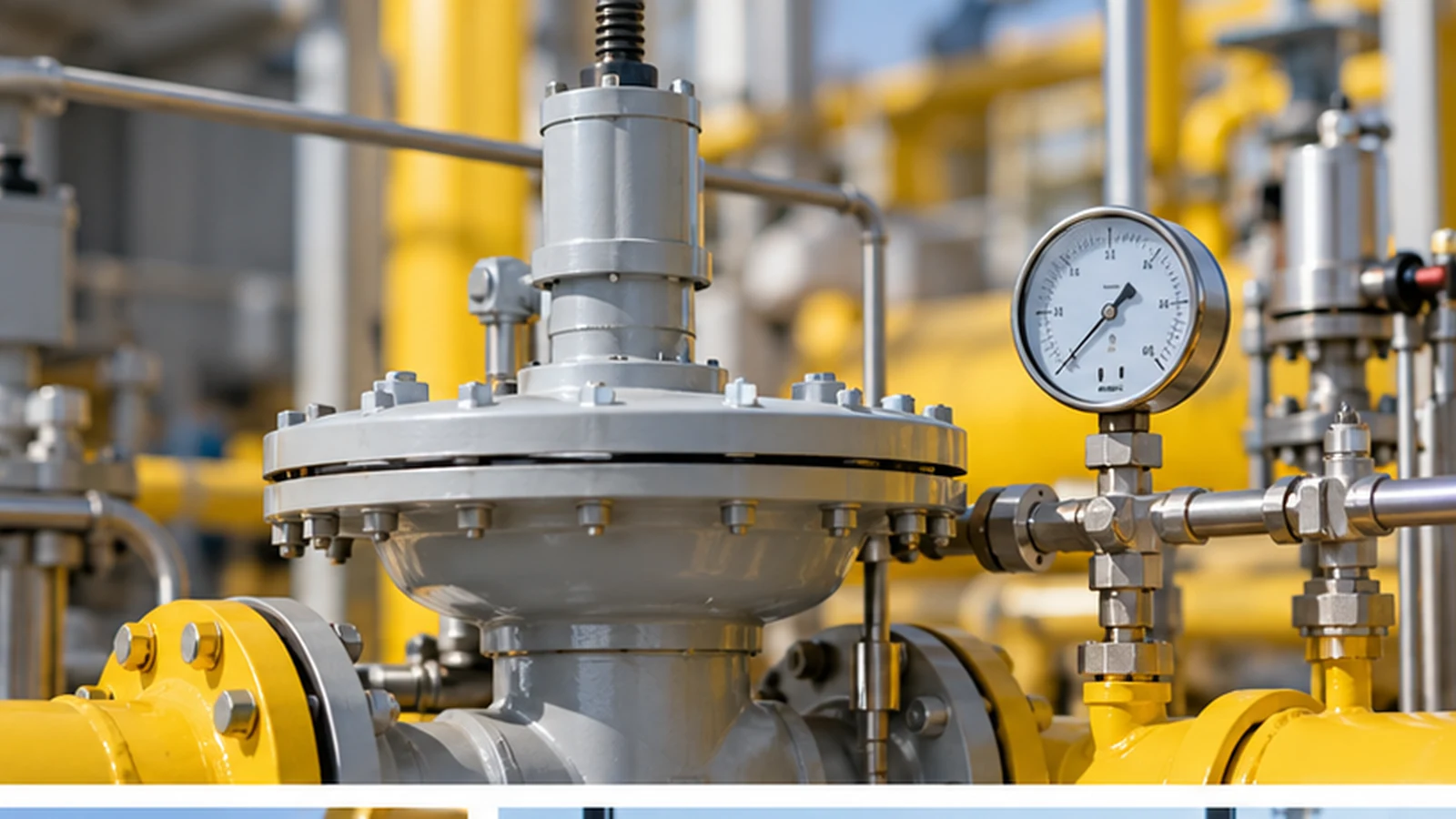
A natural gas regulator is more than a pressure-reducing fitting. Its job is to maintain downstream pressure within the specified operating envelope as inlet pressure and gas demand change. Poor selection can result in unstable delivery pressure, inadequate performance at peak load and avoidable safety risks. This practical guide explains seven selection criteria for gas distribution and industrial applications without attributing unverified specifications to any Ekbatan Gas Control product.
This is an educational engineering article, not an announcement of a new product or procurement project. It is intended to help technical buyers, utility engineers and authorized installers ask the right questions of manufacturers. Final selection, installation, commissioning and adjustment must be performed by qualified personnel under applicable local utility rules and mandatory standards.
What Does a Gas Pressure Regulator Actually Do?
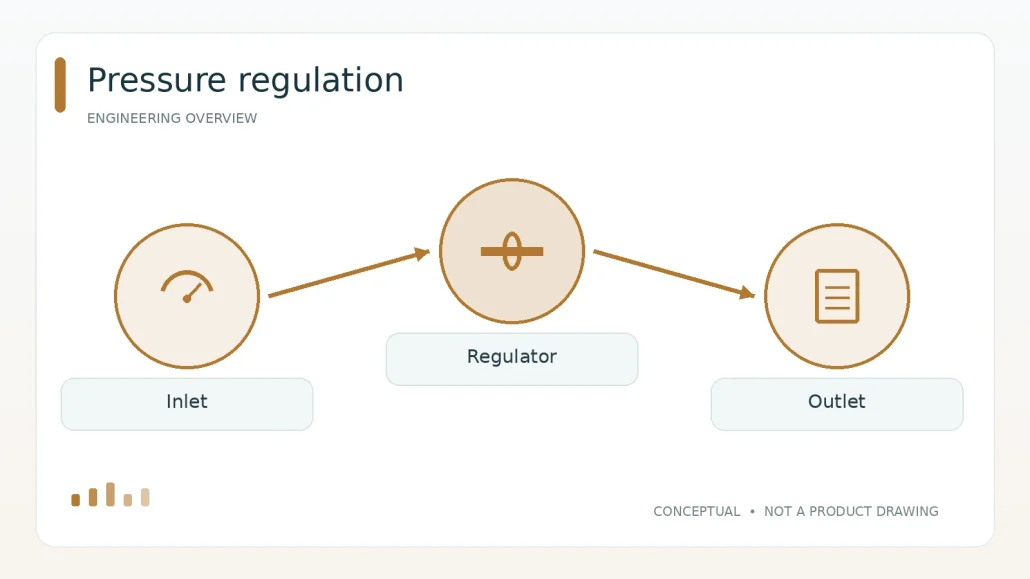
A regulator senses and responds to operating conditions by varying the opening through which gas flows. In a typical direct-operated design, a spring, diaphragm and gas-pressure forces interact; pilot-operated arrangements use a supplementary control circuit and may respond differently. Actual construction and behavior must always be verified in the manufacturer's documentation for the specific model.
Pressure regulation and gas metering are distinct functions. A residential gas meter measures gas volume or quantity, while a regulator controls pressure. A smart gas meter or upgraded gas meter may communicate readings through an AMR system, but connectivity alone does not provide pressure control or a certified safety shut-off function.
Seven Criteria for Selecting a Gas Regulator
1. Inlet Pressure Envelope and Required Outlet Pressure
Start by documenting the minimum and maximum inlet pressures at the installation, the required downstream operating pressure and relevant transients. A regulator that performs well at nominal inlet pressure may fail to deliver adequate capacity when the supply pressure falls during peak demand. Specify whether each value is gauge or absolute pressure, and verify the manufacturer's permissible setpoint range.
2. Flow Capacity at the Worst Operating Point
A catalog capacity figure is meaningful only alongside its test conditions. Deliverable flow depends on inlet and outlet pressures, gas properties, pressure drop, regulator characteristics and the installation. Adding up connected appliance ratings without considering load coincidence and operating scenarios can also distort the required capacity.
Consider a purely illustrative facility using 10 standard cubic metres per hour under normal load and 40 under peak load. Both points, particularly the peak at minimum available inlet pressure, must be checked against a validated capacity curve. These figures are not a recommended building size or an Ekbatan product specification.
3. Pressure Stability, Droop and Lock-Up
As flow increases, outlet pressure can move away from the setpoint; this is commonly assessed through performance curves and concepts such as droop. At near-zero flow, lock-up behavior and the maximum stabilized downstream pressure also matter. Comparing two regulators solely by their nominal outlet pressure ignores important aspects of accuracy and operating safety.
4. Turndown and Transient Response
An installation may operate for long periods at very low load before demand changes abruptly. Engineers should review the usable minimum-to-maximum flow range, response to step changes and possible oscillation. Claims about turndown or dynamic stability should be supported by appropriate test data, not inferred from nominal pipe size.
5. Protection Against Abnormal Pressure
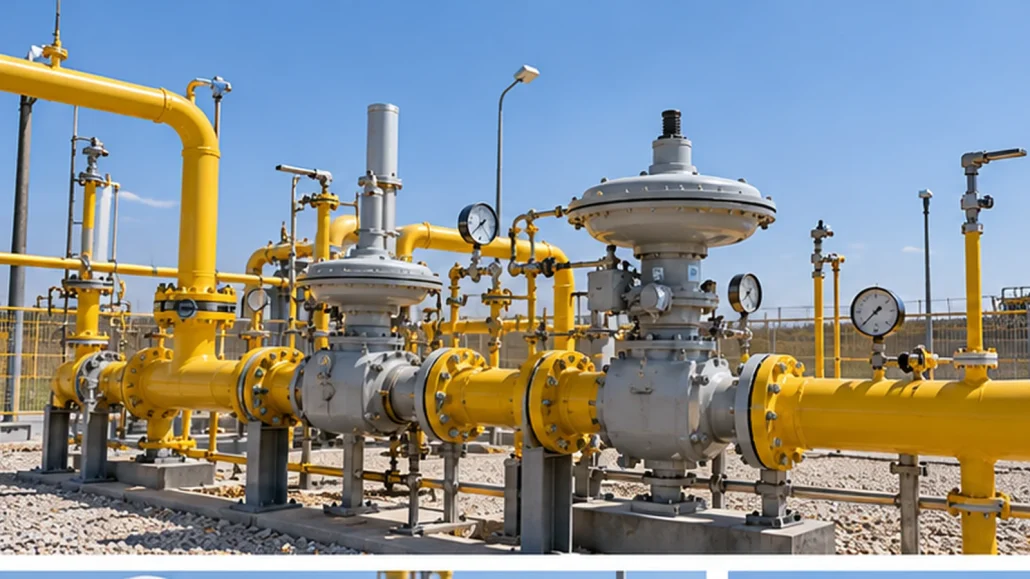
A pressure regulator is not necessarily a complete overpressure-protection system. Depending on the risk assessment and governing code, the installation may require a monitor regulator, an independent safety shut-off device (SSD or slam-shut), pressure relief or another protective arrangement. A shut-off device interrupts gas flow at defined conditions; a relief device provides a controlled discharge path. They are not interchangeable, and any venting arrangement requires professional engineering and approval.
6. Environmental Conditions and Gas Compatibility
Operating temperature, moisture, particulates, potential freezing, corrosion and seal compatibility all affect reliability. Contaminated filters and unsuitable materials may compromise the assembly. Do not assume that a regulator certified for one fuel-gas composition is automatically suitable for corrosive service or different gas mixtures without manufacturer confirmation.
7. Testability, Maintenance and Traceability
Consider access for inspection, functional and leak testing, serial-number traceability, maintenance instructions, calibrated test equipment and verified approvals. Purchase price alone does not reflect maintenance cost, service interruptions, spare parts and expected operating life. These are important procurement criteria even when two products have similar nominal ratings.
Regulator, Safety Shut-Off and Gas Meter: Separate Roles
A service connection or pressure-control station may contain pressure-control, protective and measurement devices, each with a distinct purpose. The regulator controls downstream pressure, safety equipment responds to defined hazards and the gas meter records consumption. When a smart meter sends data to a smart gas system, those readings can support consumption analysis but cannot establish the mechanical health of the regulator by themselves.

Apply Standards Only Within Their Stated Scope
EN 12279 addresses functional requirements for pressure-regulating installations on service lines. Within its stated scope, it covers upstream operating pressure up to 16 bar and design flow up to 200 normal cubic metres per hour. EN 334:2019+A1:2024 covers specified regulators for gas networks and commercial or industrial installations with inlet pressures up to 100 bar; it is not a blanket product standard for every small domestic service regulator.
ISO 23555-1:2022 provides general requirements for pressure safety and control devices operating above 5 bar and up to 100 bar, while expressly excluding certain smaller service-line devices. EN 14382:2019+A1:2024 addresses industrial gas safety shut-off devices. Citing these standards does not certify any particular product. Iranian national requirements, utility specifications and actual model approvals must be checked separately.
A Procurement and Commissioning Checklist
The technical file should establish inlet-pressure range, downstream design pressure, minimum and maximum flow, validated capacity curves, performance and lock-up characteristics, independent protective measures, connection type, gas compatibility, installation constraints, test documentation and maintenance arrangements. If these inputs are missing, selecting a regulator solely by connection diameter or external appearance is not technically justified.
How Regulators Fit into Smart Gas Operations
Smart gas meters and remote reading systems can reveal consumption trends, demand peaks and unusual usage patterns that help network planning. Evaluating a regulator itself, however, requires relevant pressure data, operating context and suitable tests. Combining metering and maintenance information may improve decisions when data quality, access controls and cybersecurity are addressed. No quantified energy savings or safety improvement should be claimed without independent evidence.
Conclusion
Selecting a natural gas pressure regulator is an engineering decision, not a simple pipe-size match. The pressure envelope, actual flow demand, dynamic behavior, independent protection, environmental suitability, test records and local regulations must be assessed together. For Ekbatan Gas Control and other energy-equipment manufacturers, transparent and verifiable technical data provide a stronger basis for utility and customer evaluations.
Sources
EN 12279 — Gas pressure regulating installations on service lines: https://www.sis.se/en/produkter/fluid-systems-and-components-for-general-use/valves/pressure-regulators/ssen12279/
EN 334:2019+A1:2024 — Gas pressure regulators: https://standards.iteh.ai/catalog/standards/sist/78e20018-4696-4e92-9254-7ccdd14eaeee/sist-en-334-2019a1-2025
ISO 23555-1:2022 — Gas pressure safety and control devices: https://www.iso.org/standard/36895.html
EN 14382:2019+A1:2024 — Gas safety shut-off devices: https://www.evs.ee/en/evs-en-14382-2019-a1-2024-consolidated