
Ekbatan journal
Product standardization at Ekbatan Gas Control: from design to quality control
A technical report on standardizing gas industry equipment, covering design, assembly, testing and quality control, with original photographs supplied by Ekbatan Gas Control.
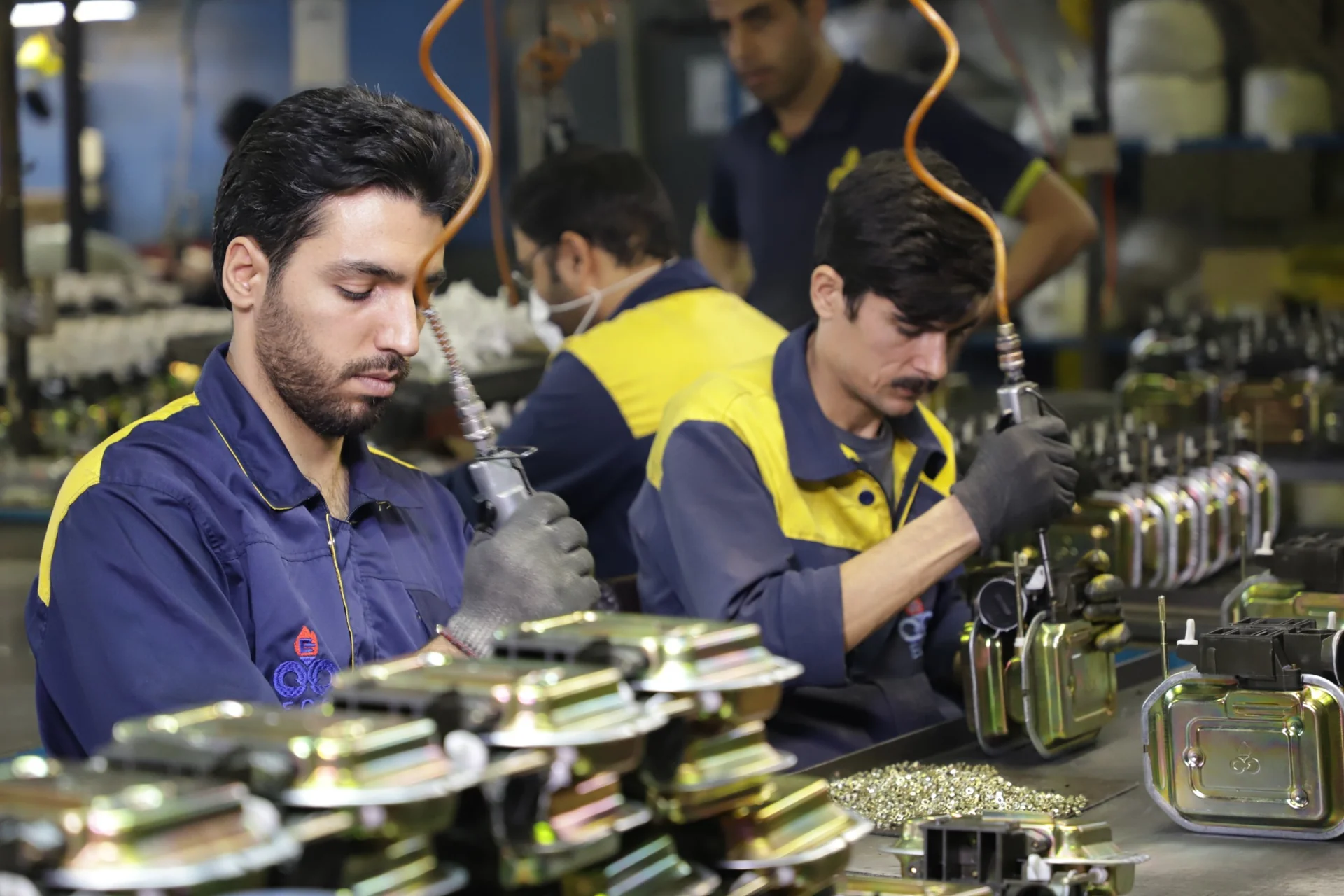
Product standardization at Ekbatan Gas Control goes beyond inspecting a product’s appearance at the end of the production line. In the gas industry, quality must begin with raw material selection and engineering design and continue through assembly, performance testing, record keeping and after-delivery service. Gas meters and other gas supply equipment directly affect measurement accuracy, network safety and consumer trust. Consistent quality therefore requires a set of defined, assessable processes.
Ekbatan Gas Control, a knowledge-based company, manufactures equipment for the gas industry. Original photographs supplied from different areas of the company show employees assembling mechanical components, working on electronic equipment and preparing meters. This technical report explains the requirements for standardizing gas measurement equipment, why each manufacturing stage matters, and how testing and technical records can be used to assess accuracy and reliability.
What exactly does standardization mean in the gas industry?
Standardization means defining and implementing specific requirements for product characteristics, production methods, testing procedures and the recording of results. Technical standards make it possible to assess product performance against clear criteria rather than subjective impressions of quality. For example, a gas meter must have a defined measurable flow range, permissible operating conditions, error limits and a method for evaluating those errors. For gas regulators, pressure control, stable performance and suitability for operating conditions are key considerations.
Standardization neither makes every product identical nor replaces research and development. Each technology, from diaphragm meters to electronic measurement systems, may have its own applicable standards and tests. The common requirement is to define technical specifications and assess whether the product meets them.
- Accurate, repeatable measurement within the defined range
- Safety, gas tightness and reliability under permissible operating conditions
- Consistent quality across production batches and traceable records
- The ability to identify and correct design and manufacturing nonconformities
Product quality begins at the design stage
When designing a gas meter, early decisions about measurement technology, nominal capacity, component materials, sealing methods and connection to the network affect its final performance. If the specifications do not match the consumer’s actual needs or operating conditions, final inspection alone cannot make up for that mismatch. Design must therefore reflect the intended application and technical and environmental constraints.
Matching meter capacity to consumption patterns
A key consideration when choosing a meter is matching its capacity to the consumption flow rate. Each meter is designed and assessed for a specific flow range. If the operating flow is continuously outside its permissible range, the recorded data cannot be expected to retain the required accuracy. The type and capacity of the equipment must match the manufacturer’s specifications, the applicable standard and network conditions.
Component selection and incoming material control
The housing, connections, diaphragm or measurement assembly, sealing components and electronic parts must be compatible with the design conditions. Incoming material and component checks may include reviewing technical documentation, dimensional conformity, visual quality and functional characteristics. The aim is to reduce the risk of a defective component compromising the complete product and to make production results more predictable over time.
Standardizing production and assembly at Ekbatan Gas Control
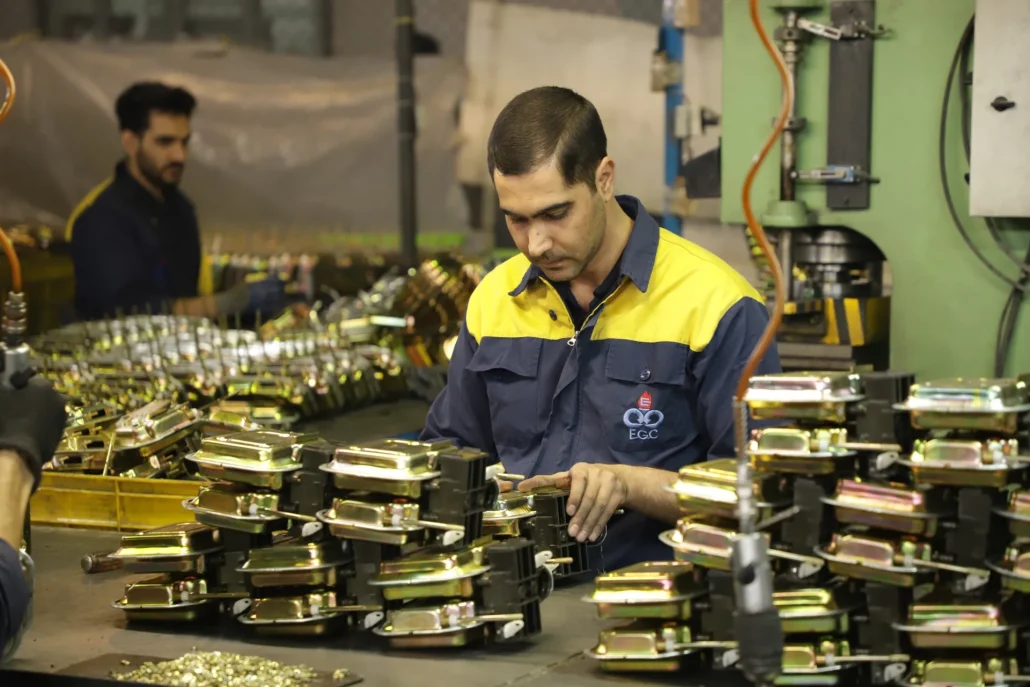
Original photographs supplied by the Ekbatan Gas Control factory show employees and equipment used in parts manufacturing and assembly. These photographs provide evidence of manufacturing activity, but a photograph cannot replace an inspection report, certificate of conformity or test record. Formal assessment of a product’s quality must rely on technical documentation and verifiable results.
In a controlled production process, assembly instructions, appropriate tools, employee training and nonconformity records complement one another. Clear, repeatable working methods reduce unintended differences between products. Recording the cause of a defect and the corrective action also allows the issue to be examined at production-process level rather than simply repaired in one device.
Mechanical component assembly
Component dimensions, connection quality, sealing condition and correct positioning of internal parts are important aspects of mechanical assembly. Installation sequence, force-applying tools and inspection methods must follow the relevant drawing and instructions. Even a suitable component may fail to deliver the desired final test result if it is installed in the wrong position or assembled incorrectly.
Electronic equipment assembly
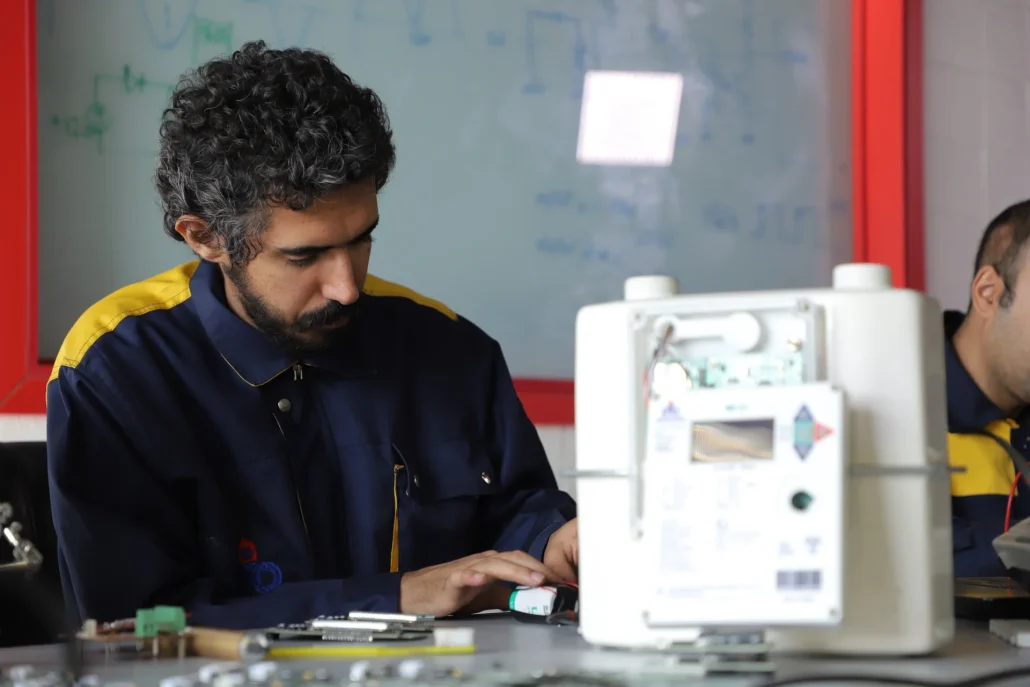
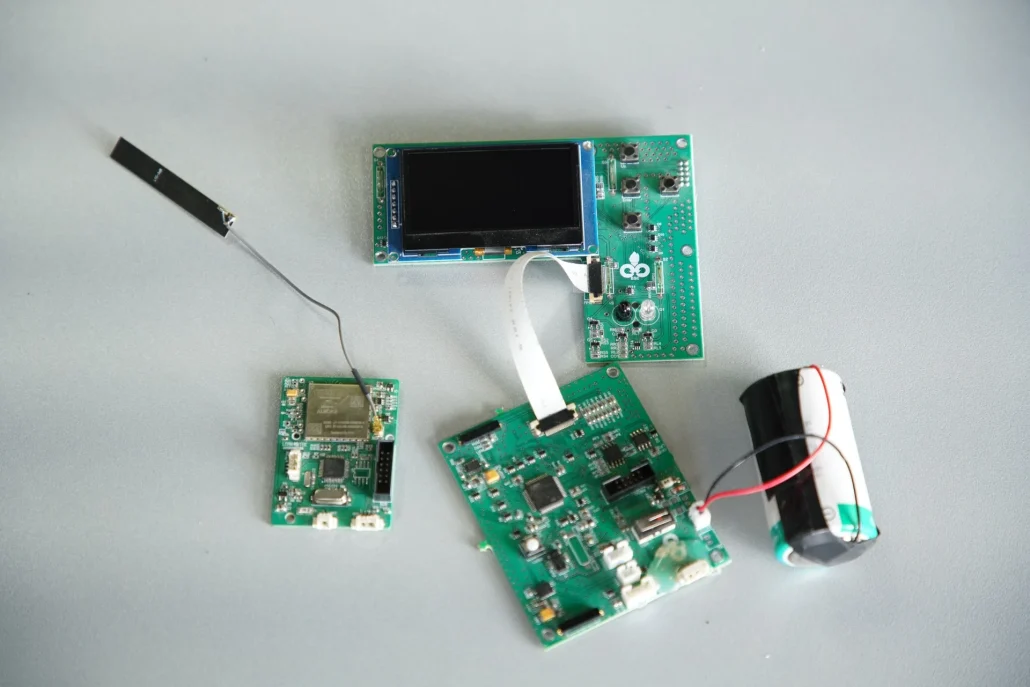
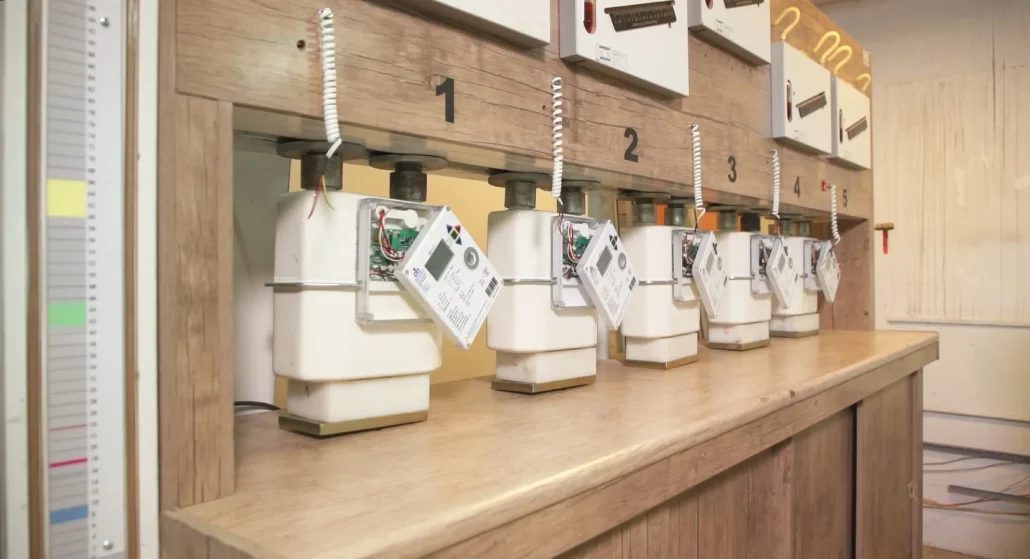
In smart meters, the electronic assembly may include processing circuitry, a display, power supply, sensors and communications components. Board connection quality, protection against environmental factors, correct display operation and data reliability are important considerations for these products. Electronic tests must reflect the design of the specific meter model, and their results must be traceable in the product’s technical file.
Technical testing: from measurement accuracy to gas tightness
In meter manufacturing, quality approval extends beyond visual inspection. Measurement equipment must be tested under specified conditions using defined methods, and the results compared with established acceptance limits. Test scope varies by meter type, so the reference standard and the actual specifications of the model under examination must always be consulted.
Measurement error testing
During accuracy testing, the meter’s recorded quantity is compared with the reference quantity of an appropriate test system. Assessment at several points within the flow range shows how measurement performance varies with flow. Permissible error limits depend on the accuracy class, standard and test conditions. No single fixed value can be applied to every gas meter without considering its model and technical reference.
Leakage and gas-tightness testing
Gas leakage is a direct safety concern. Evaluating gas tightness using defined methods and acceptance limits helps verify the integrity of the gas flow path. Equipment type, operating pressure, connection design and the relevant standard affect the test procedure. Visual inspection alone cannot replace a technical leakage test.
Assessing stability under environmental conditions
Gas equipment may be installed in environments subject to changes in temperature, humidity and mechanical stress. Assessing performance under the specified environmental conditions is therefore important. For products with electronic circuitry, suitable electromagnetic compatibility and hardware stability tests may also fall within the requirements.
Durability testing and retention of technical characteristics
Correct meter operation at delivery does not, by itself, demonstrate long-term quality. Durability test programs examine whether the expected characteristics are maintained under defined conditions. Test design and interpretation must suit the meter technology, because sampling conditions, test duration and acceptance criteria are not the same for every product.
Reference standards for gas meters and quality management
Technical and management references help manufacturers and operators express requirements in a common language. However, using a standard as a reference, a product’s conformity with it, and obtaining formal certification are different matters. Mentioning a standard in a technical report does not, by itself, mean a company or product has been certified.
| Reference | Main scope | Key consideration |
|---|---|---|
| OIML R 137-1&2:2012 | Metrological and technical requirements and tests for gas meters | Interpreted according to meter type and class |
| EN 1359:2017 | Construction, performance, safety and testing requirements for diaphragm meters within the standard’s scope | Does not apply to every meter technology |
| ISO 9001:2026 | Organizational quality management systems and process improvement | Does not replace testing or technical certification of a product model |
OIML R 137: a metrological framework for gas meters
The recommendation OIML R 137-1&2 provides a framework for the metrological and technical requirements, controls and performance tests of gas meters. Measurement range, operating conditions and error determination are important concepts in this reference. Correct application requires attention to the reference edition and the product’s scope of application.
EN 1359: specific requirements for diaphragm meters
The standard EN 1359:2017 addresses diaphragm meters within its defined scope and covers construction, performance, safety and testing. It should not be applied to meters based on other measurement technologies without examining the product’s technology and specifications.
ISO 9001: quality management at organizational level
The standard ISO 9001:2026 defines the framework for a quality management system, focusing on planning, process control, performance evaluation and continual improvement. This standard was published in September 2026. Even in an organization with a certified quality management system, each product model’s technical conformity must be established separately against the relevant requirements.
What role do product traceability and records play in quality control?
Traceability helps a manufacturer follow a product from its initial components through assembly and delivery. Serial number, production date, component specifications, test results and inspection history are examples of information that a traceability system may record. If a nonconformity is identified in a production batch, more complete information enables a more targeted investigation and process correction.
For smart products, recording the hardware version, software information and communications test results may also support better lifecycle management. Traceability is about more than archiving documents: it connects production data, quality information and corrective action.
Employee training: part of effective standardization
Even the most precise engineering drawings and testing equipment cannot deliver reliable results without trained personnel. Production, assembly, repair and quality-control employees need to understand the instructions relevant to their tasks and the importance of recording results correctly. Targeted training can reduce errors caused by incorrect process execution and help technical staff share experience.
The photographs supplied by Ekbatan Gas Control show several technical employees in different production environments. This range of activity illustrates that manufacturing gas equipment involves multiple stages and requires coordination between departments. Assessing employees’ actual training and competence, however, requires internal records and formal documentation.
Smart meter standardization: more than a digital display
A smart meter is more than a digital display or the ability to transmit information. A smart system must first measure reliably, then provide data appropriately to communications and software infrastructure. If the underlying measurement is incorrect, even the most advanced consumption-analysis software cannot guarantee the accuracy of that data.
Quality control for such equipment may include metrological tests, electronic circuit and power-supply assessment, communications performance checks and information-security requirements. The precise test method must follow the product design and applicable standards rather than a single template for all models.
Why standardization matters to gas companies and consumers
For gas companies, accurate, stable data supports consumption management and the investigation of measurement discrepancies. For consumers, accurate gas volume readings are an important basis for trust in billing and understanding consumption patterns. Standardizing measurement equipment therefore has economic and managerial implications as well as technical importance.
Accurate measurement must, however, be distinguished from an actual reduction in consumption. A compliant meter does not itself use less gas; it enables consumption to be measured more reliably. Reducing consumption requires measures such as optimizing heating equipment, managing temperature and improving operating practices. Accurate measurement provides the basis for evaluating the results of those measures.
From final inspection to continual quality improvement
Preventive quality management aims to do more than find defective products at the end of the line. Recording nonconformities, identifying root causes and defining corrective action help reduce recurrence. This cycle is effective when design, procurement, production, testing and customer-feedback teams communicate with one another.
For example, if an assembly defect appears in several devices, repairing those devices alone may be insufficient. Reviewing the instructions, tool condition, component quality and inspection method can reveal why the problem arose. The analysis should lead to a documented process correction and an assessment of the action’s effectiveness.
Conclusion: consistent quality is the result of a connected chain
Product standardization at Ekbatan Gas Control should be understood within the technical requirements of the gas equipment industry, where measurement accuracy, safety and reliability are fundamental. Sound design, suitable components, controlled assembly, testing in line with standards, record keeping and employee training are complementary parts of a quality system.
The development of smart meters has also increased the need to address metrology and data quality together. A reliable product is not the result of a single test or label, but of a measurable, improvable process throughout its lifecycle. Original photographs of Ekbatan’s production environment provide a tangible context for introducing this chain. Formal assessment of each product’s conformity still requires valid test documentation and certificates for that product.