
What is cyclic volume, and why does it matter for a G4 gas meter?
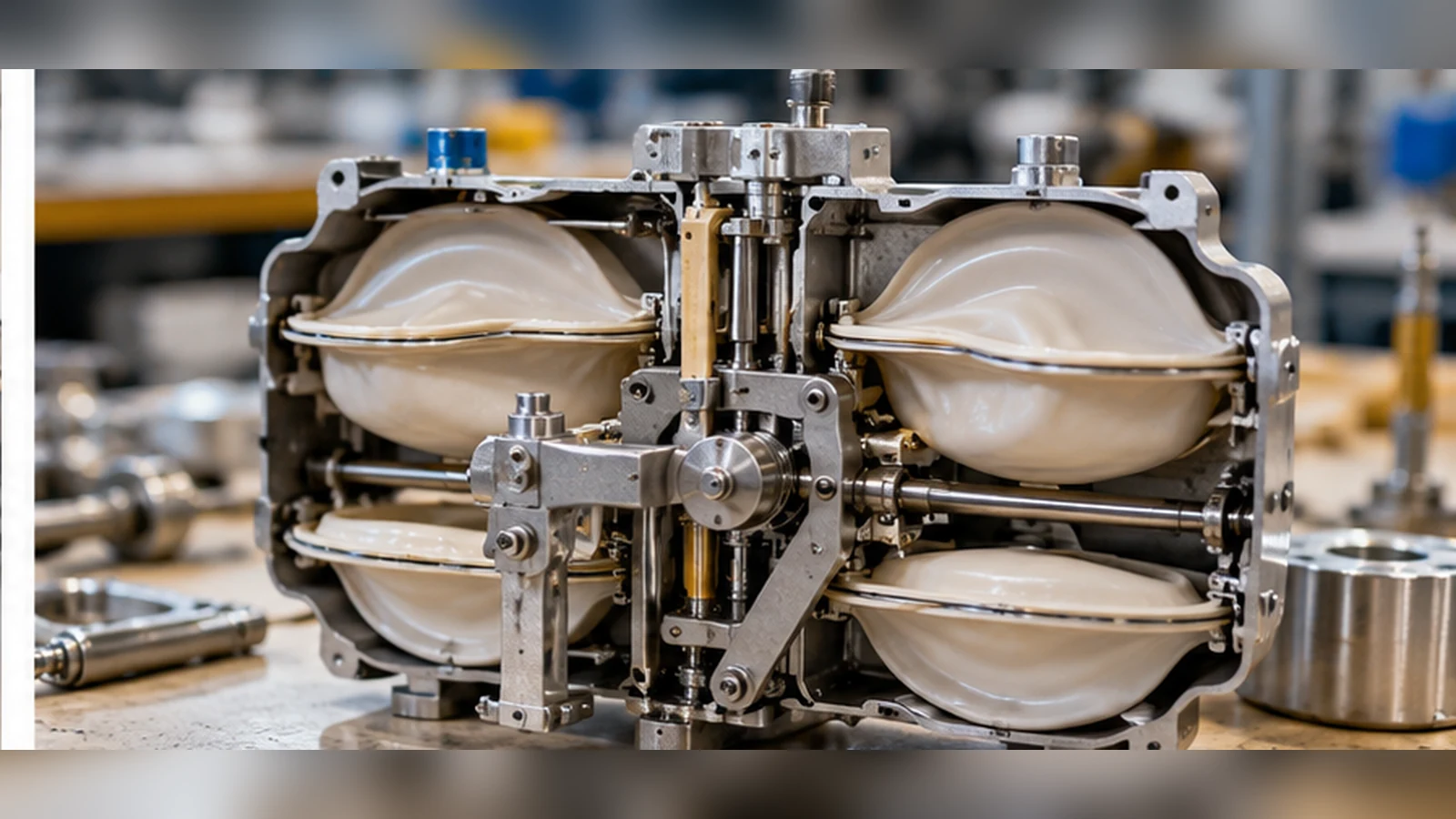
A specification such as “G4 diaphragm gas meter, 2-litre cyclic volume” combines two different design attributes. Cyclic volume is the quantity of gas displaced during one complete operating cycle of the positive-displacement measuring mechanism. In a diaphragm meter, it relates to the measuring chambers and the movement of the diaphragms. It is not a storage capacity, a billing-period consumption total or the nominal flow rating of a distribution network.
A buyer cannot rank two G4 meters on cyclic volume alone. Flow range, measurement error, pressure loss, allowable operating pressure, environmental limits, durability and model-specific test evidence all matter. This guide separates those concepts for utilities, procurement teams, quality engineers and gas-meter manufacturers.
Cyclic volume versus Qmin, Qmax and the G4 designation
What does G4 identify?
G4 is a meter size designation; it does not mean a four-litre cyclic volume. Published specifications for the G4 diaphragm models examined here list a maximum flow rate, Qmax, of 6 m³/h and a minimum flow rate, Qmin, of 0.04 m³/h. These are the figures for the cited product examples, not an unverified claim about every meter carrying a G4 marking. Always check the actual model nameplate and approved datasheet.
What do the flow-rate limits mean?
Qmin is the lower boundary and Qmax the upper boundary of the specified measurement range in which applicable metrological requirements must be met. The transitional flow rate, Qt, separates zones with different maximum permissible errors. Starting flow, Qstart, is not interchangeable with Qmin: the mechanism beginning to move does not prove accuracy at that very low flow.
| Parameter | Example G4, 1.2 L cyclic volume | Example G4, 2.0 L cyclic volume |
|---|---|---|
| Meter size | G4 | G4 |
| Published Qmax | 6 m³/h | 6 m³/h |
| Published Qmin | 0.04 m³/h | 0.04 m³/h |
| Nominal cyclic volume | 1.2 dm³ | 2٫0 dm³ |
| Example source | Natek Enerji | AEM GN G4T/G4TC and GMT BK-G4 |
Comparing 1.2-litre and 2-litre G4 designs
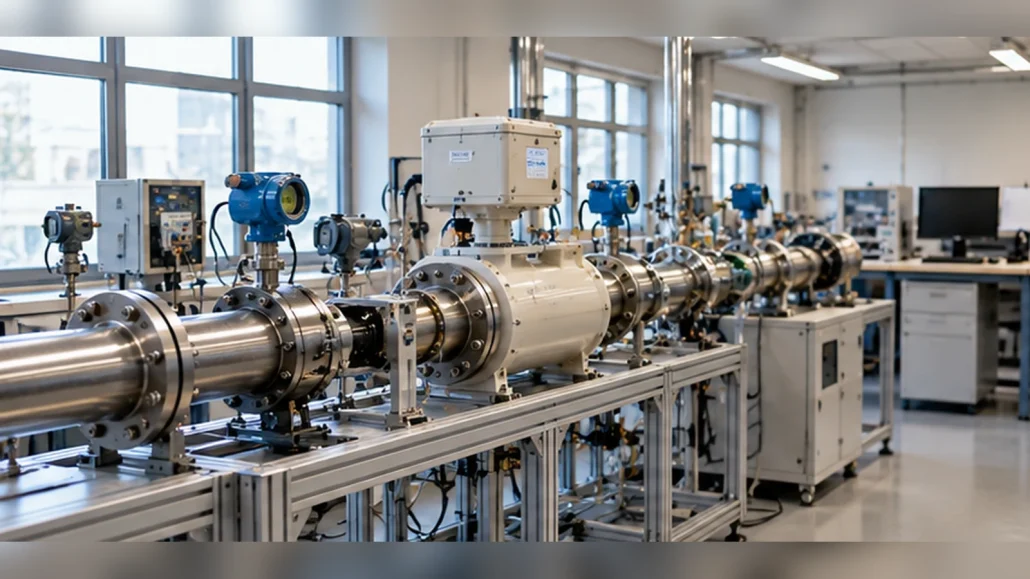
Different manufacturers can offer the same G4 size and similar rated flow limits while using different cyclic volumes. Natek Enerji publishes 1.2 dm³ for its AG4 model, with a 0.04–6 m³/h flow range. AEM publishes 2 dm³ for its GN G4T/G4TC, also with a 0.04–6 m³/h range. GMT lists 2.0 litres and the same flow range for its BK-G4 family. These are specific published product examples rather than a general performance ranking.
The examples establish that the G4 designation and cyclic volume are independent specifications. They do not establish which design is more accurate, durable, quieter or less restrictive. Such conclusions require traceable, like-for-like tests conducted under comparable conditions.
Illustrative calculation of cycles at a constant flow
In a simplified model where one cycle corresponds exactly to the stated nominal cyclic volume, the number of cycles per hour equals hourly throughput divided by volume per cycle. At 6 m³/h, or 6,000 litres per hour, a 1.2-litre cycle yields 5,000 theoretical cycles per hour; a 2-litre cycle yields 3,000. This is a mathematical illustration, not a measurement of the speed of every internal component, wear rate or service life.
At 4 m³/h, the same simplified calculation produces approximately 3,333 and 2,000 cycles per hour, respectively. A lower theoretical cycle count does not automatically confer superior durability: forces, friction, valve geometry, transmission design, diaphragm materials and quality control influence real performance.

Does a larger cyclic volume mean greater accuracy or durability?
No. Cyclic volume is one mechanical design variable, while accuracy must be established by testing indication error at prescribed flow points and conditions. Accuracy class, permissible-error limits, the error curve, repeatability and performance after endurance testing must be evaluated from credible documentation. EN 1359 defines and tests cyclic volume, but compliance with that single characteristic is not proof of the accuracy or lifetime of the complete meter.
Pressure loss is also a separate characteristic. Different valve layouts, flow passages and mechanical transmissions can change pressure-drop behaviour, regardless of nominal cyclic volume. Without comparative test results, a procurement decision based solely on “1٫2 L versus 2.0 L” is technically incomplete, especially for large-volume tenders.
Which standards and tests support a sound comparison?
The respective roles of EN 1359 and OIML R 137
EN 1359:2017 addresses diaphragm gas meters, including their metrological characteristics and cyclic-volume requirements. OIML R 137:2012 has a broader scope, covering gas meters based on different measurement technologies. The OIML website identifies its 2012 edition as current. Applicable national rules and type-approval documents in the destination market must also be checked.
A manufacturer catalogue is useful for preliminary screening, but purchase approval should require the exact model designation, accredited or otherwise competent laboratory test evidence, type-approval documentation, test conditions and certificate validity. Mentioning a standard in marketing material does not replace document verification.
Procurement checklist for high-volume G4 projects
First define the application, real customer flow profile, required Qmin–Qmax range, permitted pressure and installation conditions. Then request nominal cyclic volume and its tolerance, multi-point error curves, pressure-loss data, endurance evidence, tamper resistance, temperature limits and connection compatibility. Sampling rules, acceptance criteria, witnessed tests and serial-number traceability should be established before a purchase contract is awarded.
For a high-volume order, both suppliers must be assessed under equivalent test conditions. A 2-litre offer and a 1.2-litre offer should be compared on measurable functional performance and life-cycle cost, not a preference for one nominal figure. No performance or conformity claim about an Ekbatan Gas Control model can be made without that exact model’s authenticated technical documentation.
How cyclic volume relates to smart meters and remote reading
Cyclic volume belongs to the mechanical measurement mechanism of a diaphragm meter. Automated Meter Reading (AMR) and smart gas systems concern the acquisition, recording, transmission and management of consumption data. Adding a communication module to a mechanical meter does not change the geometry of its diaphragm chambers. End-to-end data quality also depends on base-meter accuracy, pulse factors or encoder interpretation, timestamps, communication integrity and exception handling.
For upgraded or smart gas meters, procurement documents should distinguish volume measured at operating conditions from volume converted to specified base conditions. Those values cannot be treated as interchangeable without a defined temperature, pressure and conversion method. Likewise, cyclic volume alone does not determine a household bill or prove energy savings.
Conclusion: choose G4 meters using evidence, not a single number
Both 1.2-litre and 2-litre cyclic volumes occur in published G4 diaphragm-meter specifications. The number is useful as a design descriptor, but it is not an independent quality grade. Sound engineering selection considers flow range, metrological performance, pressure loss, endurance, operating conditions and verifiable approvals. This approach helps utilities and manufacturers distinguish measurable facts from unsupported product claims.
Technical sources and product examples
1. OIML R 137:2012 — Gas meters, official legal-metrology reference. 2. EN 1359:2017 — Diaphragm gas meters, standard overview and technical provisions.
3. Natek Enerji AG4, 1.2 L example. 4. AEM GN G4T/G4TC datasheet and 5. GMT BK-G4, 2.0 L examples. Product figures apply only to the models named by their publishers.