
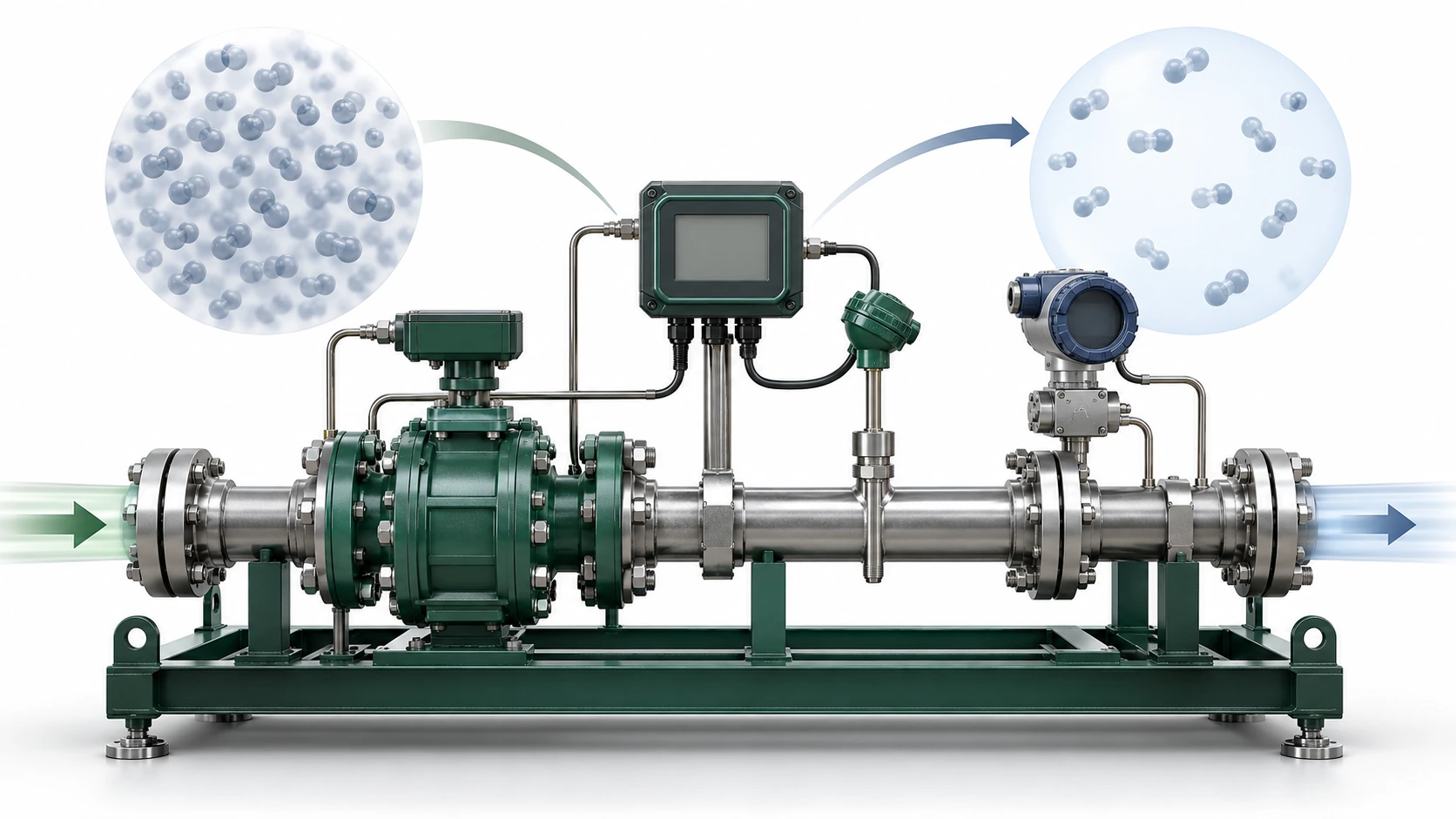
A gas meter may display one cubic metre, but that number is incomplete without its measurement conditions. Natural gas expands or contracts as temperature and pressure change. Engineers therefore distinguish volume measured at the meter from volume expressed at agreed reference conditions. The distinction matters for energy data, consumption comparisons and the design of smart gas metering systems.
This is an educational metrology guide, not an explanation of Iranian residential billing rules or a claim that a particular Ekbatan Gas Control meter has built-in volume conversion. Applicable legal base conditions, billing methods and approved instruments must be checked against current local regulations and model-specific technical documents.
What is the difference between actual and base gas volume?
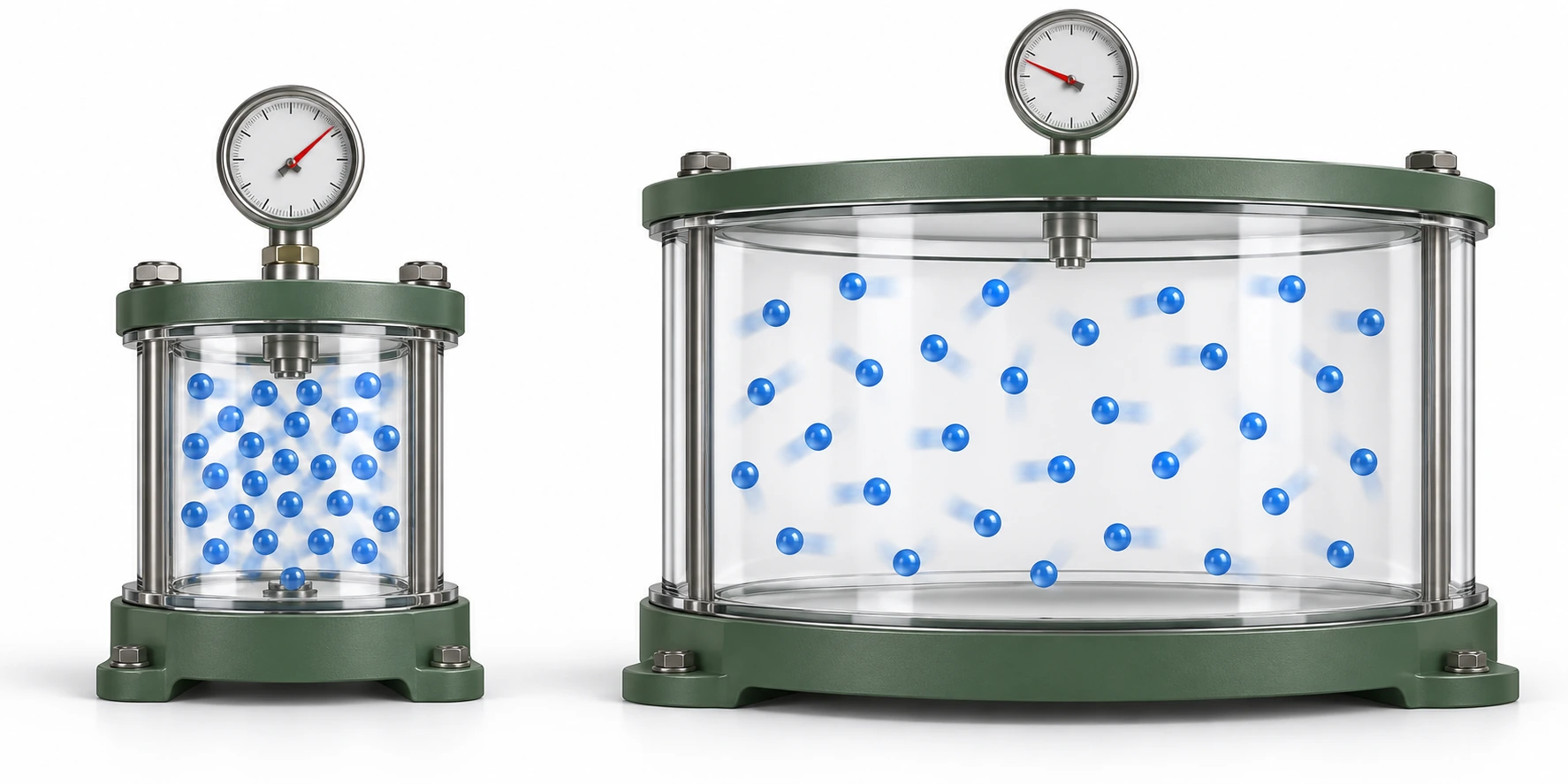
Actual or operating volume is the space occupied by the gas at the pressure and temperature where it is measured. Base volume represents the same quantity of gas expressed at a defined reference temperature and pressure. Both figures may be reported in cubic metres, yet they are not interchangeable unless their reference conditions are identical.
Why is the unit m³ alone ambiguous?
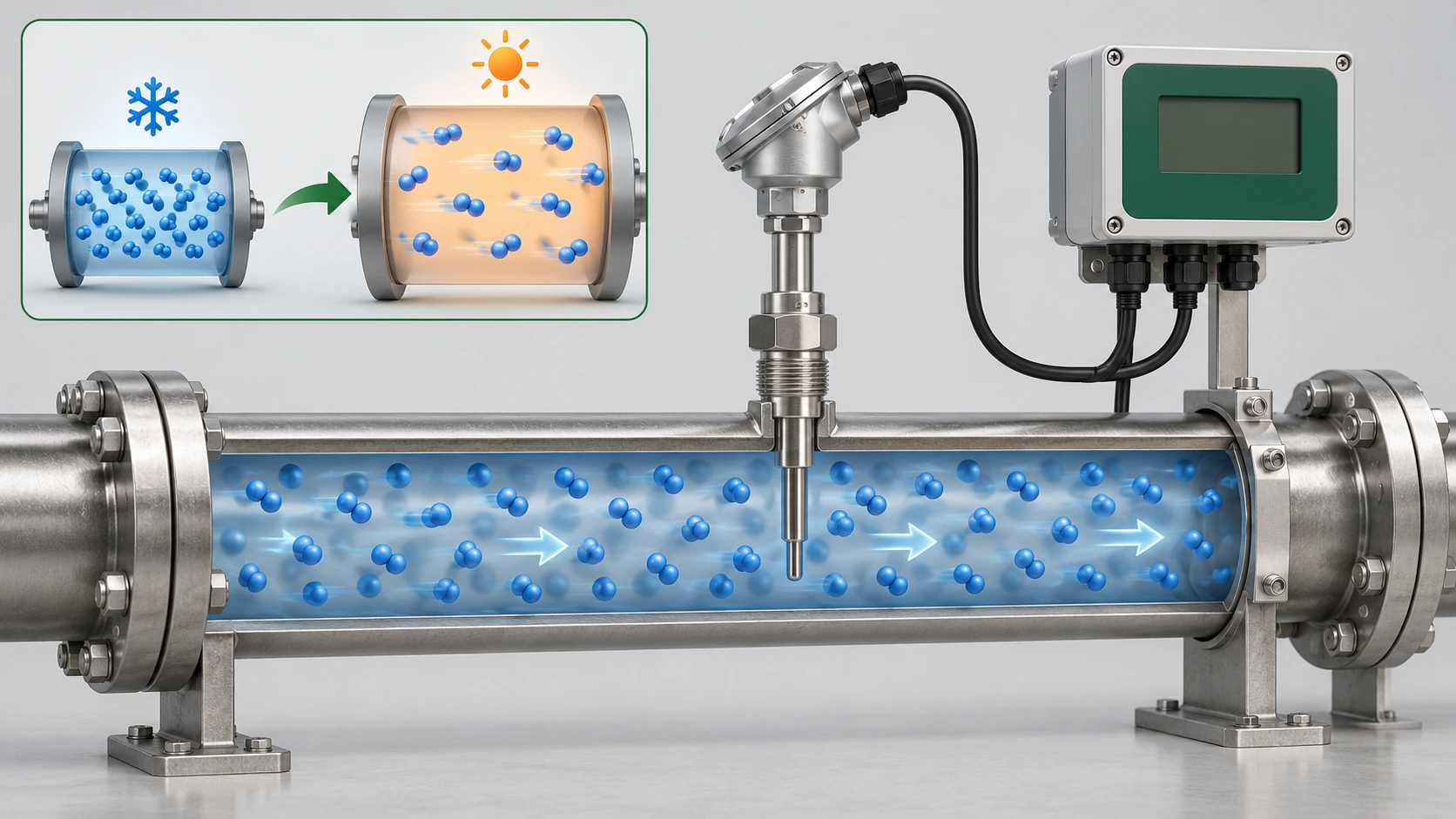
A cubic metre recorded on a warm day and a cubic metre recorded on a cold day need not represent the same amount of gas. Pressure changes the relationship further. A reliable data record should identify the gas temperature, absolute pressure, reference conditions and whether volume conversion was applied.
What reference conditions does ISO 13443 specify?
ISO 13443:1996 defines reference conditions for real, dry natural gas of 15 °C (288.15 K) and 101.325 kPa. The standard was reviewed and confirmed in 2025. These are ISO reference conditions, not a universal requirement for every national billing system or contract: other legally defined reference bases can apply.
Absolute pressure is not gauge pressure
Gas-law calculations require absolute pressure. Gauge pressure indicates pressure relative to local atmospheric pressure; conceptually, absolute pressure equals gauge pressure plus ambient atmospheric pressure. Substituting gauge readings for absolute pressure can produce a substantial conversion error.
The gas volume conversion equation
For a fixed amount of gas, a simplified real-gas conversion is Vb = Vm × (Pm / Pb) × (Tb / Tm) × (Zb / Zm). Vm is measured volume and Vb is base volume. P denotes absolute pressure, T thermodynamic temperature in kelvin and Z the compressibility factor. Subscripts m and b refer to meter and base conditions respectively.
Worked example: a change from 20 °C to 15 °C
Assume 1.000 m³ of gas is measured at 20 °C and 101.325 kPa absolute, then expressed at 15 °C and the same pressure. If the difference in Z is neglected solely for this teaching example, Vb ≈ 1٫000 × 288٫15 / 293٫15 ≈ 0٫983 m³. A custody-transfer or billing calculation cannot simply reuse this shortcut: gas composition, compressibility, instrument characteristics and applicable rules all matter.
| Variable | Meaning | Quality-control point |
|---|---|---|
| Vm | Volume at meter conditions | Check meter reading and units |
| Pm / Pb | Meter and base absolute pressure | Never confuse gauge and absolute pressure |
| Tm / Tb | Gas temperature in kelvin | Measure gas, not merely ambient air |
| Zm / Zb | Compressibility factors | Depend on composition, pressure and temperature |
| Vb | Converted base volume | State the reference conditions explicitly |
Why does the compressibility factor Z matter?
Natural gas is not a perfect ideal gas. The dimensionless compressibility factor Z describes the deviation from ideal-gas behaviour and can vary with gas composition, pressure and temperature. ISO 12213 sets out methods for calculating natural-gas compression factors. Treating Z as unity can illustrate a basic relationship but should not be carried into precision industrial metering without justification.
Gas composition is part of the measurement chain
In industrial installations, changes in the relative proportions of gas components can alter its properties and Z-factor. Even correctly calibrated temperature and pressure sensors cannot guarantee a valid converted volume if the composition input or the calculation model is unsuitable.
Do all gas meters correct for temperature and pressure?
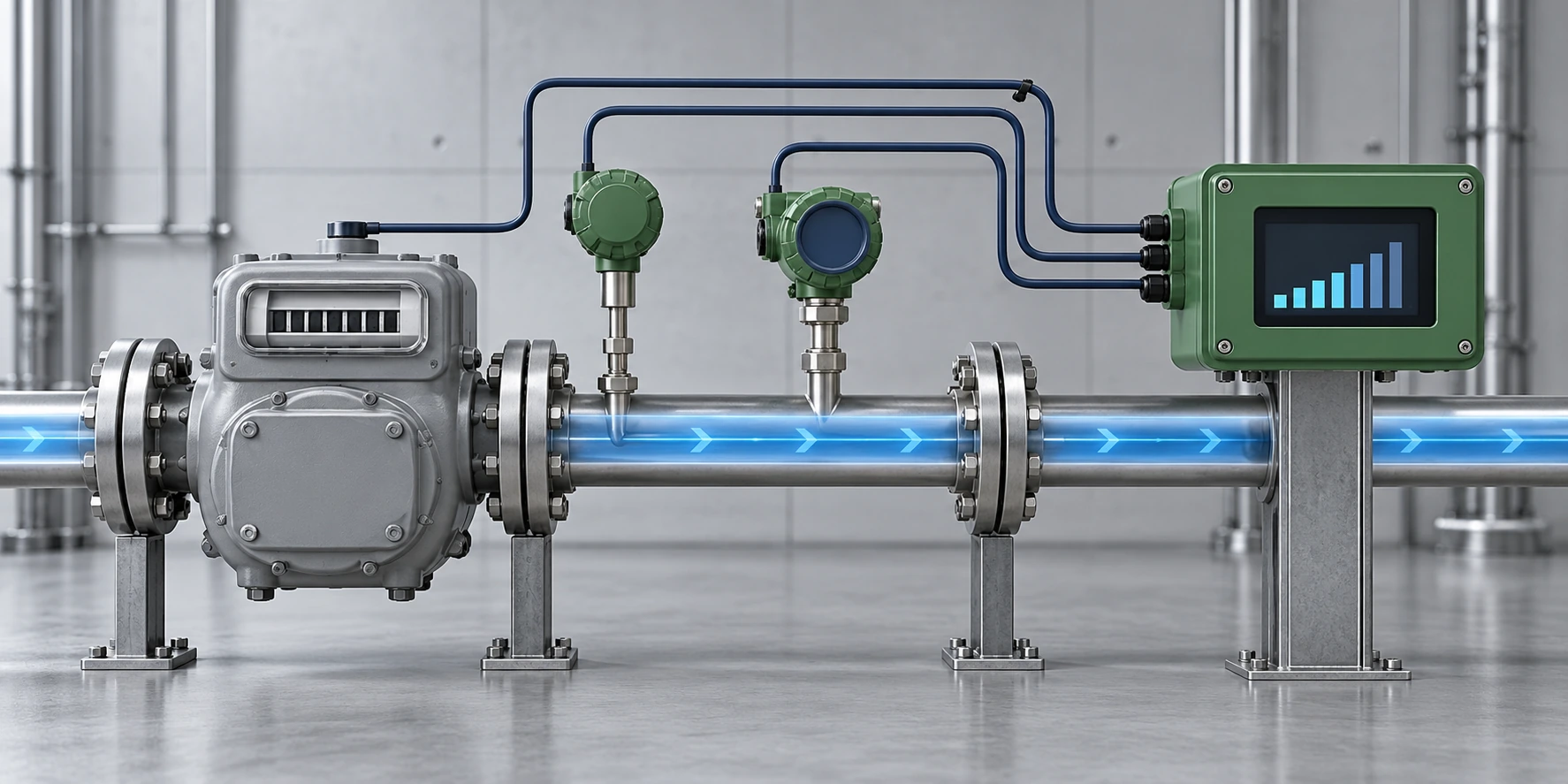
No. A meter’s core function is to measure gas passing through it within its declared operating range. Some instruments incorporate temperature compensation; other metering systems use separate or integrated volume conversion devices that process pressure, temperature and, where necessary, composition data. The actual capability must be established from the individual model’s data sheet, applicable certification and test evidence.
Smart communications do not imply volume conversion
The label “smart gas meter” may refer to remote reading, event logs or communications such as NB-IoT and LoRa. None of these features, by itself, proves temperature or pressure conversion. Likewise, G2.5 and G4 are meter capacity designations; they do not independently establish the presence of sensors or a volume-correction algorithm.
Common mistakes in gas metering projects
Typical errors include using gauge pressure in a gas-law formula, using Celsius instead of kelvin in temperature ratios, assuming a fixed Z-factor, confusing ambient temperature with gas temperature and failing to record the reference basis. A subtler data-governance problem occurs when actual and converted volumes are stored in the same database field without a condition flag: consumption analytics then compare unlike quantities.
Checklist for selecting a volume-conversion system
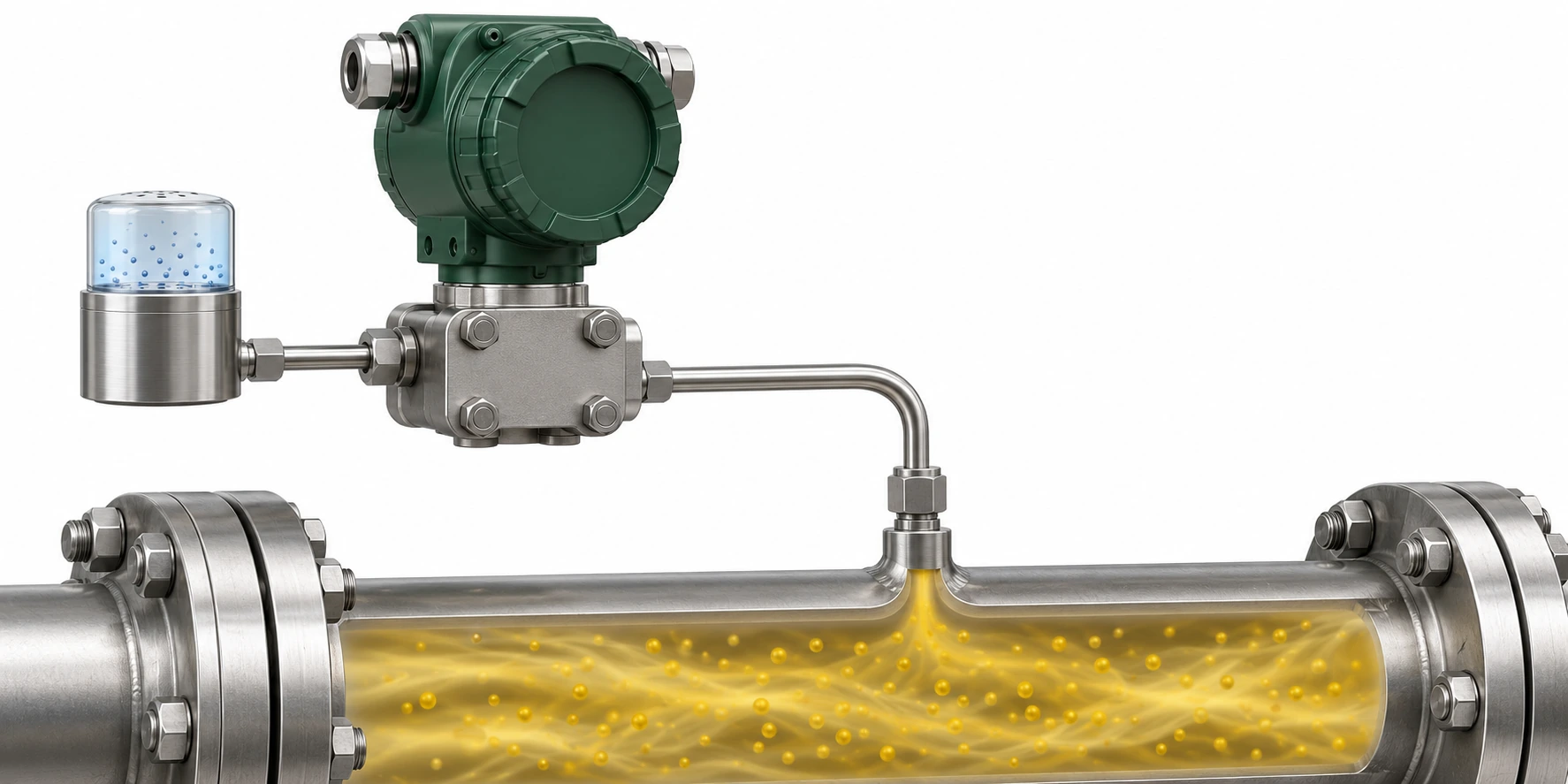
Document the measurement objective and reference conditions first. Verify the operating pressure and temperature ranges, sensor placement, gas composition inputs, Z-factor algorithm, calibration arrangements, communication-failure handling and separate storage of raw and converted readings. Finally, compare the proposed system with applicable legal metrology and project-specific requirements. OIML R 137 addresses gas meters, while OIML R 140 covers gaseous-fuel measuring systems; neither overrides local legal requirements.
Conclusion: trustworthy data before smart analytics
Digital gas management is only as reliable as its underlying measurement definitions. Recording actual volume, gas temperature, absolute pressure and the reference basis makes consumption analysis more meaningful. When assessing a residential gas meter, pressure regulator or smart gas system, rely on verified equipment specifications and installation conditions rather than a product label or communications feature.
References and scope
Technical references: ISO 13443:1996 (natural-gas reference conditions); ISO 12213-1:2006 (compression factor); OIML R 137:2012 (gas meters); OIML R 140:2007 (gaseous-fuel measuring systems). No product-specific certification is claimed.