
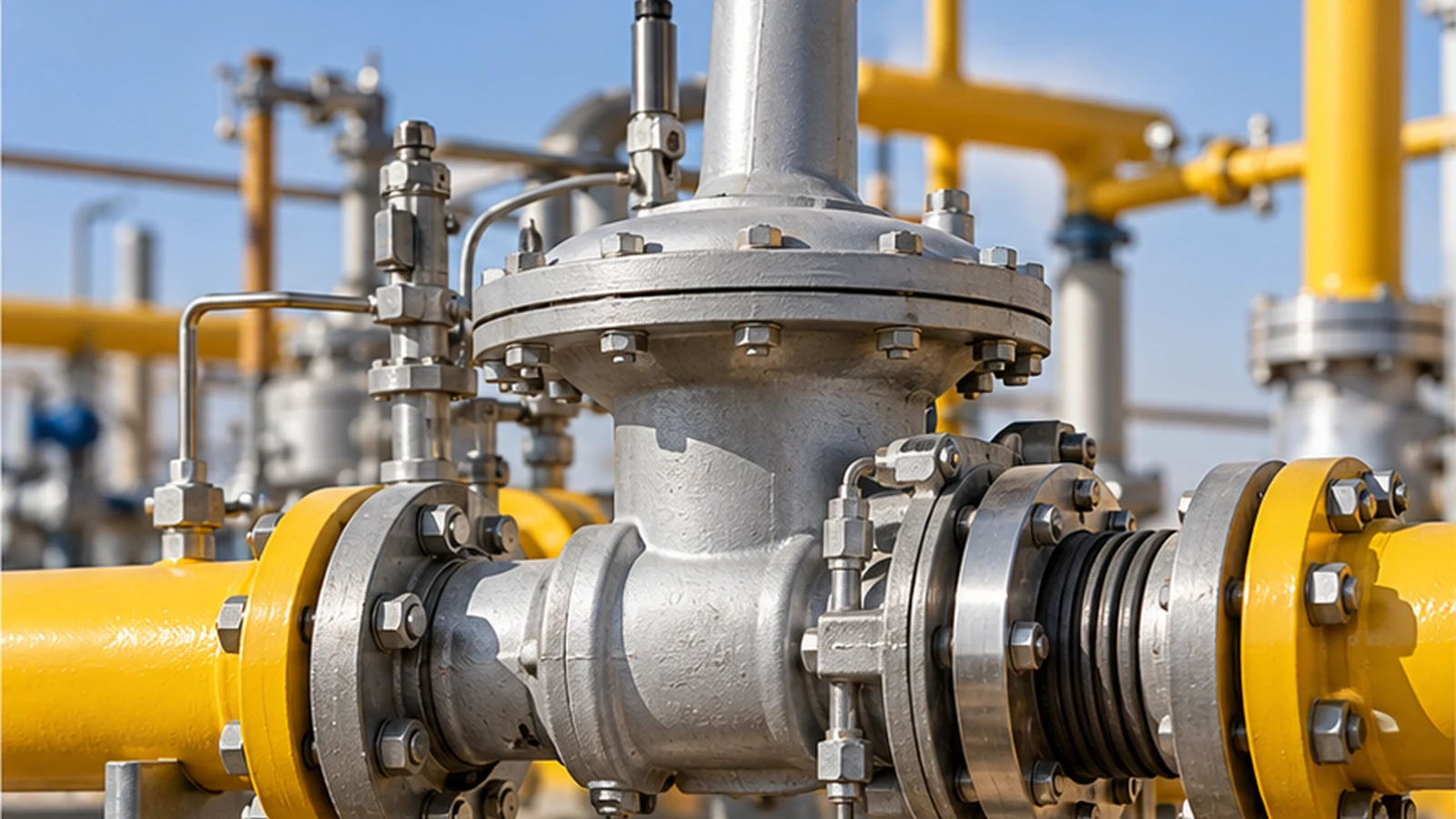
A new report from Iran’s official petroleum news agency highlights an integrated approach to natural-gas distribution safety in Markazi Province. Published by Shana at 09:00 on 31 October 2026 (9 Aban 1405), the report describes efforts to reduce gas losses through improvements to regulator connections, the use of geographic information system (GIS) heatmaps to prioritize accident prevention, and closer monitoring of industrial gas consumption. For the gas equipment sector, the significance lies in how mechanical integrity, geospatial records and consumption data can support one another.
Mohammadreza Samiei, managing director of Markazi Province Gas Company, said the province’s gas losses are below the threshold used by the National Iranian Gas Company. The report, however, provides no numerical loss rate, measurement period, calculation method or independent audit. It would therefore be inaccurate to present a specific volume of gas saved or a verified percentage improvement.
What did the Markazi Province announcement actually say?
According to the provincial gas company’s managing director, the organization is pursuing lower gas losses through the installation of articulated connections on gas regulators. Its distribution-network assets are recorded in a GIS, and heatmaps have been prepared to identify areas with the greatest concentration of reported incidents. Targeted safety education has followed in those locations. The company also reports increased scrutiny of industrial consumers and the referral of confirmed unauthorized gas-use cases to the judicial authorities.
These are three related but distinct workstreams: equipment connection integrity, geographic analysis of incidents, and investigation of unauthorized consumption. Each requires different evidence and performance indicators. Shana does not state how many connections have been fitted, how many locations have been modified, how much gas has been recovered or how many industrial cases were referred.
Why do regulator connections matter for gas loss prevention?
A gas pressure regulator controls downstream pressure within its designed operating envelope. Reliable operation of a service connection or regulating installation nevertheless depends on more than the regulator body. Joint design, sealing integrity, pipe arrangement, installation conditions and inspection procedures all matter. Each connection must be suitable for the relevant pressure, temperature, gas service and local safety requirements, and installed under approved procedures.
Shana uses the term “articulated connections” in relation to the regulators, but it does not identify the exact component, manufacturer, design standard, technical specification or mechanism behind the expected reduction in leakage. It is not possible to infer a specific patented technology, certification or percentage reduction from the news item. The measure should be described as a reported improvement programme rather than a quantified, independently demonstrated result.
Pressure regulation is not the same as joint sealing
Regulation maintains pressure; sealing prevents unintended gas release at connections. A correctly controlled outlet pressure does not eliminate the need to inspect joints using authorized methods. Likewise, a sound joint cannot compensate for an incorrectly sized regulator or an unsuitable pressure range.
Inspection, repair or alteration of pressurized gas equipment must be undertaken only by authorized personnel in accordance with the gas utility’s procedures. This article is not an instruction for modifying live gas systems.
How can GIS heatmaps improve network safety?
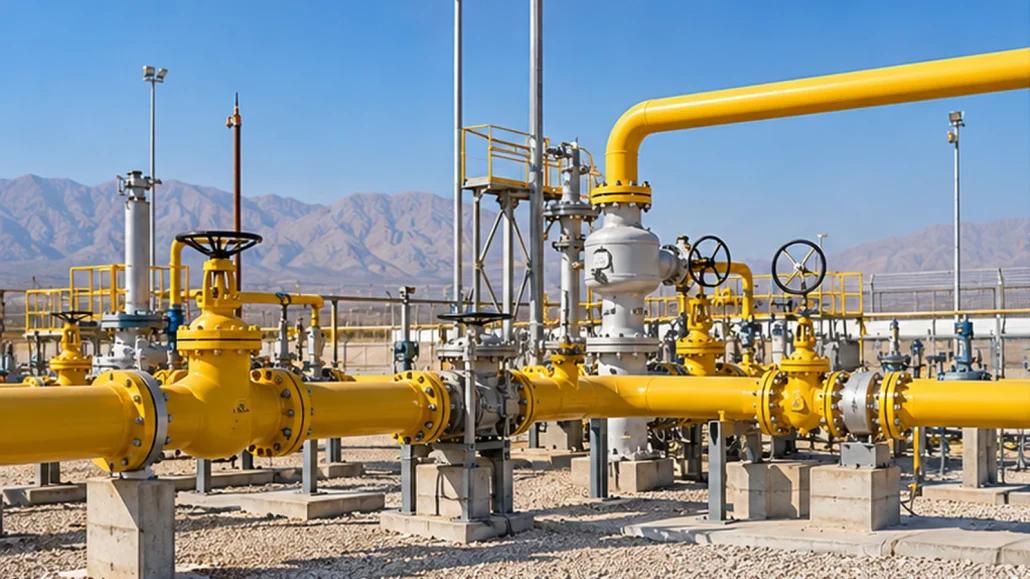
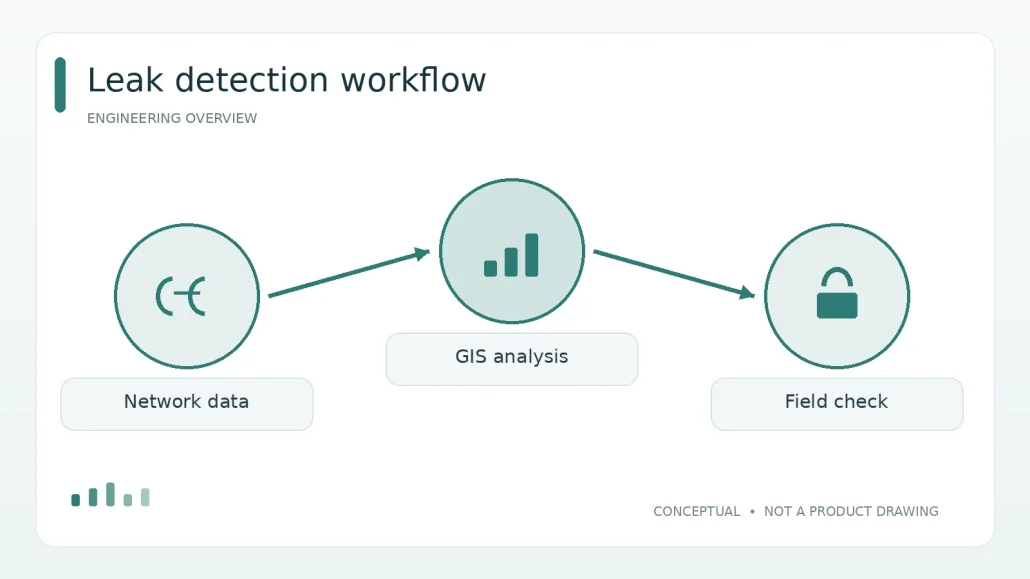
A GIS links the location of pipelines, service connections, assets and recorded incidents to a common spatial framework. When incident records include reliable location, date and classification, a heatmap can show where events are concentrated and help prioritize inspections or community education. Markazi Province’s reported approach uses mapped accident concentrations to target preventive communication.
An incident heatmap is not a live gas-leak detector
A heatmap of historical events is a statistical visualization. It does not, by itself, measure methane or pinpoint an active leak. Field leak detection requires appropriate instruments, validated procedures and qualified investigation. Areas with more reported events are not automatically more dangerous on a per-customer basis: pipeline length, connection density, reporting quality and the observation period must be considered.
Samiei reported that accident counts declined in the areas where educational measures were implemented. That is an attributed operational statement. Without baseline and follow-up data, a defined incident metric and controls for other changes, the independent contribution of education cannot be quantified.
Physical leakage, metering differences and unauthorized use
A gas-network balance can reveal discrepancies between incoming quantities and recorded deliveries, but “unaccounted-for gas” is not synonymous with physical leakage. Possible contributors include actual leaks, mismatched meter-reading periods, measurement uncertainty, data-entry errors, authorized but unrecorded use and unauthorized withdrawals. Separating these requires a defined system boundary, a consistent accounting period and a defensible reconciliation method.
Unauthorized use is also a legal matter. An anomalous consumption profile or automated alarm is not proof of theft. Shana reports that confirmed industrial cases were referred for judicial review. Technical detection, verification of facts and a legal determination are separate stages and should not be conflated.
What can gas meters and remote reading contribute?
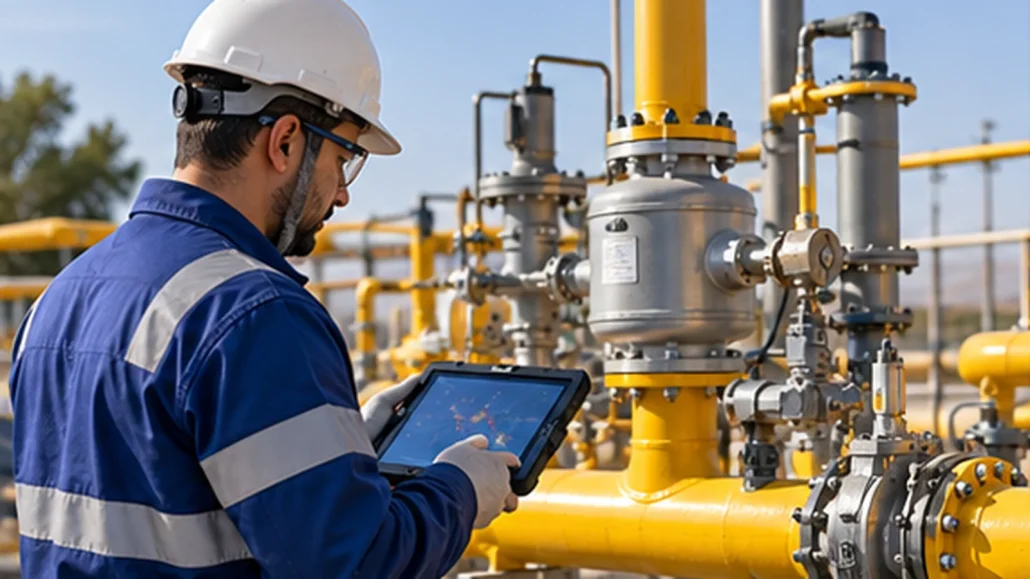
A residential gas meter, including a diaphragm G4 meter, is designed to measure gas volume within an approved operating range. Smart gas meters and upgraded meters with the necessary communication capability may support automated meter reading (AMR), reduce the time between observations and make consumption patterns easier to review. But AMR does not automatically locate a leak, and an algorithm alone cannot conclusively establish unauthorized gas use.
From a consumption alert to a defensible investigation
A robust workflow checks the customer and meter identifiers, compares equivalent periods, verifies communication quality and metrological integrity, considers normal changes in use, and refers genuinely suspicious cases for authorized field assessment. Data access controls, an audit trail and a process for customer disputes are also essential.
International legal-metrology recommendations such as OIML R 137 provide a technical framework for gas-meter requirements and testing. Citing them does not certify any particular meter model or demonstrate that Markazi Province has launched a smart-meter procurement. The 31 October report announces no such tender or purchase.
How should gas-loss reduction be measured?
Meaningful evaluation begins with a baseline and a clearly defined time period: how much gas entered the area, how much was delivered and recorded, and what network changes were made? Weather, customer mix, industrial activity, metering uncertainty and changes in network boundaries should then be considered. Otherwise, a smaller accounting discrepancy may reflect changing conditions rather than improved equipment.
Useful indicators include the number of joints inspected and corrected, verified leaks per unit of network length, incidents per service connection, incident response time, the proportion of validated meter readings, and an adjusted gas-balance discrepancy. Each indicator needs a documented definition and method before results are published. ISO 50015 provides general principles for energy performance measurement and verification, although it does not replace a gas utility’s operating and safety rules.
Implications for gas-equipment manufacturers
For manufacturers of gas regulators, residential gas meters, industrial instrumentation and smart gas systems, the Markazi report underscores the value of inspectable designs, reliable connections, component traceability and trustworthy measurements. Ekbatan Gas Control could examine these themes in product development through documented joint-integrity tests, maintainability reviews, manufacturing quality controls, approved-range meter accuracy and secure data exchange in communication-enabled products.
These are engineering considerations, not evidence of an order, partnership or product approval. The official report does not mention any procurement involving Ekbatan Gas Control. Residential regulators, industrial pressure-control equipment and diaphragm meters also have different functions and applicable requirements; they are not interchangeable simply because they operate in the same gas network.
Conclusion
The 31 October 2026 report describes three complementary directions in Markazi Province: improving regulator connections to pursue lower gas losses, using GIS incident heatmaps to focus preventive measures, and monitoring industrial consumption more closely. The verified news is the provincial official’s account of those actions, not a quantified savings result. Establishing their effectiveness will require consistent measurement, transparent documentation and independent verification.
Frequently asked questions
Did Markazi Province publish an exact gas-loss reduction figure?
No. Its gas company managing director said losses were below the National Iranian Gas Company’s reference threshold, but Shana did not publish a percentage or volume.
Do articulated regulator connections eliminate leakage?
No such conclusion is supported. The report describes an initiative to reduce losses but provides no component specifications, test results or verified leakage reduction percentage.
Can a GIS heatmap identify an active gas leak?
Not by itself. The heatmaps described in the report represent recorded incident concentrations. Active leak detection requires suitable instruments and field verification.
Does unusual smart-meter consumption prove gas theft?
No. An unusual pattern may justify further examination, but technical verification and lawful procedures are needed before any determination.
Has a smart-gas-meter tender been announced for this programme?
No. The 31 October 2026 report does not announce a smart-meter procurement contract, tender or dedicated budget.
What is the best indicator of gas-loss programme success?
A combination of adjusted gas-balance data, verified leakage, safety outcomes and measurement-data quality, assessed against a documented baseline, is more meaningful than a single unadjusted number.
Sources
1. Shana, “Gas losses in Markazi Province industries to be reduced,” Persian original, 31 October 2026, 09:00, article 3119140: https://www.shana.ir/news/3119140/
2. International Organization of Legal Metrology, OIML R 137, gas-meter metrological and technical requirements: https://www.oiml.org/en/publications/recommendations/137/
3. International Organization for Standardization, ISO 50015:2014, measurement and verification of organizational energy performance: https://www.iso.org/standard/60043.html