
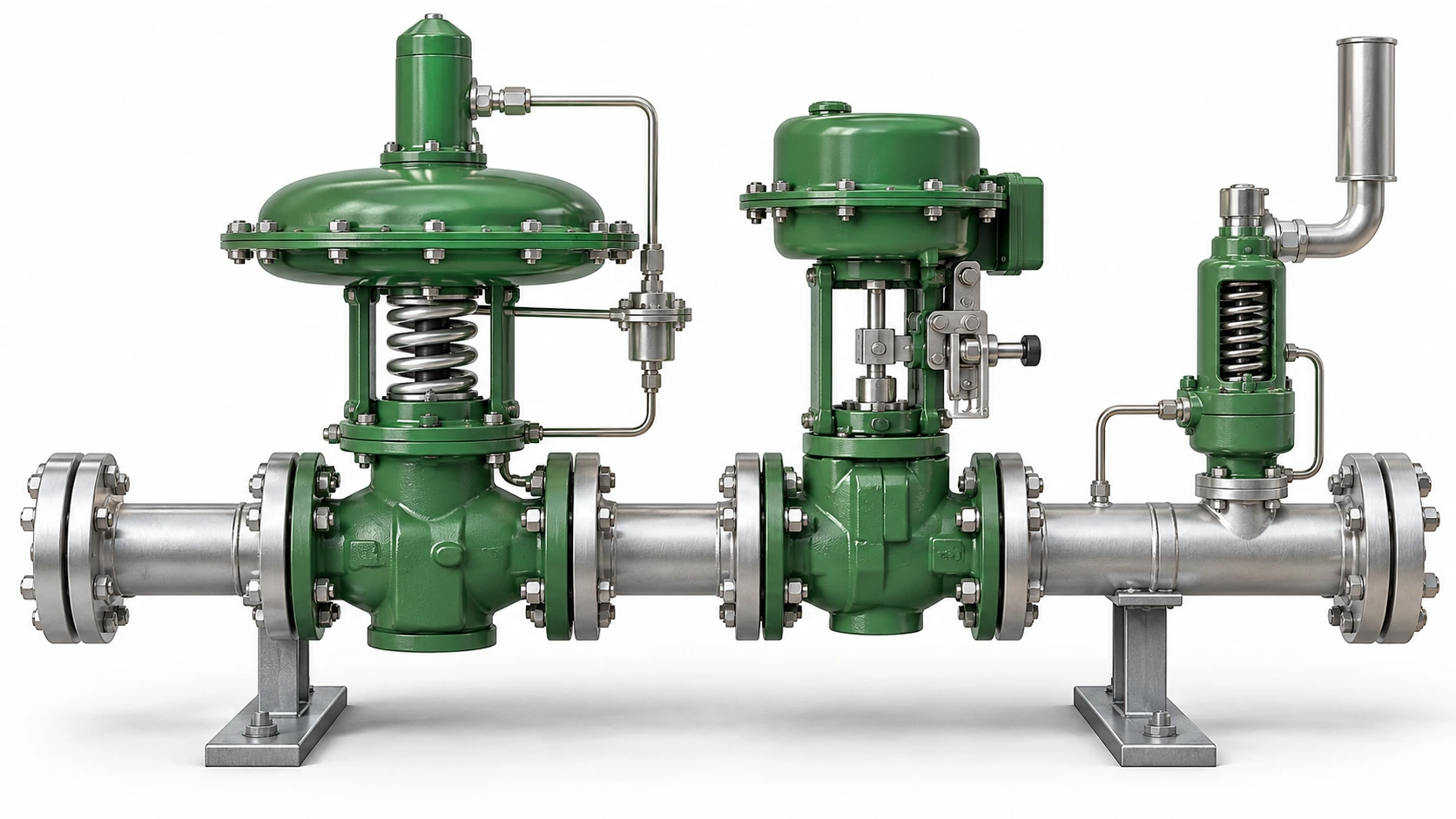
A gas pressure regulator controls downstream pressure, while a safety shut-off device (SSD) interrupts flow when a defined protective threshold is reached. These functions are related but not interchangeable. Confusing them can lead to incorrect equipment selection, misleading specifications and avoidable operational risk. This practical guide explains the distinction between regulators, slam-shut valves, pressure relief devices and gas meters for engineers, contractors and equipment buyers.
The technical reference points are EN 334:2019+A1:2024 for gas pressure regulators and EN 14382:2019+A1:2024 for gas safety shut-off devices. Neither standard automatically applies to every domestic regulator or every installation in Iran. The applicable local rules, approved design, product certification and qualified engineering assessment take precedence.
What does a gas pressure regulator actually do?
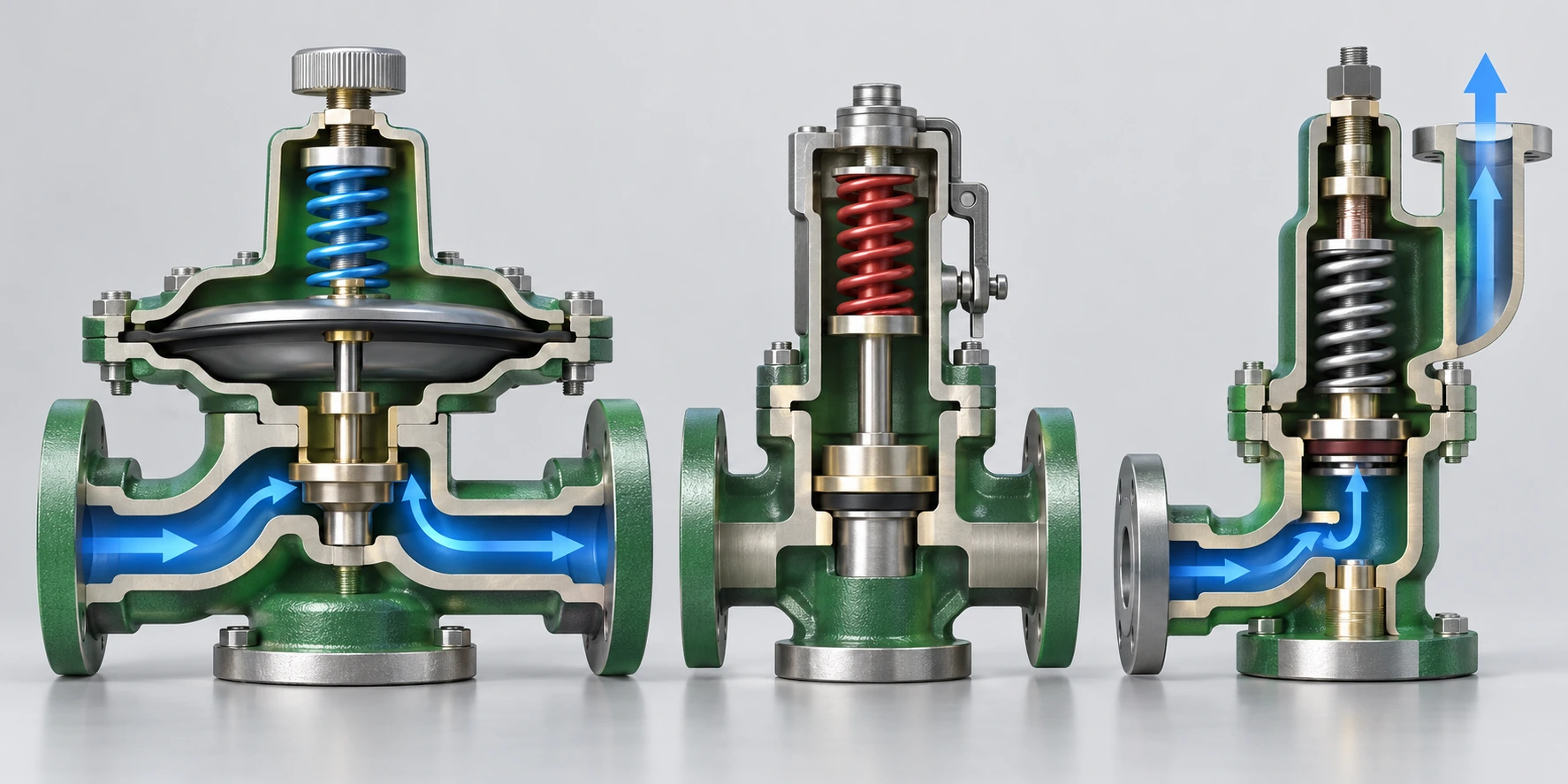
A regulator senses downstream pressure and modulates the gas passage to maintain an outlet pressure near its set point. Actual performance depends on inlet pressure, instantaneous flow, spring-and-diaphragm or pilot arrangement, operating temperature and device geometry. A nominal outlet pressure on a datasheet does not mean that the pressure remains perfectly unchanged across every flow rate and operating condition.

Why nominal capacity alone is not enough
Regulator capacity must be checked at the lowest expected inlet pressure and highest design demand. A flow rating measured at one test condition cannot be transferred to every pressure and gas composition without the manufacturer’s performance data. Pressure losses through piping, filters and fittings, together with variable demand, also influence the operating point. Industrial designs additionally require consideration of start-up, shutdown and transient conditions.
How is a safety shut-off valve different?
A safety shut-off device (SSD), often called a slam-shut valve, stops gas flow when the monitored condition reaches a defined protective limit. A regulator modulates continuously; an SSD responds to a fault condition. Reopening after a trip is governed by the device design and operating instructions and generally requires authorized intervention. EN 14382 specifies construction, performance, testing, marking and sizing requirements within its stated scope.

Overpressure and underpressure trips
Depending on the system architecture, protection may address excessive downstream pressure, an unacceptable pressure drop, or both. Trip settings must be coordinated with the pressure limits of downstream equipment and process needs. Unauthorized adjustment, defeating a protective device or breaking seals is unsafe and should never be presented as a routine operating step.
What is the role of a pressure relief device?
A relief device may limit a pressure rise by discharging gas in a controlled manner to an approved safe destination. That is not the same as shutting off the upstream flow with an SSD. Relief capacity, discharge location, ventilation and flammable-atmosphere hazards require a formal engineering assessment. A relief valve alone is not a universal substitute for required shut-off protection.
| Device | Primary purpose | Response to abnormal conditions |
|---|---|---|
| Pressure regulator | Continuously controls outlet pressure | Failure behaviour depends on design |
| Safety shut-off device (SSD) | Interrupts flow at a protective threshold | Trips; reset per approved procedure |
| Pressure relief device | Controlled discharge to limit pressure | May vent gas to a designed safe route |
| Gas meter | Measures gas volume | Not a substitute for pressure control or independent protection |
Residential and industrial gas regulators: what changes?
“Residential gas regulator” and “industrial gas regulator” are application descriptions, not a single universal certification category. Residential installations are driven by supply conditions, appliance demand and connection rules. Industrial systems may require wider flow turndown, high availability, instrumentation and more complex protective architectures. Similar external appearance is no evidence that two regulators can be interchanged.
Five specifications to verify before selecting a regulator
- Minimum and maximum inlet pressure at the actual site, not only a nominal value.
- Required outlet pressure and allowable deviation across minimum and peak flow.
- Gas composition, gas and ambient temperature, and material compatibility.
- Required overpressure/underpressure protection, relief, filtration and monitoring.
- Model-specific certificates, installation drawings, testing instructions and maintenance support.
A technical enquiry should include the full operating envelope and the manufacturer’s datasheet. Connection size alone does not establish capacity. Likewise, a label such as “G4 regulator” should not be taken as a complete regulator specification: G4 commonly refers to a gas meter capacity designation, not a full regulator performance class.

How regulators relate to gas meters and smart gas systems
The regulator manages pressure; the gas meter records volume. A smart gas system may aggregate readings, alarms and operational data, but communication capability alone does not establish an independently certified mechanical shut-off function. Meter pressure limits, installation order and the local gas utility’s requirements must be considered as part of the complete assembly.
Pressure and flow trends can support gas consumption optimization, but an observed reduction cannot automatically be credited to a new regulator or smart gas meter. Credible savings claims require a baseline, adjustment for weather and demand, and a defined measurement-and-verification method.
Maintenance and symptoms requiring qualified assessment
Low outlet pressure at peak demand, pressure oscillation, unusual noise, repeated SSD trips or a suspected leak should prompt inspection by qualified personnel. None of these symptoms proves that the regulator itself has failed: blocked filters, network pressure changes and downstream faults can produce similar effects. Leak tests, adjustment and repair must follow approved safety procedures and manufacturer instructions.
Conclusion: pressure control and safety are separate layers
Safe system design begins with clear functions: the regulator controls pressure, the SSD provides protective isolation, the relief device handles controlled discharge where specified, and the meter measures volume. Digitalization adds value only when sound equipment selection, trustworthy data and safety engineering come first. No unverified product performance or certification is attributed here to Ekbatan Gas Control.
Technical references
EN 334:2019+A1:2024 — Gas pressure regulators; EN 14382:2019+A1:2024 — Gas safety shut-off devices. These links document the standards’ scope, not a claim of certification for any particular product.