
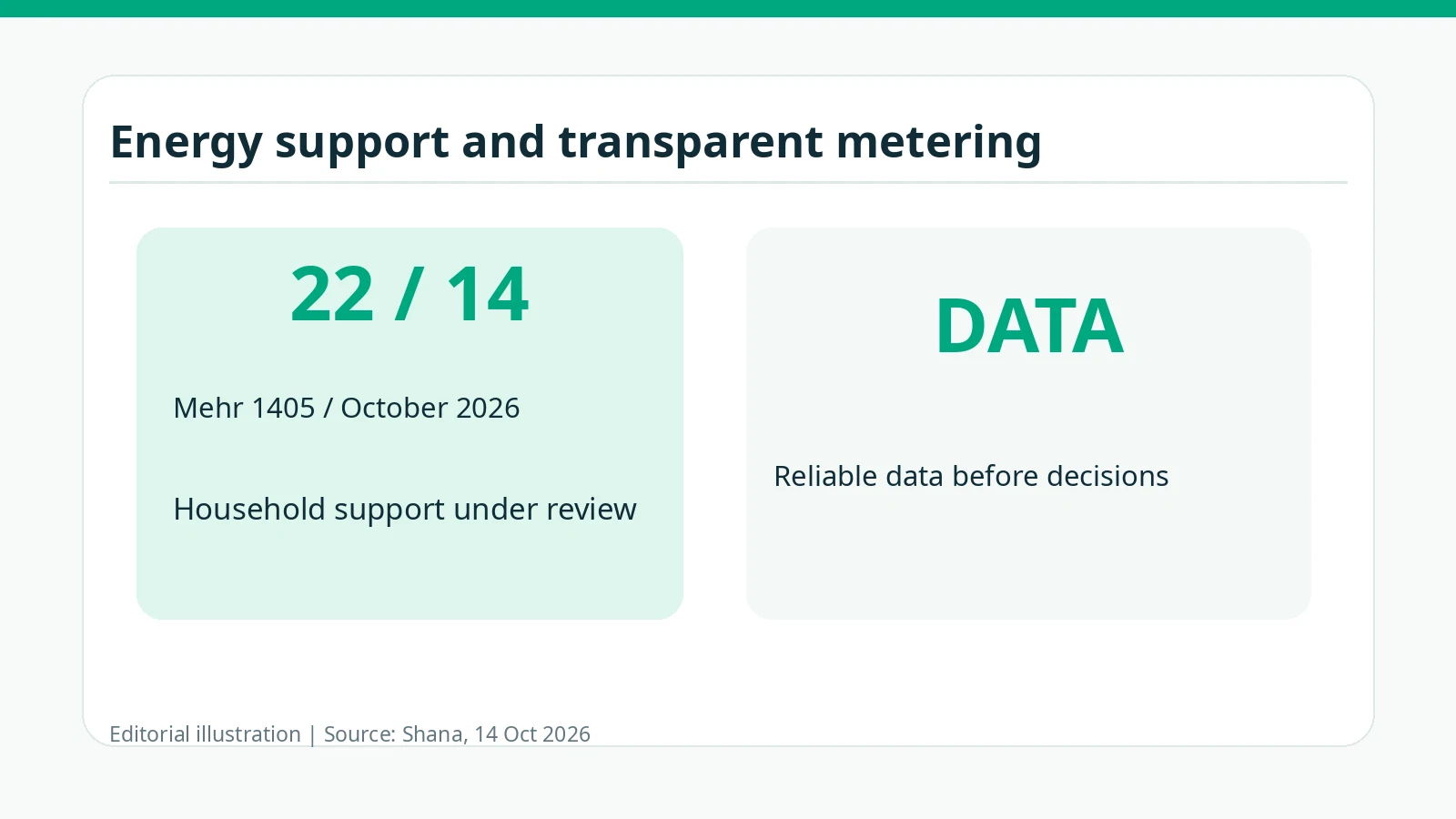
Iran’s fuel-consumption management meeting on 14 October 2026 (22 Mehr 1405) addressed household natural-gas subsidies, fuel losses and better visibility across the supply chain. Shana, citing the Iranian presidency’s information service, also reported figures on liquid-fuel consumption and imports. Those figures describe different things: one is an expected effect of measures under discussion, while another is a comparison presented at the meeting.
For gas utilities and meter manufacturers, the central question is not merely how a tariff may change. Any equitable allowance system requires reliable measurements, a clear definition of the eligible household or premises, an appeal process and auditable records. No new household gas tariff or implementation date was published in the report.
What did the 14 October meeting establish?
According to Shana, the president called for reviewing how household gas subsidies are allocated, identifying losses and monitoring deviations from formal fuel-distribution channels. He questioned whether owners of multiple properties should receive the same cumulative advantages as households without property. This was a policy direction, not an announcement of a legally effective tariff table. The report did not specify an allowance volume, billing formula, start date or enacted regulation.
Liquid-fuel figures must not be confused with natural gas
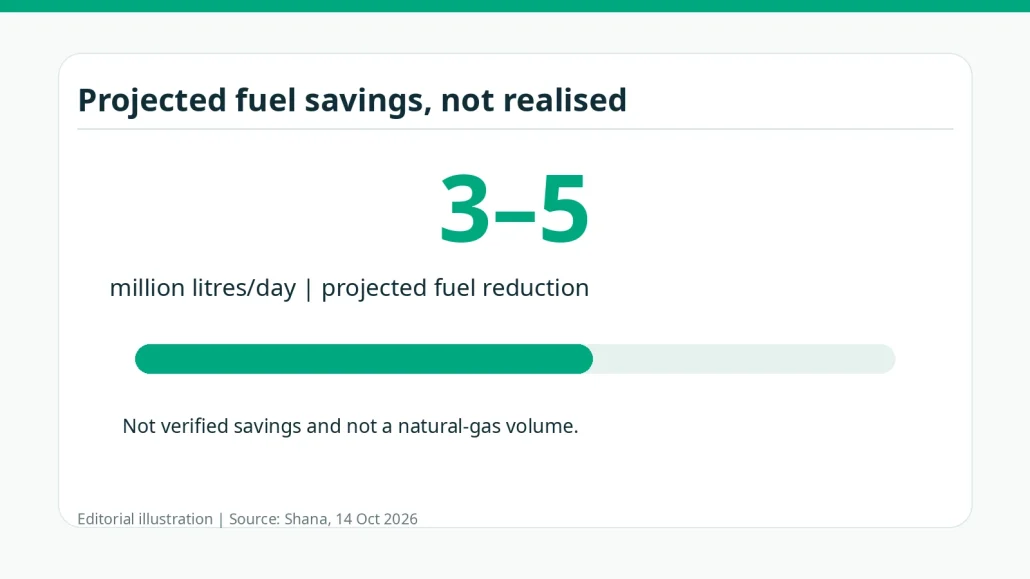
The meeting report stated that fuel-distribution measures could reduce daily fuel consumption by approximately 3–5 million litres. The wording describes a projected impact, not a verified reduction already achieved. It also reported a 58% decline in fuel imports in Mehr 1405 compared with Mehr 1404. The article did not specify the exact fuel category, baseline volume or calculation method. Neither number should be presented as a natural-gas volume or an observed reduction in residential gas use.
Why reliable gas metering matters for subsidy design
A household gas bill combines measured consumption with approved billing rules and tariffs. If subsidy eligibility is to depend on property ownership, allowance bands or household circumstances, authorities must first define whether eligibility belongs to a customer account, an actual household or an individual dwelling. A single gas meter can serve multiple users, while a household may change address. Resolving these cases requires trustworthy records and a fair correction process, not hardware alone.
Smart gas meters and their practical limits
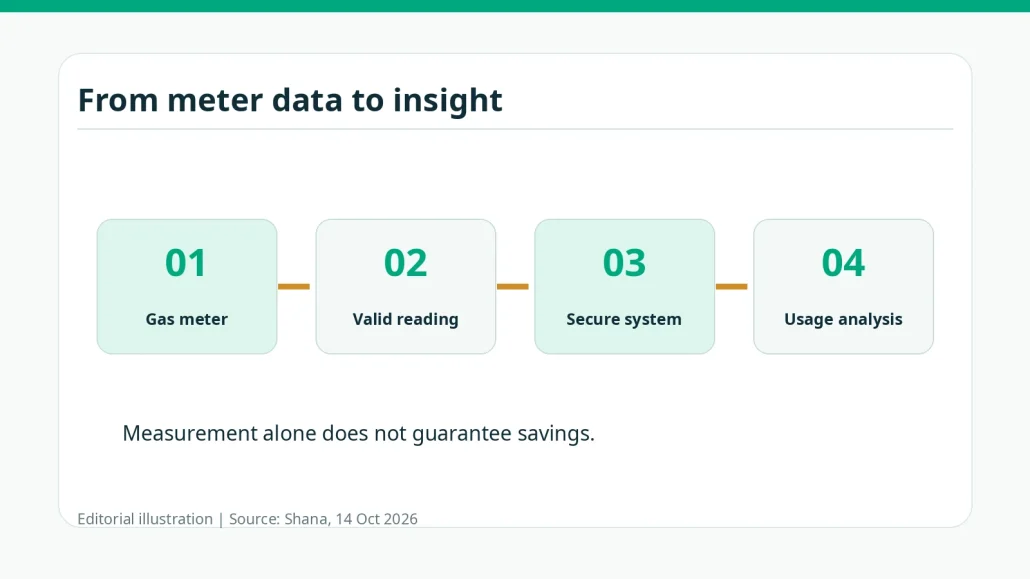
A properly selected and maintained gas meter provides a defensible consumption record. A smart gas meter, supported by secure communications and backend software, can enable more frequent readings, operational alerts and trend analysis. It does not automatically save gas. Measurable savings depend on installation quality, meter verification, actionable feedback, consumer behaviour and the design of the wider programme.
Reported indicators versus verified outcomes
| Indicator | Status in the report | How to interpret it |
|---|---|---|
| 3–5 million litres per day | Expected impact of distribution measures | Projection; not verified realised savings |
| 58% lower fuel imports in Mehr | Figure reported at the meeting | Fuel category and baseline require clarification |
| Household gas subsidy review | Policy direction | No new tariff or implementation date specified |
| Supply-chain monitoring | Management priority | Requires operational data and public reporting |
Measuring an actual change in gas demand requires comparable periods. Outdoor temperature, customer count, industrial activity and fuel switching can all influence consumption. A month-on-month fall in meter readings does not by itself demonstrate that a policy worked. Weather-normalised consumption, reading completeness and independently defined baselines offer a more meaningful assessment.
Technical requirements for data-driven gas management
Data quality, access control and privacy
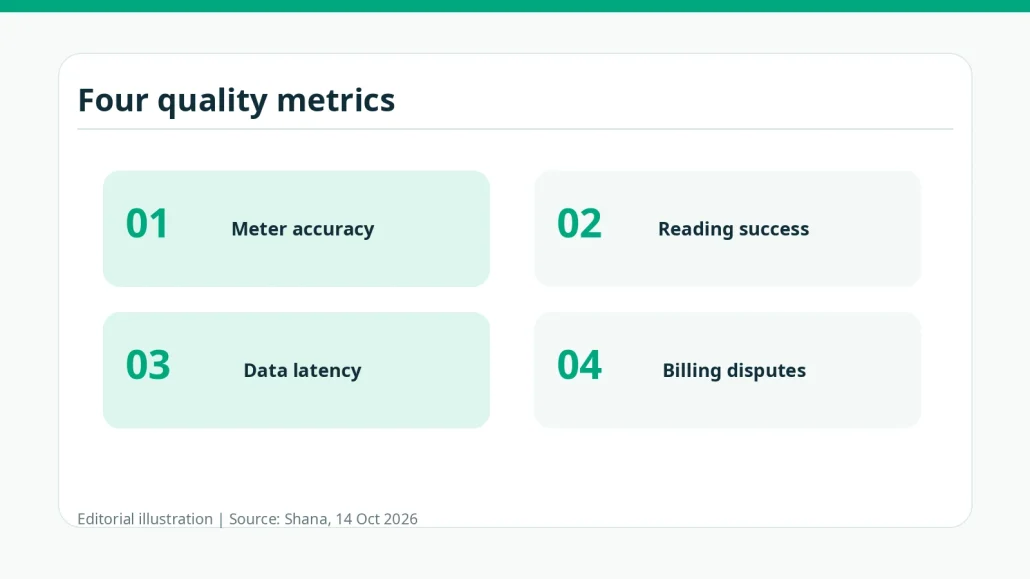
A credible monitoring programme should publish its successful-reading rate, meter error thresholds, data latency and billing-dispute rate. It should also define retention periods, access permissions and safeguards for customer information. Collecting more granular data without clear governance does not guarantee better energy management.
Field equipment and installation decisions
Diaphragm, upgraded and smart gas meters should be chosen against flow range, installation conditions, relevant standards and communications requirements. Common designations such as G2.5 and G4 represent different application ranges and are not interchangeable recommendations for every site. Domestic manufacturers, including Ekbatan Gas Control, have industrial expertise relevant to measurement quality and maintenance; the meeting report did not announce any new contract involving the company.
What remains unknown?
The report did not provide the proposed allowance per household, rules for shared meters, excess-use pricing, the start date, appeals arrangements or the mechanism for protecting low-income consumers. It also did not disaggregate expected savings among pricing, anti-diversion controls and distribution improvements. Until binding regulations and operating instructions are released, it would be misleading to describe a new household gas subsidy system as already implemented.
Implications for Iran’s gas sector
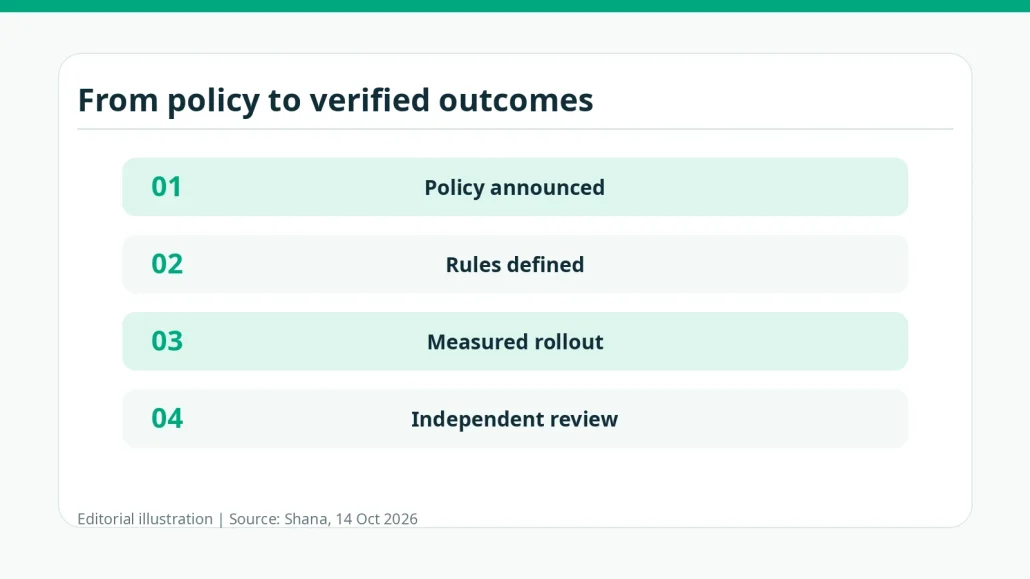
The meeting signalled a stronger emphasis on traceable consumption and more targeted energy support. Yet there is a substantial difference between announcing a policy and proving its effect. Utilities, meter suppliers and customers need transparent measurement, verified loss reduction, equitable treatment and effective error resolution. Any later tariff decision should be reported separately, with its own primary documentation.
Source and editorial method
Primary source: Shana, “Benefits of Lower Fuel Consumption Should Reach Low-Income Groups”, published 14 October 2026 (22 Mehr 1405), report 3058688. The sections on metering architecture and performance indicators are editorial technical analysis, not statements attributed to government officials.