
What has been reported at Sarajeh?
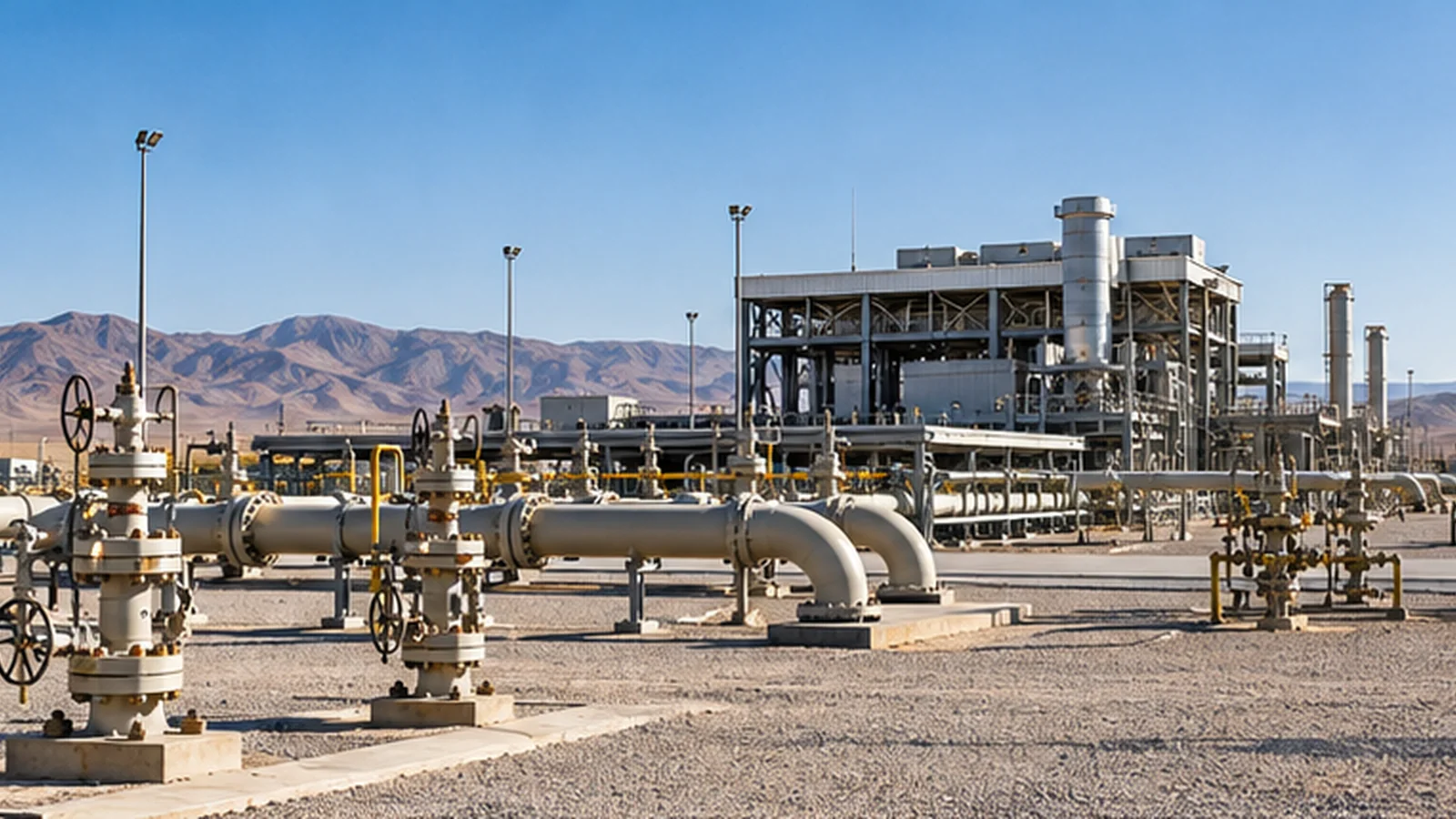
On 28 October 2026 (6 Aban 1405), at 10:49 local time, Iran’s official oil and gas news agency Shana reported that gas injection at the underground Sarajeh storage facility in Qom had finished ahead of schedule. Citing the National Iranian Gas Company (NIGC), the report quoted its managing director, Saeed Tavakkoli, saying that injection performance was approximately 3% above plan and that stored gas volume exceeded the comparable figure last year by more than 50 million cubic metres.
These are two different performance indicators. The first measures delivery against an operational target; the second compares reported storage volumes across years. Neither figure by itself establishes the facility’s total working-gas inventory, maximum daily withdrawal capability or the number of winter demand days it could cover. The announcement is a noteworthy pre-winter operational milestone, but it is not evidence that Iran’s seasonal gas imbalance has been eliminated.

Why underground storage matters to a winter gas system
Gas demand varies substantially with temperature, particularly where residential and commercial heating depends on natural gas. When technical and supply conditions permit, operators can inject gas into an underground reservoir during lower-demand periods and withdraw it when demand rises. Storage adds operational flexibility to production, transmission and demand-side measures; it cannot substitute for those systems.
Inventory, storage capacity and deliverability are different
Gas inventory is the amount held at a given time. Storage capacity describes the permitted operating range of the facility, while withdrawal deliverability describes how much gas can be brought to the surface, processed and delivered over a specified period. Deliverability depends on reservoir pressure, well conditions, compression, processing and pipeline constraints. An increase in inventory does not automatically produce the same percentage increase in maximum withdrawal rate.
Underground facilities also retain gas required to support reservoir pressure and operation. That volume should not automatically be treated as working gas available for routine withdrawal. Shana’s 28 October announcement does not disclose the working-gas inventory, cushion-gas requirement, withdrawal schedule or actual winter delivery rate, so none should be inferred from the reported year-on-year increase.

How should the 3% and 50-million-cubic-metre figures be read?
“Approximately 3% above plan” is a comparison against an injection target. Calculating the absolute excess requires the target itself, which the news item does not specify. “More than 50 million cubic metres above last year” is a year-on-year storage comparison, not a statement that 50 million cubic metres of new storage capacity was built or that this amount will be withdrawn every day.
Avoid confusing operating progress with physical expansion
An injection programme can finish early without changing the geological capacity of a reservoir. Likewise, a higher year-end inventory is not equivalent to measured energy savings. A rigorous comparison would state the reference dates, opening inventory, volume reference conditions, target definition and data reconciliation procedure. Those details are not included in the cited announcement.
Measurement and instrumentation: making the gas balance reliable
A credible storage gas balance depends on measured injection and withdrawal flows, pressure, temperature and gas properties at clearly defined custody and process boundaries. Flow instruments must suit their operating range, be maintained and calibrated, and report volumes on compatible reference conditions. Otherwise, two apparently comparable cubic-metre readings may not describe the same physical basis.
Digital monitoring helps operators follow injection trends, equipment condition and abnormal events. It does not remove the need for sensor verification, calibration traceability, timestamp alignment, data-quality checks and measurement-uncertainty assessment. Industrial metering and safety systems at an underground storage site are distinct from residential gas meters, even though both belong to the wider gas measurement ecosystem.
Where smart gas meters and AMR fit
Smart gas meters and automatic meter reading (AMR) systems can improve the timeliness and granularity of downstream consumption data. When deployed and operated appropriately, such data may support demand forecasting and network planning. It does not replace industrial flow metering, reservoir pressure management or storage-facility safety controls. The Sarajeh announcement contains no procurement decision for smart meters and names no equipment supplier.
What the development means for gas equipment manufacturers
The storage milestone reinforces the value of reliable instrumentation across the gas chain: appropriate pressure measurement, application-specific gas regulators, maintainable equipment and auditable data. For manufacturers of residential and industrial gas metering equipment, the relevant opportunity is to study genuine operator requirements and standards, rather than treat a public announcement as evidence of a purchase order.
Ekbatan Gas Control may monitor these developments for future product planning, but no new contract, tender award or partnership involving the company was disclosed. Product performance, communications features, certification and suitability for a particular industrial application should only be claimed when supported by the corresponding approved product documentation.
Which data would establish winter readiness?
A stronger assessment would require working-gas inventory, maximum and sustainable withdrawal rates, well and compressor availability, delivery-pipeline constraints, gas quality, pressure limits and winter demand scenarios. Analysts would also need to know the measurement dates and standard conditions used for the reported volumes. Until those data are available, the reported achievement is best described as early completion of an injection programme and higher reported storage volume, not verified coverage of any specific winter supply shortfall.
Conclusion
NIGC’s reported Sarajeh results—early completion, injection performance roughly 3% above plan and storage volume more than 50 million cubic metres above last year—are a meaningful operational update ahead of winter. Their practical contribution to system resilience will ultimately depend on withdrawal capability, working-gas availability, measurement quality and demand conditions.
Source and editorial method
Shana, “Sarajeh Gas Storage Sets Record Ahead of Schedule”, 28 October 2026, 10:49 local time (original Persian report). The discussion of underground storage and metrology is independent technical analysis, not an assertion of additional unreported Sarajeh project specifications.