
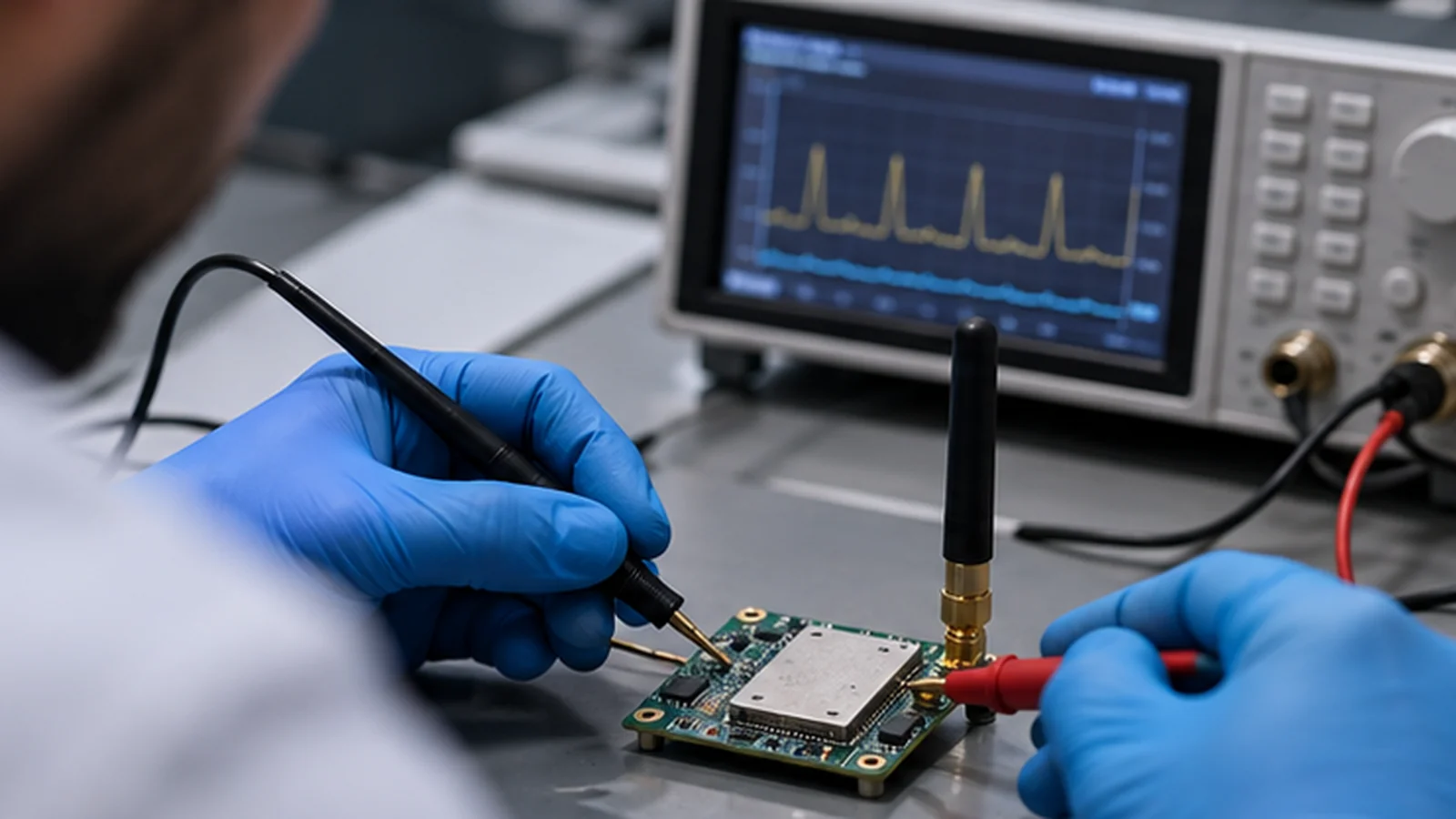
A smart gas meter may operate for years without a mains connection, but the phrase “ten-year battery” is not a performance guarantee for every installation. Service life depends on usable battery capacity, sleep current, sensing frequency, radio transmissions, network coverage, temperature and firmware behaviour. For residential gas metering and automated meter reading (AMR), power management must be designed alongside metrological integrity and safety. This engineering guide makes no claim about the battery life of any specific Ekbatan Gas Control product.
Why battery life matters beyond the battery price
Across thousands or millions of service points, battery replacement entails more than a cell purchase. It can require an authorised site visit, access coordination, service records, communication downtime and responsible disposal. Installing a larger cell does not necessarily correct inefficient firmware or poor radio coverage. An AMR procurement specification should distinguish a tested service-life estimate under defined conditions from an unqualified marketing figure.
Separate measurement from communications
Some architectures allow the mechanical register or measurement element to operate independently of the modem; others depend on electrical power for electronic accumulation and display. A sleeping or failed radio does not automatically mean gas measurement has stopped, nor does it prove measurement continues. The answer depends on the actual meter design, its data-retention provisions and its approved operating conditions. Low-voltage behaviour and access to readings must be verified for the specific model.
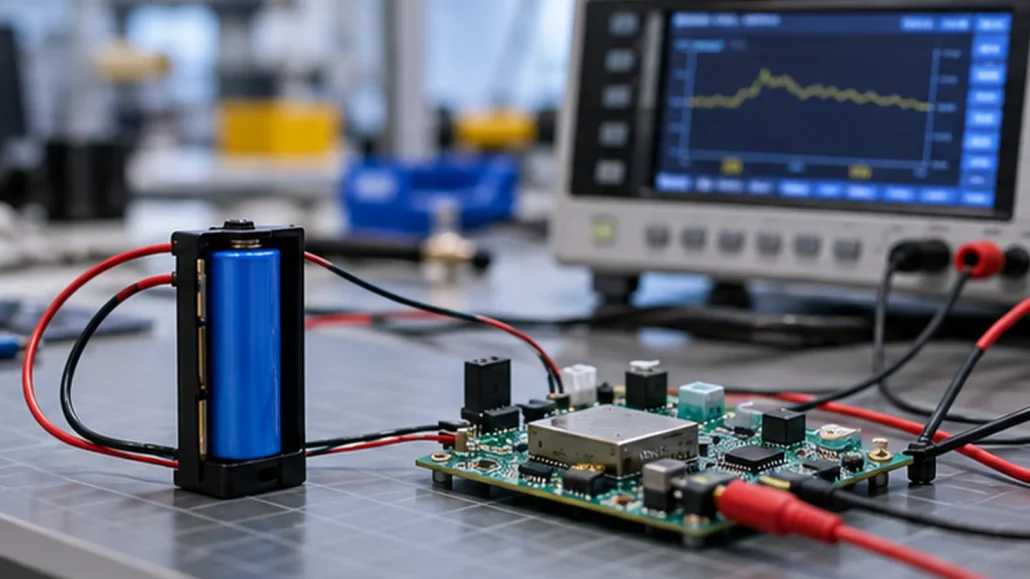
What is a battery power budget?
A first-order estimate divides usable capacity in ampere-hours by average current in amperes: theoretical life (hours) = usable capacity (Ah) / average current (A). Usable capacity is not the nominal figure printed on a cell. Temperature, pulse loading, cut-off voltage, internal resistance, self-discharge and ageing can reduce the energy the electronics can actually use. The equation is a screening tool, not a field-life warranty.
Worked example: one daily transmission versus a retry
Consider a hypothetical 8 Ah primary cell, with only 60%—or 4.8 Ah—assumed usable in the design. Ten 365-day years contain about 87,600 hours, giving a total average-current budget of roughly 54.8 microamperes. Suppose sleep current is 20 µA and one daily radio event draws an average of 150 mA for ten seconds. That event contributes approximately 17.4 µA when averaged across a day; sleep plus one event totals about 37.4 µA. Just one additional identical radio event each day raises the figure to approximately 54.7 µA, effectively consuming the entire budget before sensor sampling, processing, the real-time clock, display and engineering margin. All values are illustrative assumptions, not measurements from a commercial meter.
Why weak coverage can shorten battery life
A radio consumes energy not only when a payload is transmitted. Network acquisition, connection setup, listening for responses, retransmissions and error recovery also contribute. A meter in a basement or a shielded cabinet may require more attempts or remain active longer than a meter beside a strong base-station signal. Consequently, a laboratory test under excellent coverage cannot represent every building. Field trials should log signal conditions, delivery success, retry counts and awake time.
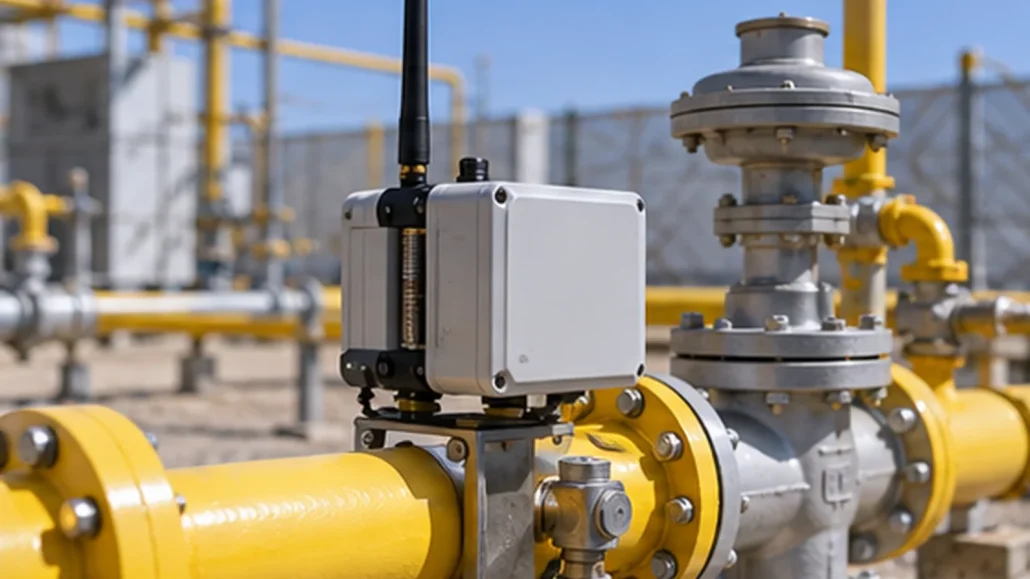
NB-IoT: PSM versus eDRX
In NB-IoT, Power Saving Mode (PSM) lets a modem enter deep sleep while retaining its network registration state; immediate downlink reachability is generally unavailable during that interval. Extended Discontinuous Reception (eDRX) lengthens the intervals between paging opportunities and trades responsiveness for reduced consumption. GSMA deployment guidance makes clear that effective settings depend on the mobile operator, negotiated timers and device implementation. A chipset supporting PSM does not by itself establish a ten-year battery life on an Iranian network.
Why frequent downlink access changes the design
A requirement to accept commands every few minutes produces a different energy profile from once-daily readings. Where operationally appropriate, routine data can be aggregated, reporting periods can be matched to actual use cases, and urgent alerts can be handled separately. However, power saving must never undermine legally relevant gas-volume registration or applicable safety and alarm requirements.
LoRaWAN: the benefit and trade-off of Class A
A LoRaWAN Class A device opens short receive windows after an uplink and can remain in a low-power state between exchanges. Other classes use different listening patterns to improve downlink availability. Actual energy use depends on data rate, airtime, transmit power, message frequency, acknowledgements, gateway coverage and local spectrum rules. Neither “LoRaWAN” nor “NB-IoT” is inherently proof of a longer battery life: both must be assessed against the same traffic and coverage assumptions.
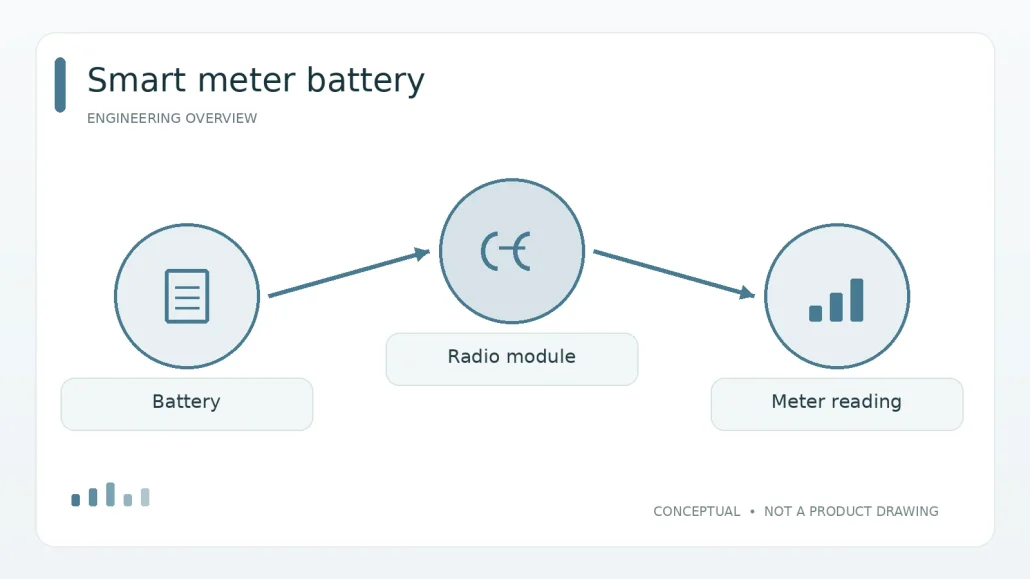
Lithium primary cells, temperature and current pulses
Primary lithium cells can suit long-duration applications, but chemistries differ in temperature range, pulse-current capability and safety characteristics. In cold conditions, internal resistance can rise and voltage sag during radio transmission can become more severe. Heat can accelerate ageing or self-discharge. Cell selection should therefore use the modem’s real pulse profile, site temperature envelope, enclosure design, protection circuit and applicable standards. IEC 60086-4:2025 addresses safety requirements for primary lithium batteries; it does not certify a particular ten-year operating life.
Metrological requirements and data retention
The international recommendation OIML R 137-1&2 distinguishes replaceable from non-replaceable power sources. For a non-replaceable source, the declared lifetime must support the meter’s operational life, or remaining capacity may be indicated in the specified manner. For replaceable sources, replacement instructions, replacement timing or low-capacity warnings, and preservation of meter parameters are important. These provisions must be assessed alongside applicable Iranian regulations and the approval of the particular meter model. OIML guidance alone is not an Iranian type approval.
A practical verification programme for meter manufacturers
From current traces to field trials
Before stating an expected battery life, measure sleep current across temperature, energy per radio event, attachment time, no-coverage behaviour, retries, event logging and end-of-life voltage. Combine those measurements in a representative multiyear duty-cycle model, then update the model using field trials across different building types. Record raw data, firmware version, operator, radio band and timer settings so the result can be reproduced.
What buyers should request
For a smart gas meter or an upgraded meter module, “ten years” is insufficient on its own. A useful specification states readings and transmissions per day, assumed coverage distribution, operating temperature, usable capacity, failed-transmission rate, low-battery alerts and replacement policy. Remote reading and energy-efficiency benefits can only be evaluated against a defined deployment scenario and test method.
Conclusion: battery life belongs to the whole system
For Ekbatan Gas Control and other gas-equipment manufacturers, low-power engineering spans the sensing element, firmware, modem, radio coverage and after-sales service. Smart gas meters and upgraded gas meters can support consumption visibility, but their battery endurance and data availability require documented testing under relevant conditions. No unverified product specification or certification is asserted here.
Technical sources
OIML R 137-1&2:2012, including the 2014 amendment, section 6.6 on power sources.
GSMA, NB-IoT Deployment Guide and Improving Energy Efficiency for Mobile IoT.
LoRa Alliance, LoRaWAN device classes and reception patterns.
IEC 60086-4:2025, safety of primary lithium batteries.
OIML R 137-1&2:2012 (incl. 2014 amendment) GSMA Whitepaper – Improving Energy Efficiency for Mobile IoT GSMA NB-IoT Deployment Guide LoRa Alliance – What is LoRaWAN IEC 60086-4:2025