
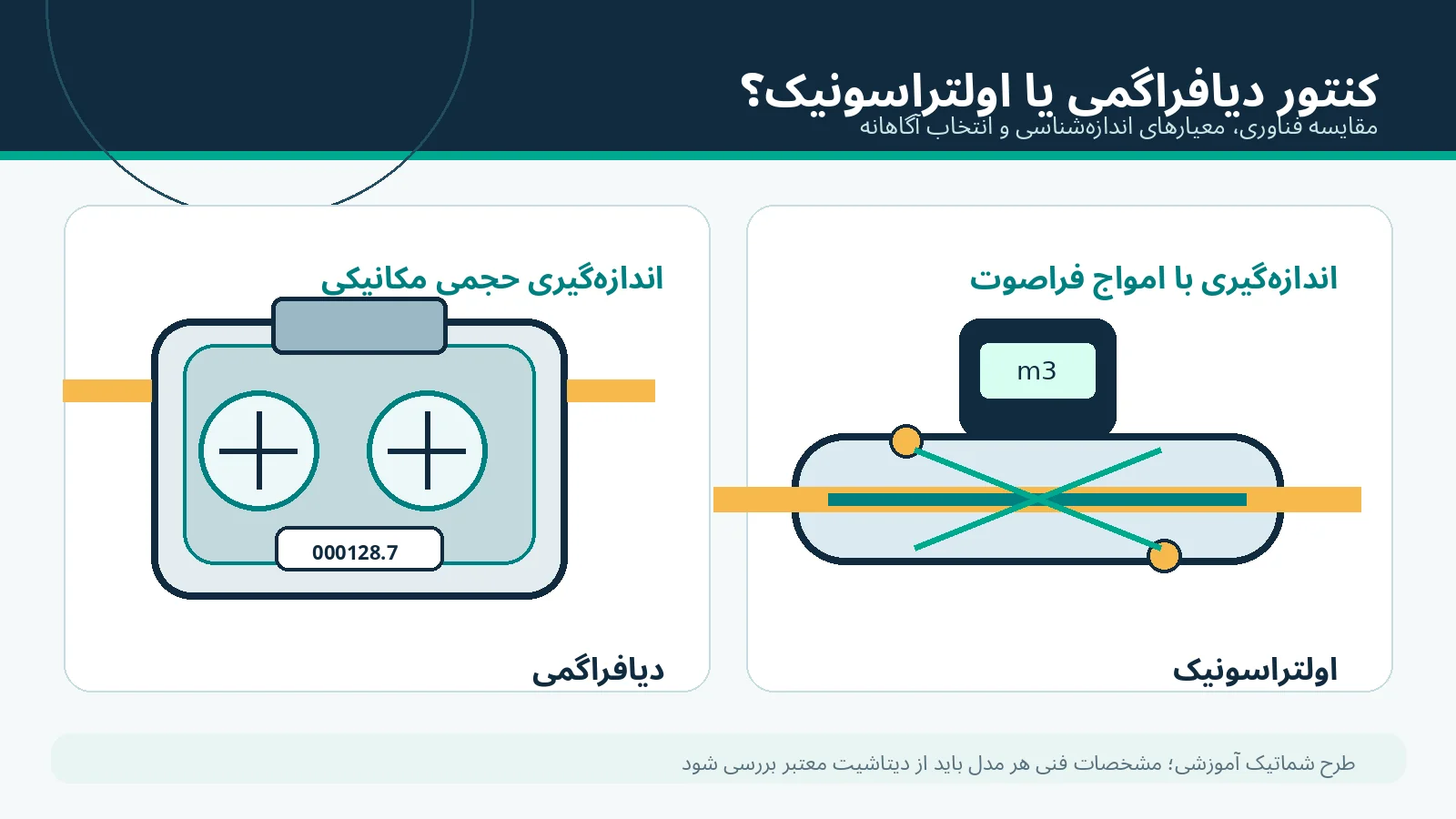
When modernising a gas network or choosing a meter for a building, a common question is whether a diaphragm or ultrasonic gas meter is better. No technology is best for every consumer, pressure and installation. These meters use different physical principles, and comparison should consider actual flow, verified accuracy, installation environment, communications requirements and lifecycle cost.
This guide for Ekbatan Gas Control readers explains the differences without exaggerated sales claims. Smart functionality, remote reading and the measurement principle are treated as separate concepts. No capability, standard or performance characteristic is attributed to the company’s products without a specific model’s datasheet.
How does a diaphragm gas meter work?
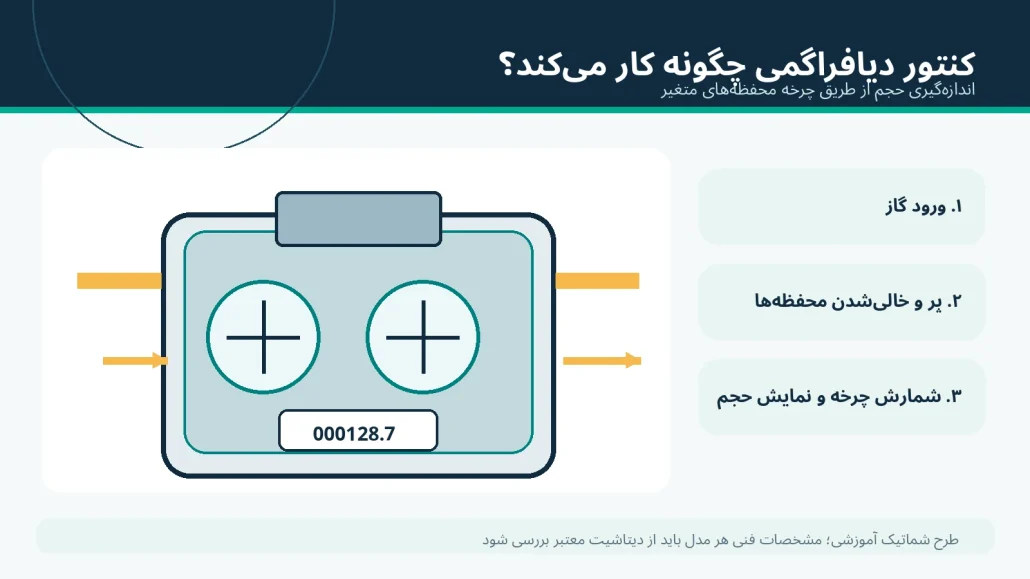
A diaphragm meter is a positive displacement instrument. Gas enters chambers whose volumes change through flexible diaphragms. Its mechanism converts filling and emptying cycles into mechanical movement and a count of the volume passing through. This is an established approach in many low-pressure domestic and commercial applications. Connections, capacity, flow range and permitted conditions must nevertheless be checked for each product.
The volumetric mechanism is understandable and has a long history of use. Moving parts also mean that long-term performance depends on design, material quality, gas conditions, loading and durability tests. No meter should be described as completely error-free or having an unlimited service life.
How does an ultrasonic gas meter work?
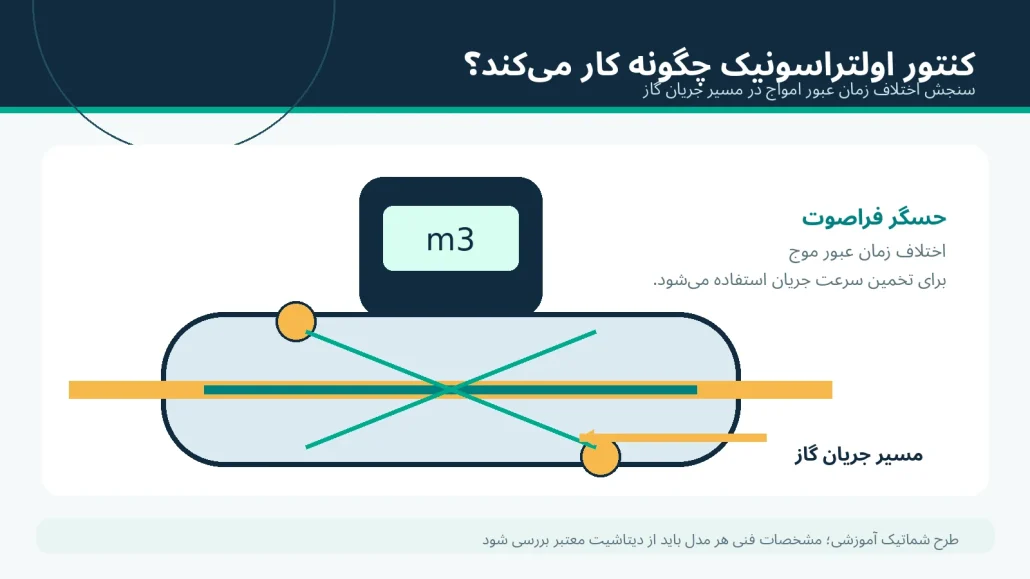
Many ultrasonic meters measure wave transit times along defined paths. The difference between propagation time with and against the flow provides information about gas velocity. Electronics use path geometry and measurement algorithms to calculate and register volume. Acoustic paths, compensation and limitations depend on the particular design.
This principle generally does not require moving displacement components. That alone does not guarantee greater accuracy, unlimited resistance to contamination or freedom from maintenance. Sensor quality, electronics, installation conditions, gas composition and verified tests remain important. Power supply condition and energy management must also be considered in electronic meters.
Comparing the two technologies
| Criterion | Diaphragm | Ultrasonic |
|---|---|---|
| Measurement principle | Counting displaced chamber volumes | Analysing ultrasound propagation through flow |
| Moving measuring components | Generally present | Generally unnecessary for the ultrasonic principle |
| Display and communications | Mechanical, or with electronics depending on model | Generally electronic; communications depend on model |
| Performance dependencies | Diaphragms, mechanism, operating conditions and durability | Sensors, electronics, algorithm and flow conditions |
| Selection basis | Capacity, accuracy, installation and approval | Capacity, accuracy, installation and approval |
The table describes principles, rather than ranking brands. A diaphragm meter may have a communications module for remote transmission. An ultrasonic meter without suitable communications infrastructure is not necessarily part of a smart reading network. A valid comparison requires actual model specifications.
Are ultrasonic meters always more accurate?
No. Accuracy is assessed through metrological class or requirements, permissible errors at different flows, test results and operating conditions. Ultrasonic technology alone does not guarantee that a specific device outperforms every diaphragm meter at every flow. Even meters using the same technology may have different ranges, performance classes and installation requirements.
OIML R 137 provides a framework for metrological requirements, performance testing and evaluation of gas meters with different principles. It is cited to explain criteria, not to claim OIML certification for a particular Ekbatan product.Qmin and Qmax: capacity matters more than the technology’s name
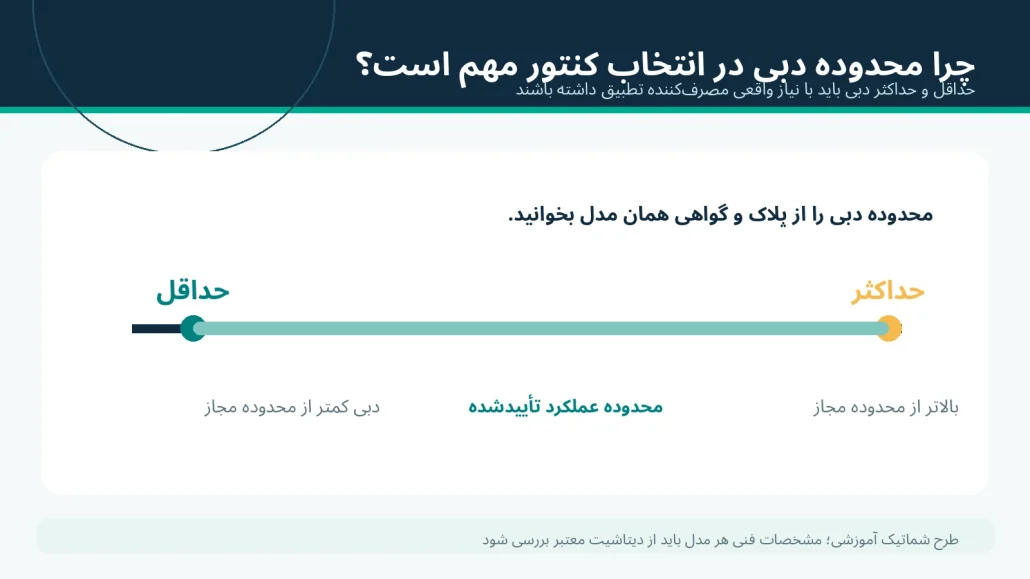
Minimum flow Qmin and maximum flow Qmax are key selection parameters. Consumption may range from one small burner to several appliances operating together. Prolonged operation outside an approved range should not be expected to meet the stated performance. Rated capacity alone is insufficient for selection.
For a building, engineering assessment should cover gas appliances, simultaneous use, minimum steady consumption and inlet pressure. Commercial and industrial applications also require attention to load variation and contractual measurement requirements. Final sizing must follow utility instructions, connection specifications and the assessment of a qualified designer or installer.
Smart functionality is independent of ultrasonic measurement
Smart metering may include periodic recording, data transmission, detection of defined events and interaction with a management system. The measuring principle may be diaphragm, ultrasonic or another technology. Remote reading means obtaining data without visiting the meter and does not necessarily include every smart-system function.
Evaluate how frequently data are recorded, how they are transferred, how authentication and information protection work, what happens during communications failure and how long the power source lasts under realistic conditions. Answers should come from the product’s technical documents and tests, rather than the technology label on a brochure.
Pressure, temperature and gas quality
Every meter is designed and evaluated for a specified pressure and temperature range. Gas conditions can affect performance, so permitted limits, reference test conditions and installation requirements matter. Volume at operating conditions is also different from volume converted to base conditions. A digital display does not imply temperature and pressure correction.
Where base volume or commercial accuracy is important, required sensors, absolute pressure data, gas temperature and conversion methods must follow the rules and system specifications. Cleanliness, moisture and particles also require model-specific assessment: manufacturer documents define each technology’s and model’s restrictions.
Purchase price or lifecycle cost?
Comparing purchase prices alone can mislead. Lifecycle cost includes procurement, installation, communications equipment, relevant power or battery provision, testing, maintenance, support and possible downtime or replacement. A meter that is economical in one project may not be so with more customers, different environmental conditions or more complex communications.
Tender submissions should include flow range, test conditions, warranty duration and limits, parts availability, recording methods and technical support as well as unit price. Comparable assessment requires the same specifications and acceptance conditions for all bidders.
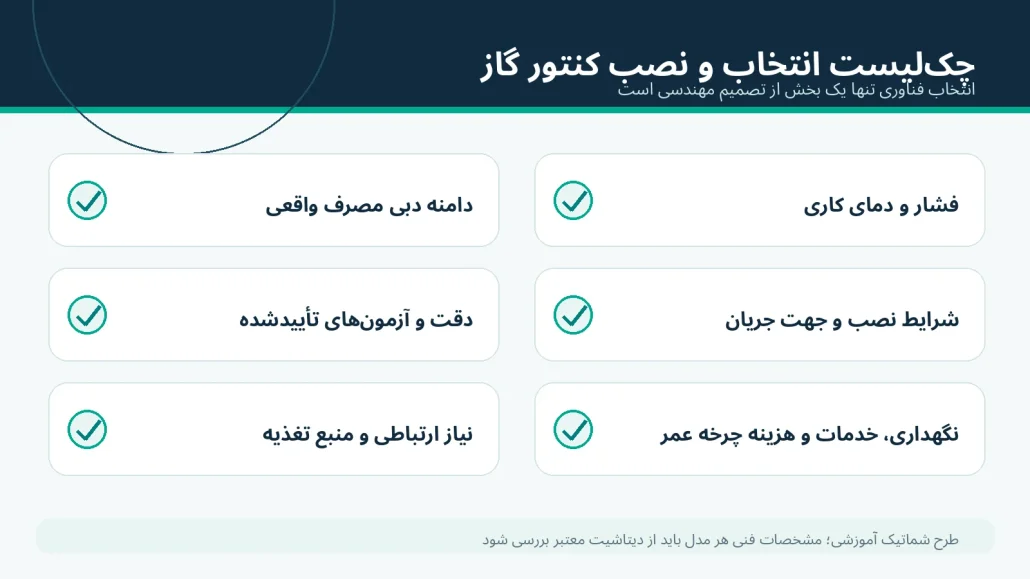
Installation and operation checks
- Network compatibility: operating pressure, connections, flow direction and ambient temperature should match the nameplate and instructions.
- Installation location: allow reading and inspection access and provide the mechanical and environmental protection required by regulations.
- Metrology: check type approval and initial or periodic verification where required by the competent authority.
- Communications: test coverage, security, timestamps and failure scenarios before operation.
- Safety: only authorised people and companies should install or intervene in the gas path.
Safety consideration
Volumetric measurement methods do not replace approved leak detection equipment and procedures. If gas is smelled, safety measures and contact with the relevant emergency service take priority.
A decision checklist for clients and contractors
| Technical question | Required evidence or action |
|---|---|
| What are the actual minimum and maximum flows? | Calculate loads and compare with Qmin and Qmax |
| Is accuracy sufficient across operating points? | Model-specific tests and metrological requirements |
| Does installation match the network? | Drawings, pressure, temperature, connections and instructions |
| Is remote reading needed? | Protocol, security, power and receiving system |
| What are the long-term costs? | Purchase, installation, testing, maintenance and support |
| Are sales claims documented? | Datasheet, valid certification and warranty conditions |
The role of Iranian manufacturers
Technology selection in Iran’s metering networks should go beyond marketing. Manufacturers, clients and testing organisations can define actual customer needs, acceptance methods, durability criteria and service requirements together. Local technical knowledge and support have practical value when product performance is traceable through valid testing and actual operation.
Ekbatan Gas Control works in gas control and measurement equipment. Selecting its products or comparing them with alternatives requires current specifications, certificates for the particular model and project conditions. This article does not claim that the company manufactures or supplies ultrasonic meters.Which gas meter is best?
The technology name alone cannot answer that question. Diaphragm meters use positive displacement, while ultrasonic meters use ultrasound to calculate flow. Correct selection depends on actual consumption, flow range, metrological requirements, installation, communications and lifecycle cost. Compare specific models rather than two broad technology labels.
Before ordering, prepare a project requirements table and request technical documents, tests and service details for each model. This reduces unsuitable selections and strengthens consumption data quality for future energy management.
Sources and basis of the guide
This is an educational guide, not a news report or a claim about new National Iranian Gas Company statistics. Its technical reference is OIML R 137-1&2 on gas meters; company context comes from Ekbatan’s official website. Images are educational schematics, not product photographs or test evidence for a real device.
Frequently asked questions
What is the main difference between diaphragm and ultrasonic meters?
Diaphragm meters count volume using positive displacement chambers. Ultrasonic meters analyse wave transit times to determine flow.
Are ultrasonic meters always more accurate?
No. Accuracy depends on model, flow range, test conditions and metrological requirements, which must be checked in valid documentation.
Can a diaphragm meter be smart?
Yes. Some models or meter-and-module combinations support recording or transmission. The capability and its scope must be verified in the datasheet.
Why do Qmin and Qmax matter?
They define the meter’s specified flow range. Actual consumption must suit the model’s verified performance range.
Does every ultrasonic meter connect to the internet?
No. The measuring principle alone determines neither the communications method nor internet connectivity.
What documents should be checked before buying a gas meter?
Check the datasheet, pressure and temperature limits, flow range, required tests or certificates, installation instructions, warranty and support conditions.